Australia's vast, red heart has cradled Aboriginal culture for tens of thousands of years, its stories etched into the land through songlines. Now, scientists are uncovering just how ancient this landscape truly is, using clues not from the Earth itself, but from the depths of space.
Stardust as a Timekeeper for the Earth
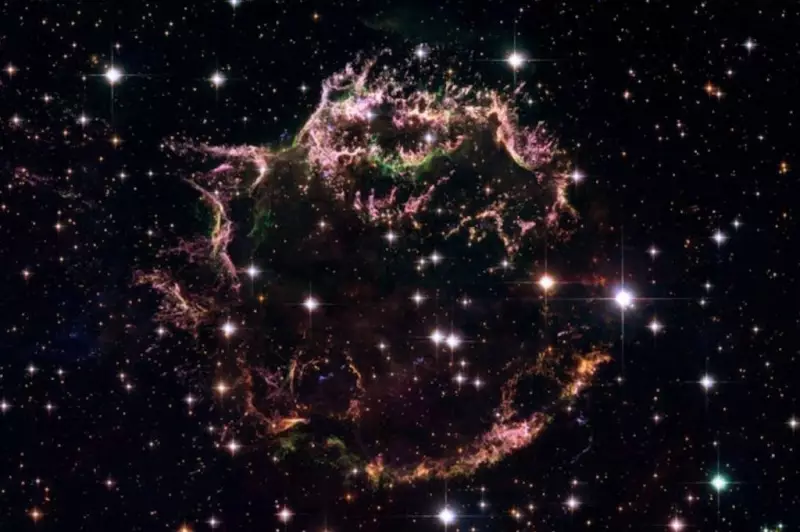
The key to this discovery lies in microscopic crystals, formed in the violent explosions of dying stars. These tiny particles, cosmic rays born from stellar cataclysms, rain down on Earth and become trapped in the soil and rock of our ancient landscapes. Researchers are now using these crystals as a precise 'cosmic clock' to date the rise and fall of landforms across Australia.
This groundbreaking method provides a timeline that stretches back far beyond conventional geological techniques. It offers a new way to measure erosion rates and understand when major features of the continent's iconic terrain were formed and subsequently worn away. The findings, published in early 2026, bridge a profound gap between deep geological time and the immense cultural history of the First Peoples.

Linking Songlines to Stellar Science
For over 60,000 years, Aboriginal Australians have recorded their intimate knowledge of the land's formation, water sources, and history in intricate songlines. These oral maps and stories represent one of the world's oldest continuous cultural records. The new data from the cosmic crystals provides a scientific corroboration of this ancient timescale, suggesting the landscapes described in these enduring traditions are phenomenally old.
The remnants of stellar explosions, analysed by teams including researchers from The Conversation, act as a celestial timestamp. By measuring the accumulation of these rare cosmic materials in the Australian crust, scientists can calculate how long a surface has been exposed. This reveals periods of dramatic change and long stretches of remarkable stability in environments like the Pilbara or the Flinders Ranges.
A New Chapter in Understanding Our Continent
The implications of this research are significant for multiple fields. For geoscientists, it provides an unprecedented tool for modelling landscape evolution on a continental scale. For historians and archaeologists, it creates a robust chronological framework that aligns with Indigenous oral histories. It underscores the incredible antiquity of the Australian continent and the deep time wisdom contained within Aboriginal cultural knowledge.
This fusion of astrophysics, geology, and Indigenous science tells a more complete story of Australia. It shows that the history of our red earth is written not only in its rocks and in the world's oldest living culture, but also in stardust that has travelled across the galaxy to settle here, acting as a permanent record of time itself.