The Judicial Committee of the Privy Council in London has begun hearing an appeal against Trinidad and Tobago's colonial-era law that criminalizes gay sex. The case, brought by LGBTQ+ activist Jason Jones, challenges the constitutionality of sections 8 and 16 of the Sexual Offences Act, which prohibit consensual same-sex relations between adults and carry penalties of up to 25 years in prison.
Legal Challenge Background
Jones, a Trinidadian-born British citizen, filed the appeal after the Trinidad and Tobago High Court dismissed his initial challenge in 2018, ruling that the law did not violate the constitution. The Court of Appeal upheld that decision in 2021, prompting Jones to take the case to the Privy Council, the highest court of appeal for several Commonwealth Caribbean nations.
The law, inherited from British colonial rule, has been criticized by human rights groups as a violation of privacy and equality. According to the International Lesbian, Gay, Bisexual, Trans and Intersex Association (ILGA), similar laws exist in over 60 countries worldwide, many of which are former British colonies.

Arguments Presented
During the two-day hearing, Jones's legal team argued that the law is discriminatory and infringes on fundamental rights guaranteed by the Trinidad and Tobago Constitution, including the right to privacy and freedom from discrimination. They contended that the law is outdated and serves no legitimate public health or moral purpose.
“This law is a relic of colonialism and has no place in a modern democratic society,” said barrister Paul Bowen, representing Jones. “It criminalizes private, consensual conduct between adults and stigmatizes an entire community.”
The government of Trinidad and Tobago defended the law, arguing that it reflects societal values and that any change should be made by Parliament, not the courts. Attorney General Reginald Armour stated that the law was enacted to protect public morality and health.
Potential Impact
A ruling in favor of Jones could set a precedent for other Caribbean nations with similar laws, such as Jamaica, Barbados, and Saint Lucia, which also fall under the Privy Council's jurisdiction. Activists hope that striking down the law would encourage legislative reforms across the region.
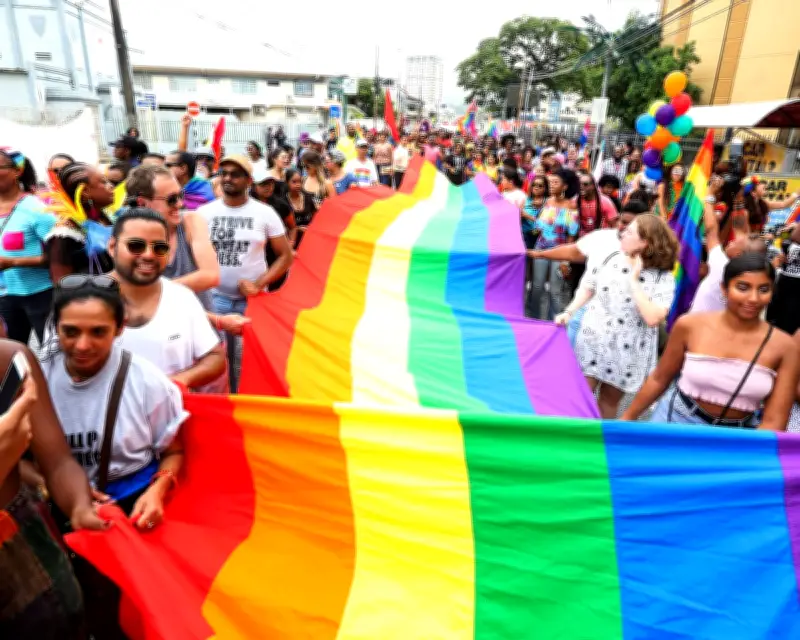
According to a 2023 survey by the Caribbean Equality Project, 68% of LGBTQ+ individuals in Trinidad and Tobago reported experiencing discrimination or harassment. The law has been used to justify violence and social exclusion, with few prosecutions but widespread fear among the community.
The Privy Council is expected to deliver its judgment later this year. If the appeal is successful, Trinidad and Tobago would join a growing list of Commonwealth nations that have decriminalized homosexuality, including India, Botswana, and Singapore in recent years.
Reactions and Next Steps
Human rights organizations have welcomed the hearing. “This is a crucial moment for LGBTQ+ rights in the Caribbean,” said Téa Braun, CEO of the Human Dignity Trust. “We urge the Privy Council to affirm that no one should be criminalized for who they love.”
In Trinidad and Tobago, local activists have organized vigils and awareness campaigns. Jason Jones, speaking outside the court, said: “We are hopeful that justice will prevail. This law has caused immense harm to countless lives, and it is time for it to be consigned to history.”
The case has also drawn attention to the role of the Privy Council as a final court of appeal for independent nations. Critics argue that it is anachronistic for a British court to decide on constitutional matters of former colonies, while supporters say it provides an impartial forum for complex legal issues.