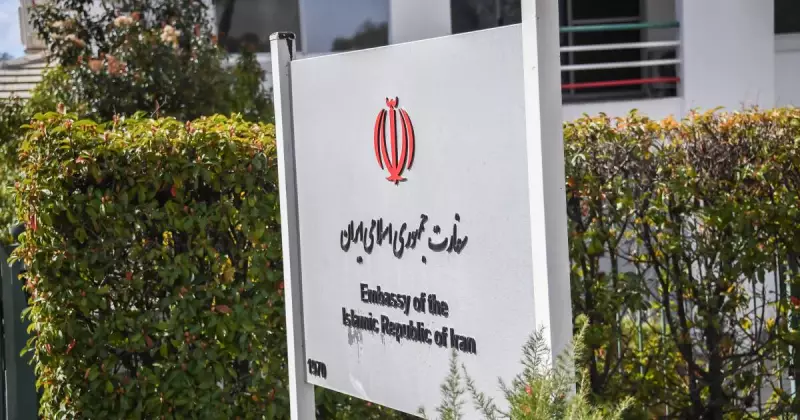
The recent expulsion of Iran's ambassador from Australia, linked to alleged anti-Semitic activities on Australian soil, was a stark moment that brought global tensions to our doorstep. Yet, this diplomatic move is now a sideshow to the monumental and potentially world-altering crisis unfolding within Iran itself.
A Tectonic Shift in Tehran
While often buried in the daily news cycle, the potential collapse of the theocratic regime in Tehran stands as arguably the most critical geopolitical event currently in motion. The fall of this regime, a cornerstone of regional hostility for nearly half a century, could completely redraw the map of Middle Eastern power dynamics.
However, history urges caution. Iran's past is a sobering reminder that the overthrow of a terrible government does not guarantee a better future. Prior to the 1979 revolution, Iran under the Shah was a wealthy, secular ally of Israel and the United States. Yet, this surface modernity masked a brutal dictatorship maintained by secret police and state terror.

That repression fuelled the revolution, which tragically swapped a secular autocrat for the rule of the Ayatollahs—a regime that has sponsored terrorism and vowed to destroy Israel. The revolution became a classic case of 'be careful what you wish for'. Images from 1970s Tehran show a startlingly different society: young women in miniskirts mingling freely with fashionable men, a world away from the religious police that now enforce oppressive sharia law, rendering women second-class citizens.
The Uncertain Road Ahead
The critical question now is: what comes next? While Reza Pahlavi, the Shah's son, talks of a future role, there is no substantial evidence of widespread public support for a monarchist restoration. At best, he and the re-emerging lion-and-sun flag of the Pahlavi era could act as a unifying symbol for the disaffected until a new governing structure emerges.
In all likelihood, any successor government would be more secular than the current theocracy but would retain strong Islamist characteristics. The experience of the Arab Spring brutally exposed the folly of expecting nations like Iran to instantly transform into Western-style liberal democracies.
It is worth noting that Israel remains the region's sole democracy, where LGBTQIA+ people are not persecuted, women have full equality, and power transitions through peaceful elections. The most significant potential outcomes of an Iranian regime change—which will inevitably come at a horrific human cost—would be an end to the decades-long campaign for Israel's extermination, the abandonment of its nuclear weapons program, and vastly improved rights for women and girls. These steps are the only viable path for any new leadership to address the catastrophic economic crisis—with a collapsed currency and inflation soaring above 50 per cent—that sparked the protests.
The Human Toll and a Stark Warning
Our hearts must go out to Iran's long-suffering people. The regime has imposed an internet and media blackout to hide the brutality of its crackdown. While the official death toll from recent unrest stands at around 538, the true figure is almost certainly far higher.
As Iran stands at this precipice, millions may be contemplating the famous verse by Hilaire Belloc: "And always keep a-hold of Nurse / For fear of finding something worse." In the poem, the boy Jim runs away from his nurse only to be eaten by a lion named Ponto at the zoo. Today, the towns, villages, and cities of Iran are stalked by many lions, and the fear of what might follow the current regime is palpable and profound.