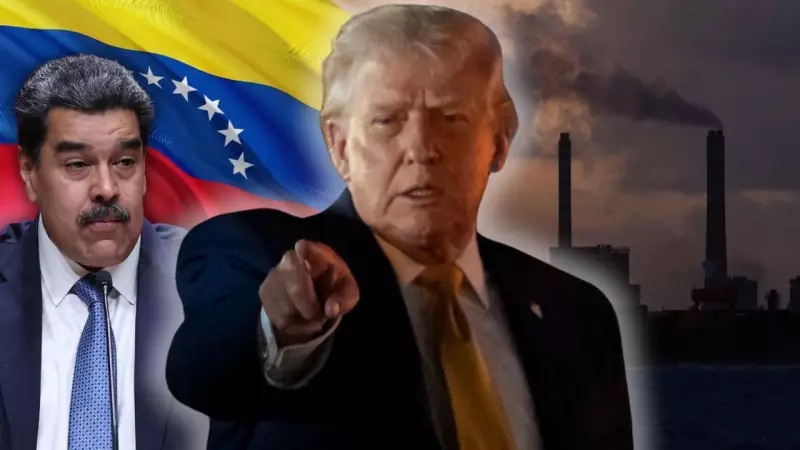
The United States has slammed the brakes on a controversial six-month experiment, reinstating crushing oil sanctions on Venezuela and throwing the future of President Nicolas Maduro's regime and the nation's crucial energy sector into fresh uncertainty.
The Sanctions Snapback: A Deal Broken
In October 2023, the Biden administration offered the government in Caracas a significant concession. It temporarily lifted key oil and gas sanctions for a period of six months. This move was not a gift, but a strategic gambit. The clear condition was that Maduro's government had to take concrete steps toward a free and fair presidential election scheduled for later in 2024.
Washington demanded the reinstatement of opposition candidates banned from holding office and the release of political prisoners. However, as the deadline of April 18, 2024, approached, US officials concluded that Maduro had failed to uphold his end of the bargain. The most glaring failure was the blocking of leading opposition figure Maria Corina Machado from running, despite her landslide victory in a primary vote.

Consequently, the US Treasury Department has allowed the general license, which eased sanctions, to expire. Companies involved in Venezuela's oil sector now have until May 31, 2024, to wind down their transactions and operations.
Immediate Impact on Venezuela's Oil and Economy
The reinstatement of sanctions is a severe blow to Venezuela's fragile economy, which is almost entirely dependent on oil revenue. The brief sanctions relief had provided a lifeline.
Venezuela's oil production had climbed to approximately 900,000 barrels per day, a notable increase from around 700,000 barrels per day before the reprieve. This boost was largely thanks to deals with foreign firms, including a notable increase in shipments to refiners in the United States itself. That flow is now set to dry up.
The move effectively freezes the progress made by state-owned oil company PDVSA and its partners. It also dashes hopes for significant new foreign investment needed to overhaul the country's dilapidated energy infrastructure. For the average Venezuelan, already suffering from hyperinflation and poverty, the economic prospects have darkened once again.
Global Oil Market and Diplomatic Repercussions
While the immediate effect on global oil prices is expected to be muted, the decision removes a potential source of new supply at a time of ongoing market volatility. Analysts suggest it signals a return to a harder US stance on Maduro, aligning more closely with the maximum pressure campaign of the previous Trump administration.
The decision also has diplomatic ripple effects. It places pressure on other nations, particularly in Europe, to reconsider their engagement with Caracas. Furthermore, it complicates the geopolitical landscape in the region, where Maduro has sought closer ties with US adversaries like Russia, China, and Iran.
The path forward is fraught. The Maduro government has condemned the US decision as "blackmail" and is likely to seek alternative, albeit less lucrative, markets for its oil. The opposition, while supportive of holding Maduro accountable, faces the immense challenge of uniting and mobilising a weary population under renewed economic pressure.
All eyes are now on the scheduled July 28 presidential election. With the main opposition candidate barred, the credibility of the vote is in serious doubt. The reinstatement of sanctions is a powerful tool, but whether it can force genuine democratic concessions from a regime that has weathered years of pressure remains the critical, unanswered question.