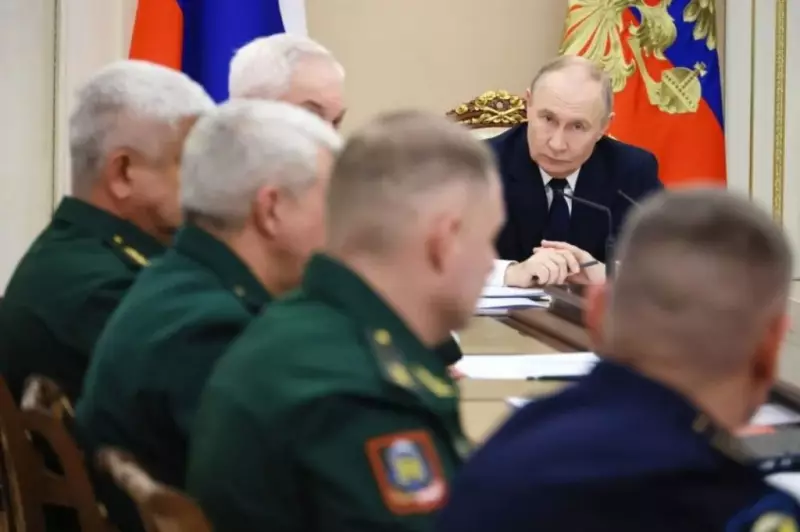
Russia has launched a furious accusation against Ukraine, claiming it orchestrated a large-scale drone attack on one of President Vladimir Putin's private residences. The alleged strike deals a significant blow to the fragile peace negotiations currently underway.
Moscow's Claims and Kyiv's Denial
Russian officials stated that on December 28-29, Ukrainian forces attempted to strike Putin's residence in the Novgorod region, west of Moscow. They asserted that 91 long-range drones were involved in the attack, all of which were reportedly destroyed by Russian air defences. No casualties or damage were reported, and the location of Putin at the time remains undisclosed.
In response, Ukrainian President Volodymyr Zelensky vehemently denied any involvement, labelling the accusation as "another round of lies from the Russian Federation." He suggested the claim was a deliberate fabrication timed to undermine his critical meeting with US President Donald Trump at Mar-a-Lago in Florida.

"It is clear that we had a meeting with Trump yesterday, and it is clear that for the Russians, if there is no scandal between us and America, and we are making progress — for them it is a failure," Zelensky stated via WhatsApp.
Escalating Rhetoric and Peace Talks in Jeopardy
Russia's Foreign Minister, Sergei Lavrov, described the alleged incident as "state terrorism" and warned that "such reckless actions will not go unanswered." He indicated that targets for retaliatory strikes had already been selected, though he provided no evidence for Moscow's assertions during televised remarks.
Lavrov confirmed the attack allegation would cause Russia to review its stance in peace negotiations, though he insisted Moscow would not abandon the talks entirely. The accusation comes at a sensitive diplomatic moment, following Trump's comments that he and Zelensky were "getting a lot closer, maybe very close" to a war-ending agreement, despite unresolved "thorny" territorial issues.
Ukrainian Foreign Minister Andrii Sybiha took to social media platform X to argue that the story was a pretext for more Russian attacks on Ukraine and an attempt to sabotage the peace process, urging world leaders to condemn Moscow.
The Stumbling Blocks to a Deal
The core issues blocking a peace agreement remain deeply entrenched. Zelensky outlined two primary obstacles in a 20-point proposal:
- Control of the Zaporizhzhia nuclear power station, currently held by Russian forces.
- The fate of the Donbas region, where Russia controls significant territory.
Russia presently occupies about one-fifth of Ukraine's territory, including Crimea and parts of four other regions it claims to have annexed. While Kyiv demands a ceasefire along current front lines, Moscow insists Ukrainian troops withdraw from unoccupied parts of Donetsk. In a show of resolve, Putin on Monday ordered his generals to continue efforts to secure the entire Zaporizhzhia region, of which they already control roughly 75%.
As accusations fly and threats of retaliation loom, the path to peace appears more fraught than ever, with both sides preparing for further escalation.