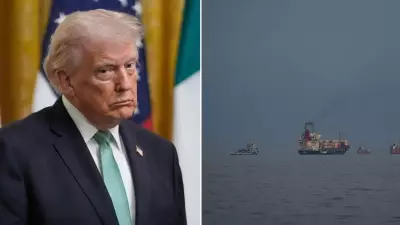
Oil Markets in Holding Pattern as Traders Await Middle East Peace Developments
Oil prices traded sideways on Thursday morning, with benchmark Brent Crude holding steady at $US98.05 a barrel. This stability comes as market participants digest conflicting headlines surrounding the ongoing Middle East conflict, particularly Iran's rejection of a US ceasefire proposal.
Geopolitical Tensions Drive Market Sentiment
Traders are closely monitoring the situation after Iran dismissed a 15-point ceasefire offer from the United States and presented its own set of conditions to end the war. According to National Australian Bank, a senior Iranian official confirmed the rejection, with the US proposal demanding Tehran dismantle key nuclear sites, fully reopen the Strait of Hormuz to shipping, and limit missile use to self-defence only.
In response, Iran has outlined demands including reparations, recognition of its authority to collect fees from ships transiting the Strait of Hormuz, and the lifting of all sanctions. This diplomatic standoff has left oil markets in a state of uncertainty, with prices reflecting the cautious mood among investors.

Global Markets React to Escalation Fears
Wall Street edged slightly higher as investors hedged bets on the potential for the conflict to escalate, especially with the US deploying up to 4000 additional marines to the region. European shares also gained, with the UK's FTSE 100 rising by 1.4 per cent, indicating a mixed global response to the geopolitical risks.
Adding to the tension, President Trump's Press Secretary Karoline Leavitt stated early on Thursday morning that the administration does not bluff and is prepared to "unleash hell" on Iran if it fails to agree to ceasefire conditions, including reopening the Strait of Hormuz. This strong rhetoric has further fueled market volatility and speculation.
Local and Commodity Market Impacts
In Australia, futures for the S&P/ASX 200 pointed 0.4 per cent higher, as the local share market aims to avoid a fourth consecutive week of losses. These declines have been driven by fears that an energy supply shock could push interest rates as high as 4.85 per cent later this year, highlighting the broader economic implications of the oil market's movements.
Meanwhile, gold prices edged higher to $US4515 an ounce, recovering from three weeks of heavy losses since the war erupted on February 27. This uptick in gold reflects its traditional role as a safe-haven asset during times of geopolitical uncertainty, mirroring the cautious sentiment seen in oil markets.
As the situation develops, traders remain on alert for any breakthroughs or escalations that could sway oil prices and global financial stability. The interplay between diplomatic efforts and military posturing continues to be a key driver for market dynamics in the coming days.