Rivers of Fire Engulf Tehran as Conflict Enters Ninth Day
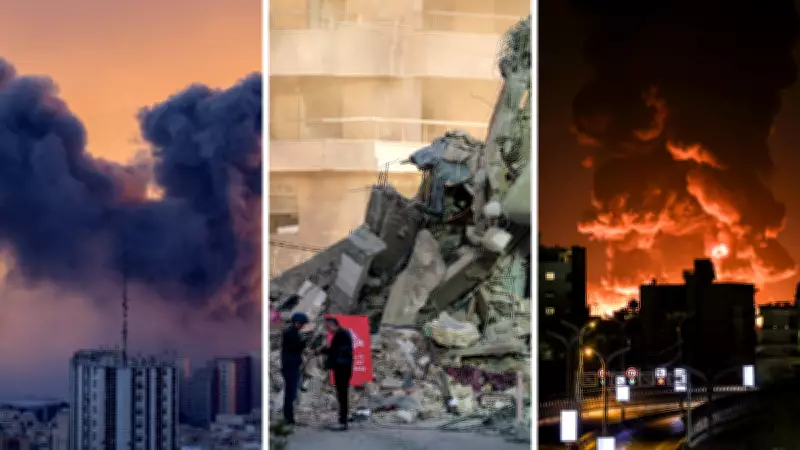
The Iranian capital of Tehran is currently engulfed in rivers of fire, with the city choking under thick layers of toxic smoke and ash. This devastating situation marks the ninth day of the ongoing war between the United States, Israel, and the Iranian regime. The chaos has been directly triggered by American military strikes targeting key Iranian oil facilities, which have sent world markets into significant turmoil.
Environmental Catastrophe Unfolds in Capital
These attacks have caused black acid rain, saturated with oil particles, to fall across Tehran, creating hazardous environmental conditions for residents. The combination of fires, smoke, and contaminated precipitation represents a severe crisis for the city's infrastructure and public health systems.
New Supreme Leader Announced Amid Crisis
Nine days following the assassination of Iran's former Supreme Leader Ayatollah Ali Khamenei, state television has announced his successor. The new leader is Mojtaba Khamenei, the 56-year-old second son of the late Ayatollah. Despite never holding formal government office or delivering public speeches, Mojtaba Khamenei maintains strong connections to Iran's powerful Revolutionary Guards.

Continuation of Hardline Policies Expected
Political analysts anticipate he will continue his father's hardline approach to governance and foreign policy. Former CIA director David Petraeus commented on the situation, stating, "I think the hope had been that there might be someone who would become the leader, who would be a bit more pragmatic, might signal a willingness to give up on the nuclear program, and that does not appear to be the case right now."
Immediate Threats Against New Leader
However, the new Supreme Leader may already be living on borrowed time. United States President Donald Trump has publicly declared him unacceptable, while Israel has explicitly vowed to assassinate him. These threats create an extremely precarious position for Mojtaba Khamenei as he assumes leadership during an active military conflict.
Regional Retaliation and Escalation
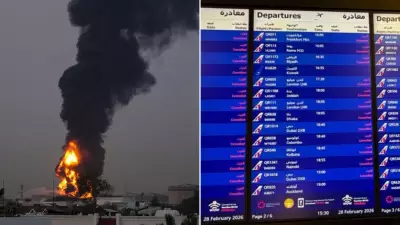
Iran has responded with defiance, striking a government building in Kuwait as retaliation for attacks against its territory. Meanwhile, many Iranian drones continue to be shot down, including operations over the United Arab Emirates, indicating ongoing aerial combat across the region.
Tel Aviv Attack Details Emerge
In Tel Aviv, one missile successfully hit the city, dispersing dozens of bomblets across urban areas. Early reports indicate the missile carried a cluster bomb warhead designed to open up and spread munitions over a large area, potentially up to eight kilometers wide. Fortunately, no fatalities have been reported at this stage, though injuries have occurred.
Widespread Impact Across City Streets
Israeli authorities report that sixteen warheads scattered across Tel Aviv following the attack. The impact zone spread across multiple city streets, with one warhead striking an apartment building directly. This impact caused a massive explosion that sent shattered debris flying in all directions.
Just one floor below where the warhead struck, twenty-weeks-pregnant Efrat Shahar experienced the terrifying moment. She recounted, "I heard the boom and it was very loud. It was louder than I'd ever heard, but I didn't think it was this close." Her testimony highlights how unexpectedly the attack reached residential areas.
Lebanon Suffers Heavy Casualties
The situation appears even more dire in Lebanon, where the death toll has now surpassed four hundred people. In one particularly tragic incident, forty-one individuals were killed as Israeli commandos fought to retrieve a fallen comrade who had been buried in the area for forty years. This demonstrates how historical conflicts are resurfacing amid current hostilities.
Unclear War Objectives and Timeline
President Trump has informed Israeli media that any decision to conclude the war would be made jointly with Israeli Prime Minister Benjamin Netanyahu, though Trump would retain final authority. The American president has revised his original timeline estimate of four to five weeks, suggesting he might require additional time to accomplish his objectives.

However, these specific objectives have never been clearly articulated to the public, creating uncertainty about what would constitute an endpoint to the current conflict. The lack of transparent goals complicates diplomatic efforts and prolongs regional instability.