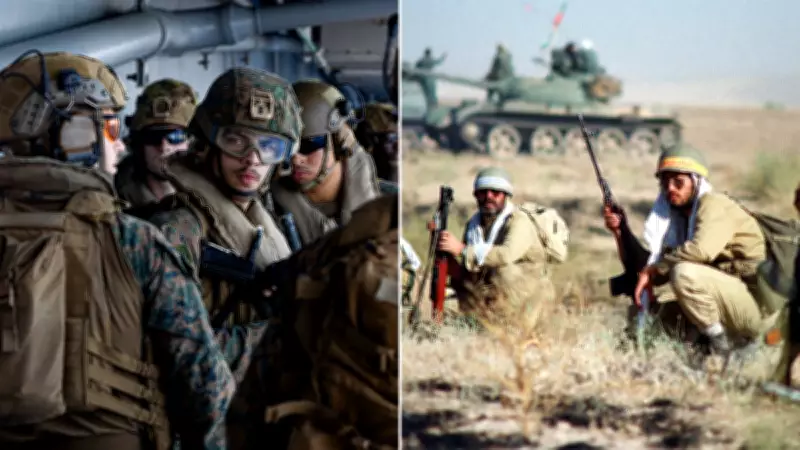
Iran's Defiant Stance as US Forces Gather Near Its Borders
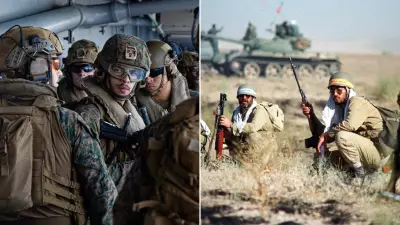
While many global leaders would react with alarm to the presence of the world's most expensive military force amassing at their doorstep, Iran has taken a strikingly different approach. In recent weeks, as thousands of US Marines have assembled in proximity to Iran, Tehran has provocatively invited the United States to approach, with state-run media declaring, "Come close, we are waiting for you." This audacious response raises a critical question: what underpins Iran's confidence in its ability to repel a potential US invasion?
Decades of Strategic Defence Planning
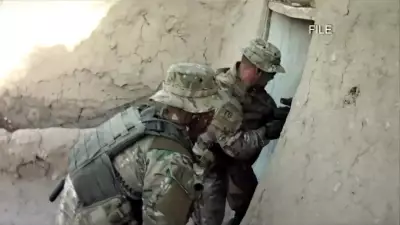
According to Andrew Maher, a former Australian Defence Force officer and current senior lecturer at UNSW, Iran's nerve is rooted in a defence strategy meticulously developed over decades to counter larger military powers. Maher, who commanded a platoon in Afghanistan in 2007, suggests that Iran closely observed conflicts like the war in Afghanistan, treating them as "live experiments" to refine its tactics against the US military. From these observations, Iran has implemented three key tools designed to make any invasion prohibitively costly in terms of both human lives and financial resources.
The 'Mosaic' Defence System
One of Iran's pivotal adaptations came after the swift collapse of the Iraqi government in 2003, when its leadership was targeted. In response, Iran decentralised its military in 2008 by establishing the Provincial Commands of the Islamic Revolutionary Guard Corps (IRGC), a structure often described as a "mosaic defence." This system grants limited autonomy to regional commands, ensuring that defence operations can continue even if top military leaders are eliminated during conflict. Instead of confronting an invading force directly, this strategy focuses on operational continuity, thereby increasing the time and expense an opponent must invest. Maher notes that hundreds of militia-like forces, part of the Basij, are dispersed across Iran, poised to wage an insurgency in the event of an invasion. This fragmented approach complicates any attempt to achieve a complete military victory, as each command can regenerate leadership and sustain resistance, draining an adversary's resources, funds, and time.

Leveraging Cheap Technology and Drones
Another lesson Iran gleaned from conflicts in Afghanistan and Iraq was the effectiveness of inexpensive yet potent weapons against costly US military assets. For instance, explosively formed penetrators (EFPs), or roadside bombs, caused significant damage to US vehicles at a minimal cost of about $50 each, prompting billions in spending on vehicle armour. Iran has applied this principle by mass-producing Shahed drones, which can travel over 1000km and carry more than 90kg of explosives. While these drones cost around $40,000 each—far more than EFPs—they remain a fraction of the price of US Tomahawk cruise missiles, which are priced at approximately $3.6 million each. Since the onset of recent conflicts, waves of these drones have posed a serious challenge to US and allied air-defence systems in the Persian Gulf, with some breaching defences to strike military bases and civilian infrastructure like hotels, airports, and gas fields.
Funding Proxy Militia Networks
Iran has expanded its defence strategy by cultivating and funding non-state armed groups across the Middle East, particularly during the 2010s. Maher explains that Iran's support for organisations such as Hezbollah, Hamas, ISIS, Houthis, and the Taliban provides a network of experienced fighters who could assist in repelling a US invasion. This approach, part of a state-level strategy spanning about 40 years, aims to establish hegemonic influence in the region to enhance national security. While the mosaic defence is defensive in nature, these proxy militias are intended to overwhelm an opposing force by opening multiple war fronts and shifting conflict points. For example, following initial US-Israeli attacks, groups like Hezbollah launched assaults shortly after, with Iraqi forces and Houthis joining weeks later, demonstrating Iran's ability to escalate conflicts horizontally and strain adversary resources.

Assessing the Current Conflict Dynamics
In a recent national address, US President Donald Trump threatened to attack Iran aggressively, vowing to send the country "back to the Stone Age." However, Maher cautions that such rhetoric may be part of a broader strategy of intimidation, influenced by analyses of Russian activities in recent years. He emphasises the importance of looking beyond leaders' statements, which can serve to mislead adversaries, maintain domestic support, or signal strategic flexibility. More critically, Maher points to the substantial losses Iran has incurred in the first month of conflict, with up to 70% of certain military capabilities, such as the Iranian Navy or missile systems, being degraded or removed from the battlefield. Regardless of Trump's framing, these losses have a significant impact on Iran's operational capacity, underscoring the complex realities of modern warfare.