Fuel Panic Buying Sweeps Australia as Middle East Conflict Sparks Supply Fears
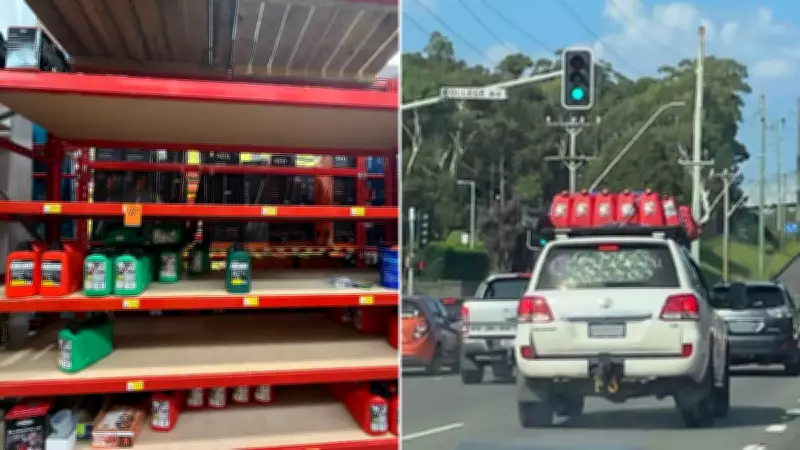
Australians are rushing to hardware stores across the country, snapping up fuel containers and leaving shelves empty as fears over fuel supply ripple through communities following the Middle East conflict. The phenomenon, dubbed the "jerry can rush," has spread rapidly, with social media posts highlighting tension at service stations and empty displays at retailers.
Retailers Struggle to Meet Demand
Bunnings has confirmed a significant surge in demand for fuel containers nationwide. "We are seeing increased demand for fuel containers in our stores across the country," a Bunnings spokesperson stated. "Our teams are working hard to ensure product is still available for our customers, with more coming to stores this week." Reports from southeast Queensland show people stockpiling fuel, including filling jerry cans, despite assurances from motoring groups like RACQ that there is plenty of supply on the way and no widespread shortage.
Social Media Captures Panic and Confrontation
Social media platforms are flooded with images and stories illustrating the intensity of the panic buying. One customer described being confronted by another patron while filling a 5L jerry can for their lawn mower. "The woman on the pump beside started going off at me for hoarding fuel and how I was bad as the people during Covid with toilet paper," they wrote. "I politely told her it was only 5L and for my lawn mower... to which I got a second verbal bashing basically accusing me of lying and that she was going to report me."

Another individual shared a similar experience, noting they were filmed while filling jerry cans for a show society's ride-on mowers, awaiting potential online exposure. Meanwhile, Reddit users have joked about the situation, with one quipping, "I think if we all buy more jerry cans and we all go fill them up we can make our own fuel reserve in our own garages!"
Panic Buying Hits Critical Sectors
The fuel frenzy is now impacting essential services, forcing some service stations to limit diesel sales to emergency vehicles only. This measure ensures ambulances, fire trucks, and police always have access. In Wagga, locals reported service stations running dry as panic buying intensified.
Rural fuel distributor Bartranz Petroleum, which supplies service stations and rural customers, has flagged major disruptions across Queensland. "We can no longer supply service stations — every time we top them up the fuel is depleted within hours by people hoarding fuel in jerry cans and IBCs (Intermediate Bulk Containers)," a representative explained. The company added it is receiving only 10 per cent of its usual Brisbane allocation, with some smaller distributors receiving none at all.
Bartranz emphasized the critical impact on agriculture: "Our focus is the VERY CRITICAL agriculture sector. Crops need harvesting, crops need planting, if piggeries can’t fuel generators animals die — the list is endless." In rural South Australia, a service station has run out of diesel and AdBlue, highlighting how panic buying is affecting regional fuel supplies.
Government and Authorities Respond
Energy Minister Chris Bowen addressed concerns last week, noting that Australia has 36 days of petrol, 34 days of diesel, and 32 days of jet fuel in reserve, the highest level in more than a decade. "I do understand people’s concerns but it’s important that people know we do have a good stock of petrol in reserve in Australia, there’s no immediate threat to petrol supplies in Australia," he stated on Tuesday.
However, authorities are warning against the dangers of stockpiling petrol at home. Fire & Rescue’s Dylan Faber cautioned, "As soon as you get the perfect mix of vapours and air, once you’ve got an ignition source, those fuel fires can be highly explosive and dangerous."

Community Calls for Consideration
Local fuel retailers and cooperatives are urging residents to act responsibly. Russell Keeley of Pittsworth’s Arek Fuel service station reported that diesel sales over the past week matched what would normally be sold in a month, calling on customers to "consider others when filling pods and drums." Similarly, Killarney Co-operative Limited appealed for restraint: "The key message is simple: please buy only what you need, so supplies remain available for everyone, including emergency services, food producers, transport operators, and local businesses."
Despite current supplies being higher than historical reserves, Australia’s fuel stocks remain relatively low compared to international peers and far below the International Energy Agency recommendation of 90 days. As the situation unfolds, Australians are being reminded to avoid panic buying and prioritize safety and community needs.