Australian Expats in US Confront Immigration Crackdown Horror
Australians residing in the United States have expressed profound distress after finding themselves at the heart of an aggressive anti-immigration operation. The situation has escalated to the point where some are seriously contemplating a return to Australia.
Personal Stories of Fear and Uncertainty
Shane Hale, originally from Whyalla in regional South Australia, has spent the past nineteen years living in the US as a permanent resident. He resides with his American wife and their two sons in Eden Prairie, southwest of Minneapolis, Minnesota. Previously, Hale lived in Houston, Texas.
He described Minneapolis as reminiscent of Melbourne and, despite the often frigid temperatures, considered it an ideal place to raise his family. However, Hale now admits he is thinking about returning to Australia due to a months-long operation targeting immigrants.

Gareth Green, from Brisbane, has also discussed with his Native American partner whether they should leave for Australia. This conversation followed the arrest of local tribe members by anti-immigration officers.
Widespread ICE Operations Spark Protests
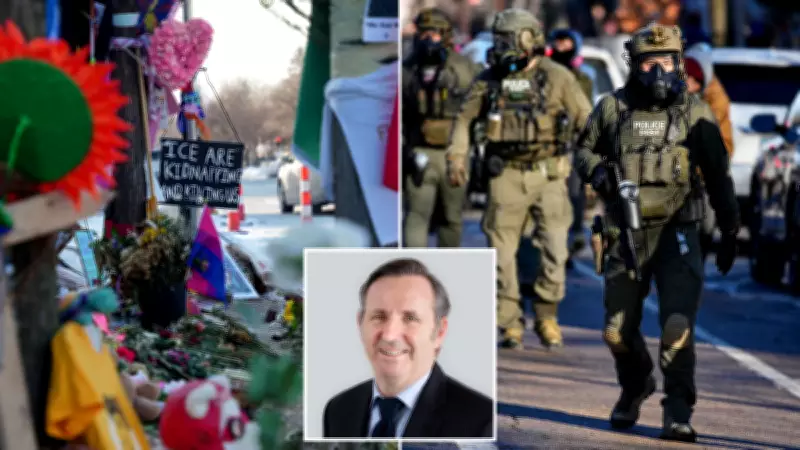
Since December, more than four thousand Immigration and Customs Enforcement agents have descended on the Twin Cities of Minneapolis and St Paul. These agents have entered homes, schools, and businesses to arrest individuals they believe are in the country illegally.
Their presence has ignited widespread protests, as locals fear the agents—who often conceal their identities—are specifically targeting Latino, African, and Asian communities, regardless of their legal status.
Tragic Shootings Intensify Community Outrage
Demonstrations grew exponentially after ICE agents fatally shot mother-of-three Renee Good on January 7 and intensive care nurse Alex Pretti on January 24. Both victims were United States citizens, further inflaming public anger.
Hale noted that Americans were already on edge after Donald Trump regained the presidency early last year. Tensions have only increased with ICE's involvement, which he has witnessed firsthand.
"I live in Eden Prairie, which is very much upper-middle class. ICE came and took a 17-year-old kid from a bus stop just up the road," he revealed.
Racial Profiling and Targeted Communities
Although an immigrant himself, Hale said he is not overly worried about being targeted by ICE agents due to his Caucasian appearance. "It really does just seem they see someone who has brown skin and they will go and question them," he observed.
Green shares this belief, having lived in the country for over a decade. He reported that members of local Native American Tribes are being targeted by agents.
"It comes off as an intentional thing because a lot of the Indigenous people in town, you know that they're Indigenous because they'll have identification showing they're tribal members, they may even have it on their cars," Green explained.
"You're still hearing stories about ICE finding these people, sending them out of state and trying to process them as if they were an immigrant that's here illegally."
He added that attempts to arrest Native Americans have only been thwarted when people nearby noticed and vouched for their ethnicity.
Community Response and Personal Precautions
The operation prompted Green to join the growing demonstrations. He said the strength of the local community helps him feel safe, but admitted he still feels nervous when alone.
"I feel safe when I'm around a couple of people, but when I'm by myself, I do get nervous," Green confessed. "If I see a police car behind me, I get nervous in case I get pulled over and it leads to something."
Both men believe their status as permanent residents is reasonably secure, yet they are taking precautions such as carrying their Green Cards at all times.
"I won't even step outside and take the rubbish out without having it on me just in case," Green stated. "I'm even carrying a little whistle around with me so that if something's happening, I can bring attention to it."

Impact on Workplaces and Schools
Hale, who is president of a local manufacturing plant, reported that several of his employees have been affected by the ICE operation. One employee had to abruptly leave work to pick up his young children from a kindergarten that had become the centre of a protest.
The centre was enveloped in tear gas as ICE worked to disperse crowds. The employee took the following day off to stay with his children. The subsequent week, Hale decided to keep the business locked to anyone outside of delivery drivers to prevent ICE agents from entering.
Green said the multicultural suburb where he lives has been rocked by the operation, which he claims is targeting children.
"You hear the stories about ICE getting kids going off to school, when they're heading home or using them as bait to lure out parents," he said. "You can see that sort of effect even in the schools around you."
Both he and Hale noted that schools are now resorting to Covid-era remote classes to protect children and their parents.
Mass Protests in Extreme Conditions
Tens of thousands of Minnesota residents took to the streets of the Twin Cities last week, with temperatures dropping to as low as approximately minus twenty degrees Celsius. They demanded the removal of ICE from the region, an act Hale described as "extremely proud of."
"They have stood up to ICE in bitterly cold weather, with the threat of physical violence," he remarked. "But they have responded in very non-violent but effective ways."
Contemplating a Return to Australia
Despite building a life in the US with his wife and two children, Hale is, for the first time, questioning whether he should leave the country.
"My wife texted me the other day after Alex's death saying: 'this is no longer my country, this is no longer the country that I know' and that was kind of scary," he shared.
"I got friends that I text with at home and they're asking me if I want to come back to Australia. This is the first time I've seriously been: 'What will it look like if everything does go bad?' I don't think I'm at that stage yet, but I never thought that I'd be thinking about that."
Green has also been forced to have difficult conversations with his partner about when they would flee.
"It's one of those things where I feel like the thought runs ... if things get to a point where they're so bad, what do we do," he said. "It's terrifying to think about, especially because of what that entails and just having to pack everything up and leave again. But there's a lot of anxiety around."
Official Travel Advice for Australians
The Department of Foreign Affairs and Trade advises Australians in the US to avoid areas where demonstrations and protests are occurring due to the potential for unrest and violence.
"Australians should monitor the media for information and updates and follow the instructions of local authorities," the department stated.