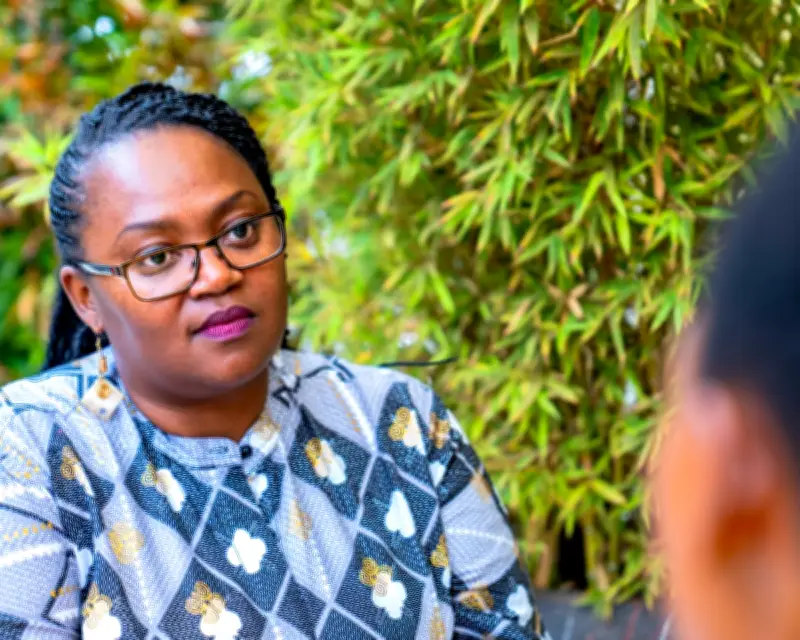
Sabine Nkusi, who witnessed the horrors of the genocide against the Tutsi in Rwanda as a 14-year-old, has returned to her homeland to lead a campaign against gender-based violence. Fleeing Kigali with her family, she saw women lying dead by the road, many victims of sexual abuse. She made a vow to God that if she survived, she would dedicate her life to restoring dignity to women who suffered such brutality. "I said to God … if I’m ever going to make it out of here … I want to be part of something … a vehicle to end that sort of violence," she recalled.
More than three decades later, Nkusi is back in Kigali as the lead on gender and sexual-based violence for Tearfund, a UK-based Christian development charity. For the past ten years, she has organized retreats where survivors share their stories with each other and with faith leaders, engage in advocacy, and build strong local networks. Her team has conducted 12 retreats, primarily in African countries, but also in Asia.
In an interview in Kigali, Nkusi said returning to the city to lead a workshop for 12 survivors of abuse "feels right." At the workshop, Francine (name changed) shared how she contracted HIV from her abusive partner after resorting to sex work to feed her siblings when separated from her parents during the genocide. "You can feel very isolated because you are stigmatised," she said. "But I’ve come to see that I am valued." Sharing is seen as a crucial part of healing, as women are often blamed for their experiences, and breaking the silence is key to their recovery.

Ending Gender-Based Violence
Nkusi believes it is possible to end gender-based violence in her lifetime, despite grim statistics. According to the UN, one in three women globally have experienced sexual and gender-based violence, mostly within their own relationships. The rate approaches 50% in war-torn countries like the Democratic Republic of the Congo. In Rwanda, 41% of women have experienced such violence in their homes.
As a Christian charity, Tearfund is well-positioned to reach conservative church communities where the Bible is often used to justify female subservience. Such attitudes, Nkusi says, make abuse and silence more likely. Her team runs courses called Transforming Masculinities worldwide, challenging views about women in marriage using scripture and engaging couples in listening exercises. Research by Stellenbosch University in South Africa found that in communities in the DRC where the programme ran for two years, rates of intimate partner violence dropped by more than half.
Changing Attitudes
Many participants in Transforming Masculinities are initially reluctant, including Edouard Buregeya, a Pentecostal pastor from Kigali who attended the course four years ago. He learned that his attitude towards his sexual relationship with his wife, Chantal, was wrong. "I thought whenever I wanted my wife, she had to give it to me," he said. After the course, he confessed his wrongdoing to her. Chantal described the moment as a "miracle." The couple now share their experience with their church and community, counseling couples in conflict and teaching their three sons about respect and equality.
Back in her London home, Nkusi feels a keen responsibility as a mother to encourage her young adult sons to think about what it means to be a man and how to view women in relationships. She recalled sharing with her eldest son how traits like not crying, being strong, and being a provider have traditionally been seen as defining for men. But now, she added, "the currency … is emotional intelligence."
*Name changed to protect identity