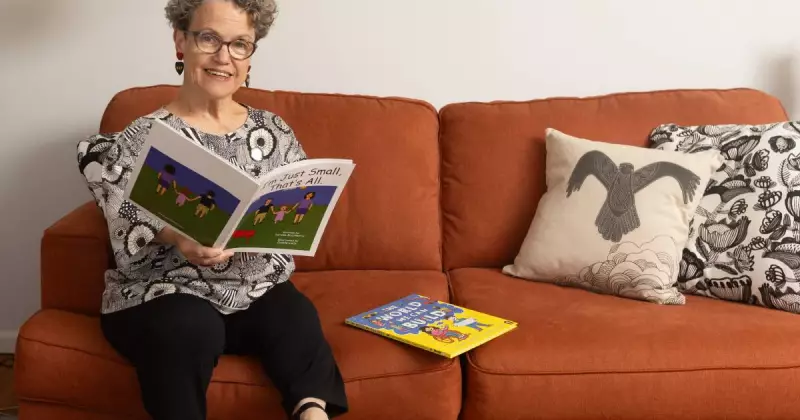
In the 1970s, a high school guidance counsellor in Armidale delivered a crushing verdict to student Maree Jenner. Told that nursing and teaching were unsuitable careers due to her stature, Jenner, who lives with dwarfism, was advised she wouldn't reach hospital beds and children wouldn't listen to someone their own size.
Decades later, Maree Jenner has worked as both a registered nurse and an educator, proving that initial assessment profoundly wrong. Now in her sixties and living on the Central Coast, she recently served as one of the Australian ambassadors for International Day of People With Disability (IDPwD) on December 3, advocating for a more inclusive society.
From Schoolyard Bullying to a Life of Advocacy
Growing up as a person of short stature in a small Northern Tablelands town, Jenner was acutely aware of being different. Primary school was particularly tough, with some children mocking and laughing at her. The bullying reached a peak in Year 3 when one boy targeted her relentlessly, making her dread attending school.

Her mother encouraged her to stand up for herself, leading to a pivotal visit to the boy's home. "I said quickly to his mum, 'Your son is mean to me'," Jenner recalls. The mother, seeing the size difference between Jenner and her son, intervened. "It was me learning at that age that I needed to speak out and speak up," Jenner says, marking the early roots of her advocacy.
Building a Career Against the Odds
Undeterred by the discouragement she faced, Jenner pursued her goals with determination. She became a registered nurse in Sydney and later worked for the Department of Health as an educator for young people with intellectual disability. Her career path was diverse and international, including a role managing a team at the International Criminal Court in The Hague and working as a photographer at the NSW State Library, where adjustments like step stools were made in the darkroom.
Today, she is back in the classroom, not as a student but as an educator promoting inclusion. She volunteers with Short Statured People of Australia and consults for Accessible Art NSW, helping make performance spaces and galleries more accessible. Through Social Futures' Inclusion in Schools program, she encourages children to value difference.
"People with disabilities have attitudinal barriers as well as built environmental, societal, organisational and institutional [barriers]," Jenner explains. "You take all these barriers away and we are able to get involved and included."
The Persistent Barriers to True Inclusion
Despite progress since the 1970s, Jenner emphasises that society remains far from truly inclusive. "The world certainly wasn't built for me, or other people with dwarfism," she states bluntly. Counters are often too high, and patronising attitudes persist. She has been compared to Disney's dwarves, patted on the head as an adult, and even physically picked up in social settings when she was younger.
Disturbingly, she recalls seeing social media pages titled "Midget Spotting in Australia" as recently as last year, highlighting the ongoing use of derogatory language. Her experience is echoed by others in the disability community. Connor Wink, a Newcastle singer with vision impairment, notes persistent misconceptions. "Sometimes people think that we're helpless or we live miserable lives," he says. "We are human, we want to socialise, we want to get out."
A Data-Driven Case for Change
The need for systemic change is underscored by official statistics. According to the government's 2022 Disability, Ageing and Carers report, about 5.5 million Australians live with a disability. Of those surveyed, 26.4 per cent reported difficulty accessing buildings or facilities, and one in ten people aged 15 and over had experienced discrimination.

Common difficulties include moving around buildings, accessing handrails or ramps, and finding suitable car parking. Andrew Vodic, CEO of the Community Disability Alliance Hunter, points out that accessibility often relies on goodwill rather than ingrained practice. "When designing things, people don't consider the potential needs to make something more accessible beyond compliance," he says, citing examples like new ambulant toilets placed up a flight of stairs.
Charting a Path Forward: From Access to Inclusion
For Jenner, the solution starts with consultation. She tells school children that the most important step is asking people with disabilities what support they need. "We need to design spaces and places with people with disabilities at the table with all lived experiences, not just physical," she asserts. She also calls for greater representation of people with disability in media and advertising.
Jill Duncan, the University of Newcastle's lead for equity, diversity and inclusion, agrees that while intent is good, strategic action is lacking. "Every year I see improvements, but also regularly, as a person who is hard of hearing, I feel excluded in the community," Associate Professor Duncan admits. She calls for measurable goals from councils, such as specific targets for repairing footpaths or improving playgrounds, while emphasising that inclusion is everyone's responsibility.
Reflecting on her role as an IDPwD ambassador, Jenner feels proud, though she was the oldest in the cohort. She was heartened by the diverse representation, encompassing both visible and hidden disabilities. Looking at the students she teaches, she remains hopeful. "I hope that by the time the children leave school, we have acceptance," Maree Jenner says, her lifetime of defiance and advocacy pointing the way toward a more inclusive future for Australia.