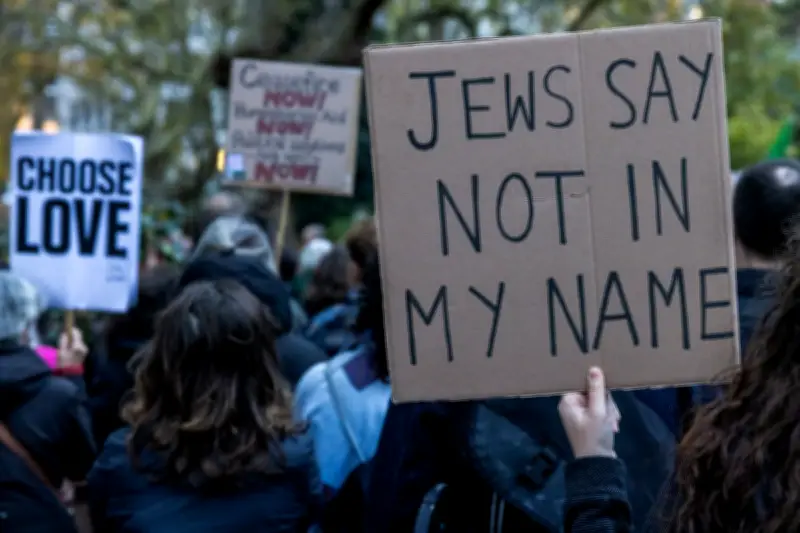
In an opinion piece for Guardian Australia, Sarah Schwartz, a Jewish Australian writer and activist, warns that the newly announced royal commission into antisemitism could have unintended consequences. She argues that the inquiry risks conflating legitimate criticism of Israel with antisemitism, thereby alienating Jewish Australians who support Palestinian freedom.
The Royal Commission's Terms of Reference
Prime Minister Anthony Albanese announced the royal commission in response to rising antisemitic incidents in Australia. The commission is tasked with investigating the nature, prevalence, and causes of antisemitism, including its connection to anti-Zionism. Schwartz notes that the terms of reference explicitly include 'anti-Zionism' as a potential form of antisemitism, which she says could chill free speech and activism critical of Israeli policies.
According to Schwartz, many Jewish Australians feel that their identity is being weaponized to silence dissent. She writes: 'The royal commission risks creating a climate where Jewish critics of Israel are treated as traitors or self-hating Jews, and where non-Jewish advocates for Palestinian rights are branded antisemites.'

Rising Antisemitism in Australia
The decision follows a spike in antisemitic incidents reported by the Executive Council of Australian Jewry, which documented a 738% increase in the first half of 2024 compared to the previous year. The escalation has been linked to the Israel-Gaza conflict. However, Schwartz contends that the government's response may be counterproductive.
She points out that the royal commission's narrow focus on antisemitism, without a parallel inquiry into Islamophobia or other forms of racism, could deepen divisions. 'By singling out one form of hatred, the government risks alienating communities that feel their own experiences of bigotry are being ignored,' she writes.
Voices from the Jewish Community
Schwartz is not alone in her concerns. Other Jewish organizations, such as the Jewish Council of Australia, have also expressed reservations. The council's director, Dr. Rebecca Forgasz, told the ABC that the royal commission must distinguish between antisemitism and political disagreement. 'We need to protect Jewish Australians from real hate, but not at the expense of shutting down legitimate debate about Israel's actions,' she said.
According to a recent poll by the Australia Institute, 42% of Australians believe criticism of Israel is often labeled as antisemitic unfairly. Schwartz argues that the royal commission could exacerbate this trend.
Implications for Palestinian Advocacy
Schwartz emphasizes that the royal commission's mandate could have a chilling effect on pro-Palestinian activism. She notes that several Palestinian rights groups have already reported being targeted by complaints of antisemitism. 'The commission could become a tool to delegitimize the movement for Palestinian freedom,' she warns.
The Australian government has allocated $5 million for the commission's operations, which will include public hearings and submissions. Schwartz calls for the commission to engage with Jewish voices who dissent from the pro-Israel mainstream, ensuring that the inquiry does not become one-sided.
She concludes: 'A royal commission that fails to listen to Jewish critics of Israel will not only be flawed but will also deepen the very divisions it purports to heal.'