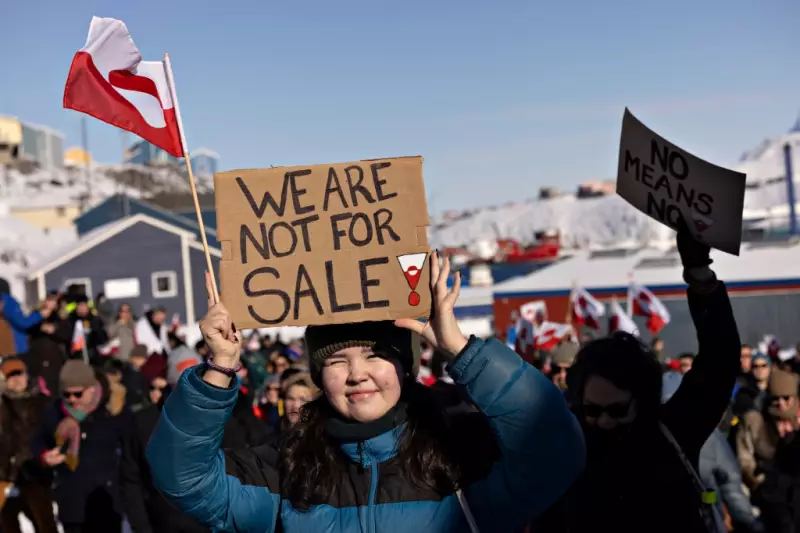
In a landmark move for Arctic development and European energy security, a coalition of European nations has thrown its substantial financial weight behind Greenland's ambitious green transition. The initiative, announced on January 7, 2026, establishes a formidable €2.5 billion (AUD $4.1 billion) strategic investment fund dedicated to propelling the world's largest island towards a sustainable future.
A Strategic Partnership Forged
The newly formed Greenland Green Transition Fund represents a powerful partnership between the European Union, several of its member states, and the Government of Greenland. This is not merely aid; it's a strategic investment designed to unlock Greenland's vast potential in renewable energy and responsibly sourced critical minerals. European Commission President Ursula von der Leyen framed the partnership as a dual-purpose endeavour: supporting Greenland's journey to energy independence while securing a stable supply of raw materials crucial for Europe's own green industrial revolution.
"This is a partnership of equals, focused on mutual benefit and our shared climate goals," President von der Leyen stated during the announcement in Nuuk. The fund will specifically target the development of wind, solar, and hydroelectric power projects across Greenland. This green energy will not only power local communities but is also earmarked to fuel future on-island processing of mined resources, dramatically reducing the carbon footprint of extraction.

Focus on Critical Minerals and Local Prosperity
At the heart of this agreement lies Greenland's geological wealth. The island is believed to hold some of the planet's most significant deposits of rare earth elements and other minerals essential for manufacturing everything from electric vehicle batteries to wind turbines. The European fund aims to ensure these resources are developed under the highest environmental and social governance standards, creating skilled jobs and lasting economic benefits for Greenland's 56,000 residents.
Greenland's Premier, Múte Bourup Egede, welcomed the commitment, emphasising local agency. "This fund gives us the tools to build our future on our own terms," he said. "It allows us to develop our natural wealth responsibly, ensuring value stays here in Greenland through local processing and job creation, while powering our communities with clean energy." The deal includes provisions for technology transfer and education programs to build local capacity.
Geopolitical Ripples in the Arctic
This substantial European investment is widely seen as a strategic counterbalance to growing global interest in the Arctic, particularly from China and Russia. By deepening economic and political ties with Greenland—a self-governing territory within the Kingdom of Denmark—the EU is securing a foothold in a region becoming increasingly central to resource security and climate resilience. Analysts suggest the move diversifies Europe's supply chains away from geopolitical rivals, reducing strategic vulnerability.
The fund's announcement signals a new chapter in Arctic development, one where climate action, economic development, and geopolitical strategy are inextricably linked. For Australia, a nation also rich in critical minerals and navigating its own energy transition, Greenland's model of leveraging green investment for sovereign development offers a compelling case study. The success or failure of this ambitious European-Greenlandic partnership will be closely watched worldwide as a test for ethical and sustainable resource development.