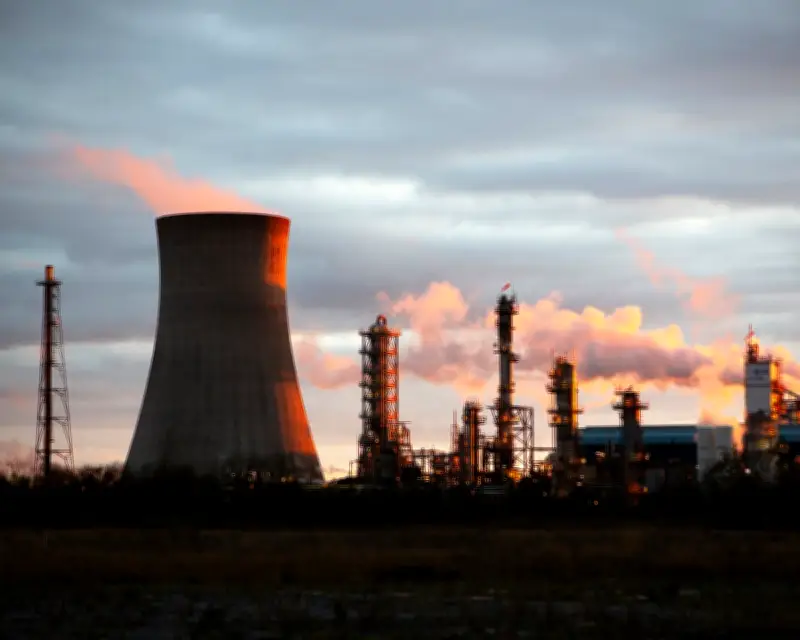
The International Energy Agency (IEA) has released a report stating that carbon capture, utilization, and storage (CCUS) is a critical technology for addressing the climate crisis. Without widespread deployment of CCUS, the world will not achieve net-zero emissions by 2050, the report warns.
IEA Report Highlights Urgency
The IEA's report, published on July 12, 2026, emphasizes that CCUS is not an alternative to reducing emissions but a necessary complement. The agency estimates that CCUS must account for nearly 15% of global emissions reductions by 2050 to meet Paris Agreement targets. Currently, only about 40 million tonnes of CO2 are captured annually, far below the billions needed.
According to IEA Executive Director Fatih Birol, “The math is clear: we cannot reach net-zero without carbon capture. It is vital for hard-to-abate sectors like cement, steel, and chemicals.”

Challenges and Opportunities
The report outlines significant challenges, including high costs, lack of infrastructure, and public opposition. However, it also points to recent policy support in the United States, Europe, and China as encouraging signs. The US Inflation Reduction Act includes tax credits for CCUS, while the EU has included it in its net-zero industrial strategy.
Environmental groups remain divided. Some argue that CCUS prolongs fossil fuel use, while others see it as a necessary tool. The IEA stresses that CCUS should be used alongside renewables and energy efficiency, not as a substitute.
Investment Needed
The IEA estimates that global investment in CCUS must reach $100 billion annually by 2030, up from just $4 billion in 2025. Private sector involvement is growing, with companies like ExxonMobil and Shell investing in large-scale projects. The report also highlights the potential for direct air capture (DAC) technologies, though they remain expensive.
“Carbon capture is not a silver bullet, but it is an essential part of the toolkit,” Birol said. “Governments and industry must act now to scale up these technologies.”