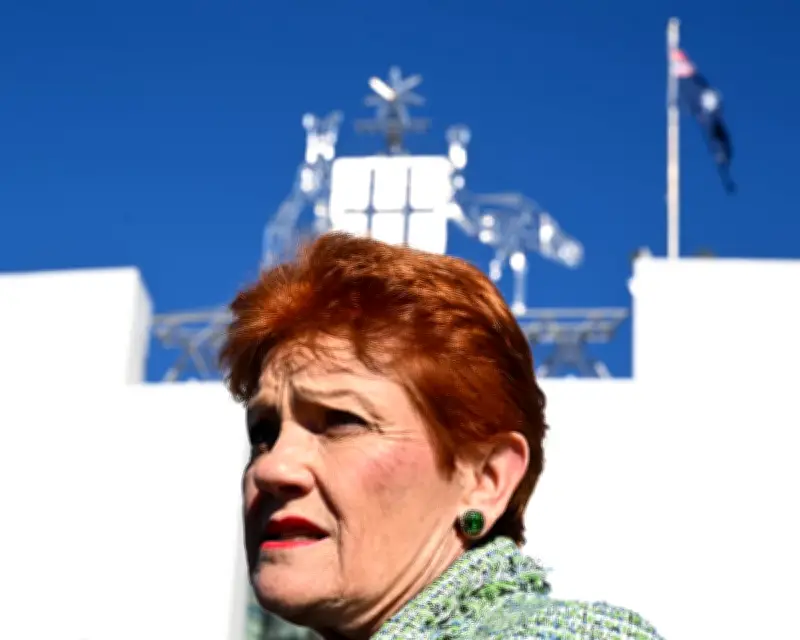
Pauline Hanson's One Nation is facing a significant electoral hurdle in its quest for government, as new analysis reveals the party would need to capture three-quarters of the 107 upper house seats in outer metropolitan and rural and regional areas to secure a majority. This finding, from pollster George Hasanakos of DemosAu, underscores the challenge posed by inner metropolitan electorates where One Nation's support remains weak.
One Nation's Rise and the 'Unknown Territory'
One Nation has surged from a distant 6% of the vote in the last federal election to first or second in recent polls, upending Australian politics. However, this rise has introduced significant uncertainty for election forecasters. Traditionally, pollsters could rely on historical preference flows between Labor and the Coalition, but the emergence of One Nation as a major force has changed the dynamics.
“We’re in a situation in the polls now where One Nation is the lead conservative party,” Hasanakos said. “But they’ve taken a large portion, perhaps half, of all the conservative voters that used to vote for the Coalition. And so the proportion of Coalition supporters who are not fans of Pauline Hanson, all of a sudden they’ve become a larger share of the remaining Coalition voters. So this could very well impact preference flows.”

Preference Flows and Seat Projections
In the 2025 election, One Nation was among the final two candidates in only two seats and reached the final three in just 26 seats. But DemosAu's March MRP poll suggests that on current numbers, a One Nation candidate would make the final three in well over 100 seats. Despite this, the party’s poor performance in inner metropolitan electorates—which account for 43 seats—means it must dominate the 107 seats in outer metropolitan (45 seats) and rural and regional areas (62 seats) to form government.
Preference flows are now harder to predict because One Nation draws support from former Coalition and Labor voters. How-to-vote cards, which influence about 40% of major party voters, may also shift allegiances. Murray Goot, emeritus professor at Macquarie University, noted that “a significant number of voters will simply follow the cards,” making polls that ask for preferences “misleading to some extent.”
Coalition and One Nation: A Potential Alliance?
The data highlights that while One Nation is strong in rural and regional areas, it lacks a foothold in cities. Goot suggested that the “interesting question” is whether a combination of One Nation and Coalition seats could approach a majority. “And for that, the Coalition has to win some metropolitan seats,” he said. Liberal frontbencher Dan Tehan has stated that coalition with One Nation is “not even being talked about,” but the math may force discussions.
Pauline Hanson has expressed ambitions to run for the House of Representatives in 2028 and believes she could serve as prime minister. However, without a clear path to government, the party's influence may be limited to shaping policy from the crossbench.