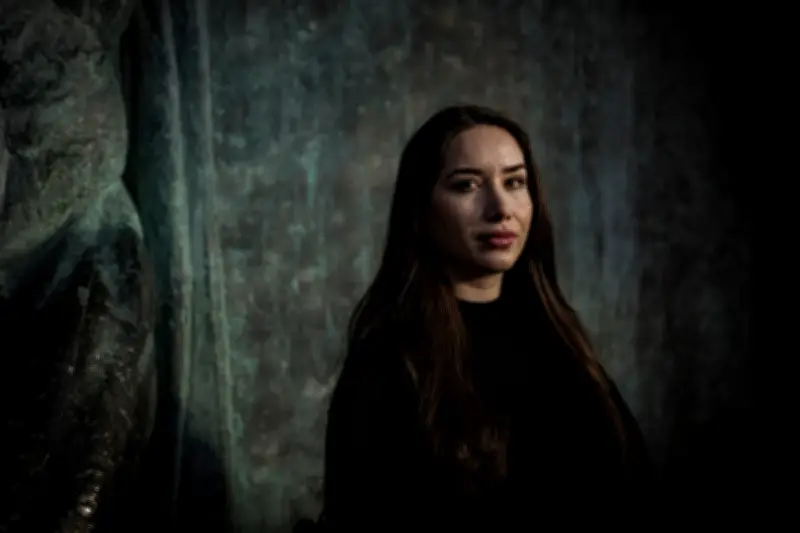
Marziyah Razi arrived in Australia at age 17 with only a basic grasp of English, having spent three years in an Indonesian refugee camp with makeshift classes. Now 28, she has been admitted as a lawyer, fulfilling a dream she describes as "a dream that came true." Her journey stands in stark contrast to recent remarks by One Nation leader Pauline Hanson, who claimed Australia faces a "growing language problem" due to immigration, calling it a risk to "social cohesion."
Hanson's Claims and the Census Data
In a National Press Club address last month, Hanson cited the 2021 census, stating that "one in four people, 23%, speak a language other than English at home, the most common being Mandarin and Arabic." She also noted that 872,000 people self-reported as speaking English "not well" or "not at all." However, that figure represents just 3.4% of Australia's population and includes over 100,000 babies and toddlers. One Nation's policies include mandating English-speaking for new arrivals and halting government-funded translation services.
Razi's Response: Migrants Bring Skills and Values
Razi, who speaks Farsi, Dari, and English, argues that such rhetoric undermines migrants' contributions. "Not everyone has the opportunity to learn English in their countries. When they come here, they can learn English, just like myself, and they can contribute back to the community," she said. After arriving, she completed a six-month intensive English course in Melbourne before resuming high school. "It helped me to get to know the Australian culture and how things work, and also to be more confident with my English," she recalls. She adds, "Learning English is not that difficult. It's not like flying a jet or something."

The Importance of Language Support Services
Razi credits the intensive language school with easing her integration into Australian systems, including legal, education, and cultural frameworks. "Those supports are really, really crucial and important for newcomers," she says. She has worked for a gambling harm prevention program for multicultural communities, using her language skills to assist non-English-speaking clients. "A lot of people may not be able to receive the support just because of the language barrier," she notes. Razi became an Australian citizen in 2020 and hopes to use her law degree to be a "voice for the voiceless," driven by witnessing injustice toward refugees and women.
Linguistic Diversity in Australia
According to the 2021 census, 5.6 million people (about 22% of the population) speak a language other than English at home, while 72% speak only English. The most common other languages are Mandarin (2.7%), Arabic (1.4%), Vietnamese (1.3%), Cantonese (1.2%), and Punjabi (0.9%). Additionally, 167 First Nations languages are actively spoken. Professor Catherine Travis, a linguist at the Australian National University, says it is "a total misconception to assume that allowing other languages to be spoken detracts from social cohesion." She argues it could enhance cohesion because "people feel better received in Australia."
One Nation's Stance and Expert Critique
One Nation's policy states: "The English language is the glue that binds our society together. If you do not speak English, under no circumstances should you be able to settle in Australia." The party also opposes translation services, claiming they "indulge the view that not speaking English is a perfectly legitimate decision." Dr. Zareh Ghazarian, a politics lecturer at Monash University, says translation services are vital for informing people of government decisions, rights, and responsibilities, empowering them as active citizens. He highlights their role in disseminating health information.

Community Voices: The Value of Multilingualism
Ramya Assaad, a Melbourne mother who migrated from Lebanon in 2007, used her Arabic skills during the pandemic to help promote government support schemes at a non-profit. "I was building a bridge … I don't believe that this has affected me or affected the community in any negative way," she says. Ann Liao, a climate advocate and one of over 680,000 Mandarin speakers in Australia, speaks Mandarin to her parents, who are enrolled in federally funded English classes. Liao's mother, who also speaks Russian, hopes to pass the citizenship test (conducted only in English) and vote in the next federal election. "The big motivation for her [is] to be able to exercise her right as a person in a country that she now calls home," Liao says. Despite limited English, her mother already volunteers at a soup kitchen, using her "limited English to ask 'How can she help?'"