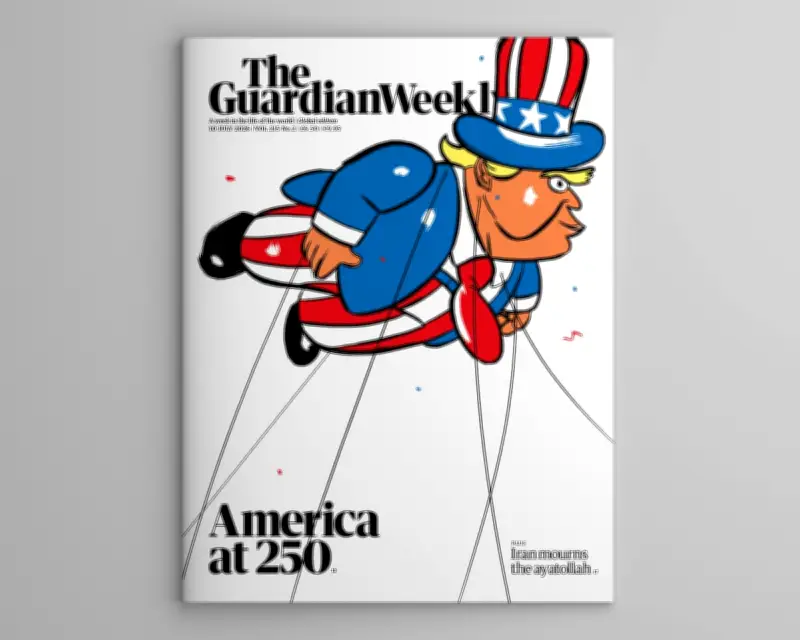
The 10 July issue of the Guardian Weekly delves into a range of pressing global issues, from the escalating climate crisis to political upheavals and cultural transformations. The cover story, titled 'A Load of Hot Air,' critically examines the gap between political rhetoric and action on climate change, highlighting the disconnect between ambitious net-zero pledges and the lack of concrete policies to achieve them.
Climate Commitments Under Scrutiny
According to the Guardian Weekly's analysis, many countries have made bold promises to reduce carbon emissions, but few have implemented the necessary measures to meet their targets. The article points out that global carbon dioxide emissions rose by 4% in 2025, despite widespread commitments to reach net-zero by mid-century. This discrepancy has led to growing frustration among climate activists and scientists, who argue that current efforts are insufficient to avert catastrophic warming.
One key example cited is the United States, where the Biden administration's climate agenda has faced significant legislative hurdles. The Inflation Reduction Act, passed in 2022, was hailed as a landmark achievement, but its implementation has been slow, and many provisions have been diluted or delayed. Meanwhile, China, the world's largest emitter, continues to build new coal-fired power plants, raising doubts about its pledge to peak emissions before 2030.

Political Turmoil in Europe
The issue also covers the political instability in Europe, particularly in France and Germany. In France, President Emmanuel Macron's government has been weakened by protests over pension reforms and a rise in far-right sentiment. The Guardian Weekly reports that Macron's approval rating has fallen to 32%, the lowest since the Yellow Vest movement in 2018. In Germany, Chancellor Olaf Scholz's coalition government is struggling to maintain unity amid disagreements over energy policy and fiscal spending.
According to the article, the far-right Alternative for Germany (AfD) has gained traction, now polling at 18% nationally, its highest level since 2017. This surge is attributed to growing public discontent with the government's handling of the economy and migration. The Guardian Weekly quotes a political analyst from the German Institute for International and Security Affairs, who warns that the rise of the AfD could destabilize the European Union's decision-making process.
Cultural Shifts and Social Movements
Beyond politics, the issue explores cultural shifts, including the impact of artificial intelligence on the creative industries. The Guardian Weekly highlights the growing use of AI in music and film production, raising questions about copyright and artistic integrity. A notable example is the recent controversy over an AI-generated song that mimicked the style of a famous pop star, sparking debates about the future of creativity.
The magazine also features a piece on the global movement for reparations for slavery, which has gained momentum in the Caribbean and parts of Africa. The article notes that several Caribbean nations have formed a commission to seek reparations from former colonial powers, including the United Kingdom and France. According to the Guardian Weekly, the total amount sought could exceed $100 trillion, a figure that has been met with skepticism by some economists.
Science and Health Breakthroughs
In the science section, the Guardian Weekly reports on a breakthrough in malaria vaccine development. A new vaccine developed by the University of Oxford has shown 85% efficacy in clinical trials, offering hope for millions in sub-Saharan Africa. The vaccine, which is cheaper to produce than existing alternatives, could be rolled out as early as 2027. The World Health Organization has called it a 'game-changer' in the fight against malaria, which kills over 600,000 people annually.
Another health story focuses on the rising rates of antimicrobial resistance (AMR), which the Guardian Weekly describes as a 'silent pandemic.' The article cites a study from the Lancet, which estimates that AMR could cause 10 million deaths per year by 2050 if left unchecked. The piece calls for greater investment in new antibiotics and public health measures to combat the spread of resistant infections.

In-Depth Analysis and Opinion
The issue concludes with a series of opinion pieces, including a commentary on the state of democracy in the United States. The author argues that the January 6th hearings have failed to hold key figures accountable, leading to a erosion of trust in democratic institutions. Another opinion piece discusses the future of the European Union, suggesting that the bloc must reform its decision-making processes to remain effective in a multipolar world.
The Guardian Weekly's 10 July issue offers a comprehensive overview of the challenges facing the world today, from climate change and political instability to technological disruption and public health crises. With its blend of hard-hitting journalism and thoughtful analysis, the magazine continues to be a vital resource for readers seeking to understand the complexities of our time.