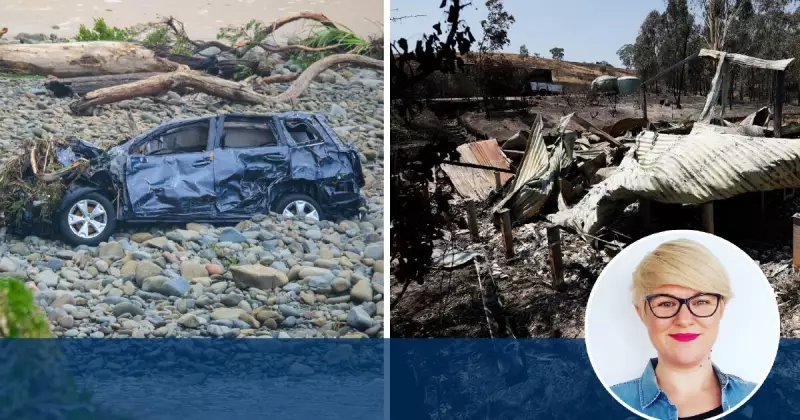
As Victoria reels from a devastating one-two punch of bushfires and flash flooding in January 2026, the stark human and economic cost of climate-fuelled disasters is again laid bare. Hundreds of homes have been destroyed, tens of thousands of livestock lost, and communities evacuated. In a separate event, intense storms triggered flash floods that washed multiple cars out to sea, forcing further evacuations.
The Rising Price of Climate Inaction
While these events are often framed as unavoidable natural disasters, experts argue they are the direct and foreseeable consequence of climate change, which is turbocharged by the burning of fossil fuels. Australia, as the world's third-largest exporter of fossil fuels, continues to expand coal and gas production, yet the enormous financial burdens of recovery are falling on ordinary households, businesses, and governments.
The insurance sector provides a clear economic signal of the escalating risk. Following the major east coast floods of 2022, Australians claimed over $7 billion on home insurance, nearly double the previous record. In response, premiums surged by an average of at least 14%, the largest rise in a decade. Research from The Australia Institute confirms that climate change is driving this unsustainable increase, making coverage unaffordable for many.

"Insurers are not activists. They price risk," the analysis states. "And what they are telling us - loudly - is that climate impacts are accelerating faster than our political response." The report warns that when 'once-in-100-year' events occur every few years, the insurance model breaks down, leaving hundreds of thousands of households underinsured or without cover entirely.
A Call for a Climate Disaster Levy
In response to this crisis, there is a growing demand for the introduction of a climate disaster levy on fossil fuel companies. Proponents argue that the industries most responsible for the pollution driving extreme weather should help foot the bill for the damage caused.
The Australia Institute has long advocated for a National Climate Disaster Fund, financed by a levy on carbon pollution. The institute's modelling suggests that a levy set at $30 per tonne would have raised approximately $44 billion in a single year. This fund could be used to support disaster response and recovery for households, businesses, and local governments.
This proposed measure highlights a profound imbalance in current policy. While the federal government has committed up to $1 billion over five years to a Disaster Ready Fund, this is vastly overshadowed by the $14.5 billion in fossil fuel subsidies provided by Australian governments annually.
The Reckoning for Communities and the Economy
The consequences of unaffordable insurance extend far beyond individual balance sheets. When coverage collapses, it undermines whole communities: property values fall, lending becomes difficult, and economic resilience evaporates. The Australia Institute research indicates that families forced to abandon insurance could lose three-quarters of their wealth if their home is destroyed.
"The cost of fossil fuel expansion is not abstract or theoretical," the argument states. "It is already burning and flooding its way through our suburbs and regions, showing up in insurance bills and government budgets." Each new coal mine or gas field approval, often defended as insignificant globally, cumulatively adds to the problem, increasing the likelihood and severity of future disasters.
The choice facing Australia is increasingly clear. It is not between the economy and the climate, but between establishing a fair mechanism to make polluters contribute, or continuing to pay a far higher price later—through burned homes, broken insurance markets, and shattered communities. As another summer of devastation unfolds, the question remains: how much longer will Australians alone bear the cost of damage turbo-charged by fossil fuel companies?