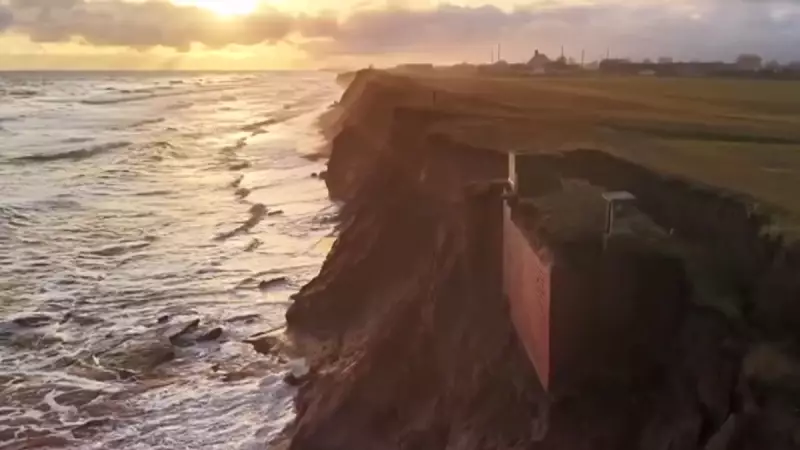
A relic from the height of Cold War tensions is now itself under threat, perched precariously on the edge of a crumbling cliff on the English coast and facing imminent destruction by the sea.
A Hidden History Exposed by the Elements
This underground bunker, constructed in 1959 as part of Britain's civil defence network, was originally built more than 90 metres inland for secrecy and safety. Today, it hangs in open view, a victim of one of Europe's fastest-eroding coastlines. "You look at it now, hanging out of a cliff, it's testament really to the damage that the sea has done," remarked local journalist John Prince.
The structure is one of hundreds built across the UK in the late 1950s, when fears of nuclear conflict were rampant. Designed for the Royal Observer Corps, volunteers were trained to monitor and report radioactive fallout from these sites, though they were never used for their intended purpose and were decommissioned in the 1990s.

Race Against Time and Tide
With the East Yorkshire coastline losing an average of two metres of land every year, experts warn the bunker could plunge into the North Sea within a matter of days. The rapid erosion has been accelerated by climate change, leading to more frequent and severe storm surges. "It is anticipated to get worse with our changing climate," explained Dr Alex Riley from the University of Hull.
This dramatic scene is one that resonates with communities across Australia, where coastal erosion also poses a constant threat to shoreline properties and infrastructure. "We can build coastal defences, they are expensive, but for the minute it's just something we have to learn to live with," Dr Riley added, highlighting a global challenge.
A Final Glimpse Before the Fall
Despite safety warnings from authorities, locals and curious visitors have been flocking to the site to catch a final glimpse of this typically unseen slice of history before it is lost forever to the waves. The bunker's sudden appearance and precarious fate have turned it into an unexpected and poignant tourist attraction.
The sight of the Cold War-era nuclear bunker teetering on the cliff's edge serves as a powerful double reminder: of a past global standoff now buried by time, and of the present and escalating natural forces shaped by our climate, which spare neither history nor the homes built in its path.