The global playground phenomenon known as '6-7' has finally begun to wane, leaving many parents and educators breathing a collective sigh of relief. This viral meme, which dominated 2025, involved children shouting "six seven" while mimicking a weighing gesture with their hands. Despite having no inherent meaning, it spread like wildfire across social platforms, classrooms, and sporting events worldwide, often to the utter bewilderment of the adult population.
More Than Just Annoyance: The Power of Meaningless Play
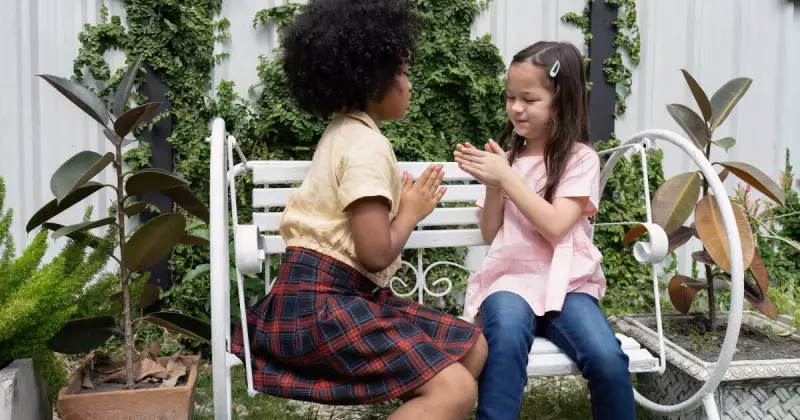
While most adults met the craze with confusion and mild irritation, media scholars saw something far more familiar. For experts like Rebekah Willett, Amanda Levido, and Hyeon-Seon Jeong, the 6-7 trend was a contemporary echo of the secret languages and coded play that have defined childhood for generations. From Pig Latin and the ubiquitous 'cool S' doodle to hand-clapping game remixes, children have long carved out cultural spaces that operate by their own rules.
The scholars argue that the very meaninglessness of '6-7' was its superpower. It created an easy barrier for inclusion and exclusion among peers and, most importantly, served as a potent tool to annoy and confuse adults. This desire for agency is a classic feature of children's culture, flourishing in the gaps between adult-directed activities—on playgrounds, online, and even during pandemic lockdowns.

From Classrooms to Burger Joints: The Viral Domino Effect
The meme's impact was tangible and widespread. Teachers reported constant classroom disruptions from spontaneous outbursts of "6-7!" Some began avoiding questions that might yield the number 67 as an answer. The trend escaped school grounds, infiltrating public life. In a notable example, the In-N-Out Burger chain in the U.S. banned the number 67 from its digital ordering system to prevent chaos.
Its cultural footprint expanded in creative ways. In the United States, children dressed as the numbers 6 and 7 for Halloween. In Australia, an amusing rumour circulated that houses with '67' in their address were selling for astronomical prices. The meme's simplicity was key to its global reach, allowing even young Korean children to adopt the English phrase and deaf children to participate through sign language.
A Long History of Secret Worlds and Remixed Games
The 6-7 craze sits within a rich historical tradition. Scholars have documented children's use of 'back slang' and nonsense phrases since before World War I. More recent examples include words like 'booyah' and 'skibidi'. Similarly, children have always adapted and remixed games to reflect their times and environments.
In South Korea, the game 'Mugunghwa kkochi pieotseumnida' (The rose of Sharon has bloomed) is a localised version of 'Red Light, Green Light'. Another game, 'Hwang-ma!', where children playfully hit a friend upon spotting a gold-coloured car, mirrors the 'Punch Buggy' game popular in Australia and the U.S. Historically, playground chants have been rewritten to celebrate pop culture icons, from 1970s soccer legend George Best to Elvis Presley.
Today, digital platforms like Roblox have become new frontiers for this culture, where children create 6-7 themed avatars and games, ensuring the meme's evolution continues online.
Valuing the Hidden Worlds of Childhood
As the dust settles on the 6-7 phenomenon, the scholars emphasise its significance. While much focus is placed on the omnipresence of technology in young lives, this episode highlights how children use these tools—and older, analogue traditions—to innovate, connect, and assert their independence.
The secret languages and seemingly nonsensical games of childhood are not just silly phases. They represent a vital, creative space where children exercise social power, build community on their own terms, and, yes, successfully get under the skin of the adults who oversee their world. With or without the internet, this hidden culture will continue to thrive and transform.