Doctors Call on Albanese Government to Ditch Oil for Clean Energy
Healthcare professionals across Australia are rallying behind an open letter organised by Doctors for the Environment Australia (DEA), demanding urgent action from the Albanese Government to accelerate the shift away from oil and toward clean energy sources. These medical experts, including GPs, specialists, and other practitioners, argue that Australia's heavy reliance on global oil supplies is not only driving up living costs but also posing significant public health risks, particularly as conflicts in regions like the Middle East disrupt fuel markets and create instability.
Health and Economic Risks of Oil Dependence
Dr Kate Wylie, Executive Director of DEA and a practicing GP, highlighted that Australia's dependence on oil exposes households to rising expenses for fuel, groceries, and mortgage payments, while also taking a toll on physical and mental health, especially in outer suburban and regional areas. "Australia has a clear alternative to polluting fuels," Dr Wylie stated. "A shift to clean energy, powered by our abundant sun and wind, would reduce our reliance on polluting fuels, while more investment in electric transport infrastructure would particularly benefit rural communities where car reliance is highest." The open letter emphasizes that reducing oil dependence is a critical imperative for health, environmental sustainability, and cost of living pressures.
Global Instability and Local Impacts
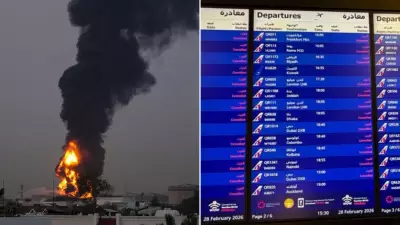
The letter points out that Australia's oil dependence leaves households, communities, hospitals, and essential services vulnerable to global instability. Recent catastrophic events in the Middle East have starkly demonstrated this dependency, with disruptions in oil markets leading to immediate effects in Australia. Transport fuel costs increase, groceries become more expensive, and mortgages grow more sensitive to interest rate rises. For families already under financial strain, this exacerbates stress and can hinder access to essentials like healthcare, worsening mental health issues such as anxiety, depression, and sleep disturbances.

Environmental and Health Consequences
Beyond economic impacts, the letter warns of the human and environmental costs associated with oil reliance and conflict. Armed conflicts cause tragic loss of life, profound physical and psychological harm, devastation of communities, destruction of health systems, and displacement of populations. Additionally, war damages the natural environment through pollutants from missiles, landmines, and other weapons that contaminate soils and water. At the same time, the continued burning of oil in Australia and globally drives climate change, leading to health harms like extreme heat, severe weather events, and infectious diseases. Air pollution from oil combustion contributes to heart disease, respiratory illnesses, and premature death.
Pathway to a Cleaner Future
Australia is uniquely positioned to change course, according to the DEA. The country's abundant solar and wind resources can power clean transport, reduce air pollution, and protect households from volatile fuel prices. Electrifying transport, funding infrastructure in rural communities, and strengthening sustainable farming systems would improve health outcomes while building a more secure and resilient economy. Notably, the rise of renewable energy is already underway, with record generation supplying more than half of total energy needs for the first time in the last three months of 2025. The open letter calls on governments at all levels to act now and accelerate this transition to clean energy for a healthier, more sustainable, and resilient Australia.