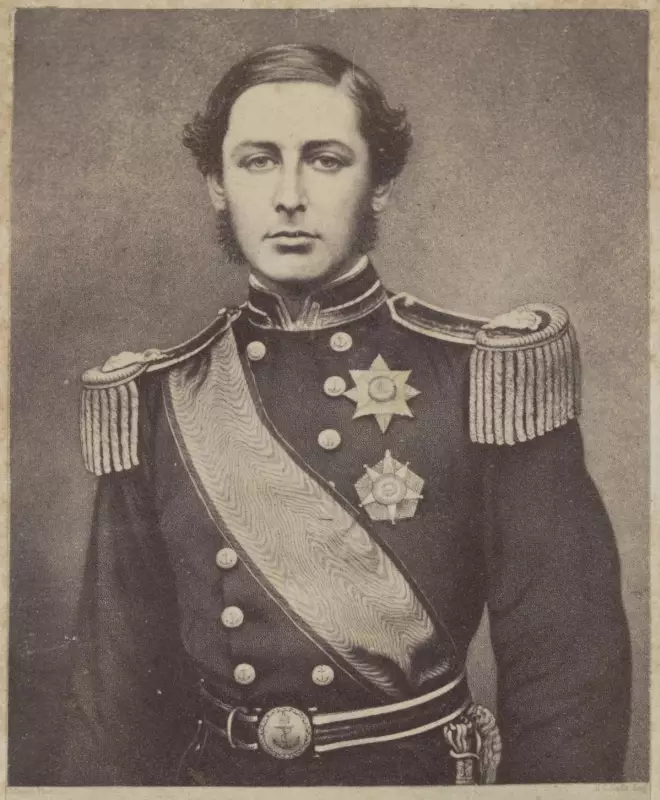
The year was 1867, and the small Swan River colony was buzzing with a level of excitement it had never known. Word had arrived from Britain that Queen Victoria's second son, Prince Alfred, the Duke of Edinburgh, would be touring Australia. For the isolated settlement of Perth, this promised to be an unprecedented event: the first-ever visit by a member of the royal family.
The Buildup to a Letdown
Colonial administrators and citizens, eager to prove their loyalty, swung into immediate action. As historian J.H.M. Honniball recorded, the Duke of Buckingham's despatch to Governor Hampton suggested the Prince "would probably visit the colony." Local newspapers, however, urged preparedness regardless. The Perth Gazette and West Australian Times declared in July 1867 that "we should be prepared for a reality."
Committees formed and elaborate plans were drawn up. The colony envisioned triumphal arches at Fremantle Jetty, St George's Terrace, and Guildford. A special bodyguard was proposed, and a large banqueting room was to be added to Government House. Banners were prepared with slogans like "Long live the Sailor Prince" and "Welcome to the Duke of Edinburgh." The community hoped he would even open new bridges across the Swan River.

For months, the colony waited on "the tiptoe of expectation," as The Inquirer put it. Yet, a nagging unease persisted. That anxiety proved justified when, in late October, rumours from Albany confirmed the worst: HMS Galatea had sailed right past Western Australia, making its first Australian landfall in Adelaide.
Disappointment and Dismantled Arches
The news of the royal snub was met with profound disappointment and anger. On November 6, 1867, The Inquirer confirmed the Duke's arrival in Adelaide. The reaction was swift and symbolic. The paper reported that "a large number of prisoners were at once detached to demolish the canopy in St George's Terrace." In Fremantle, the hastily erected arches and flagstaffs were similarly torn down amid what was described as a "universal feeling of disgust."
Prince Alfred's tour of the eastern colonies was itself historic and dramatic, marked by an assassination attempt in Sydney in March 1868 from which he recovered. Meanwhile, back in Perth, the sense of having been overlooked lingered.
A Belated But Victorious Celebration
Perhaps sensing the slight, the British government arranged for the Duke to return. In early 1869, a new despatch arrived, announcing Prince Alfred would finally visit Swan River. Preparations kicked off once more, albeit with perhaps a little less blind optimism.
On February 3, 1869, the Galatea finally steamed into view off Fremantle. "In the town the arrival produced an intense state of excitement," reported the Perth Gazette. The Prince was greeted by senior officials, and the next day his carriage entered Perth under a triumphal arch—admittedly not as fine as the one built 18 months prior.
The visit was a whirlwind of ceremony and social events. A loyal address from prominent citizens expressed that "no colony in Australia contains hearts more truly loyal" and noted the present visit would "efface the disappointment" of the earlier no-show. The Prince reciprocated, assuring them he had "keenly shared" their disappointment.
The highlight was a grand ball at Government House for 400 guests. In a notable sporting contest, the first cricket match between a British crew and a Western Australian eleven was held, with the local team emerging victorious. The visit concluded on February 7, but not without a final mishap: the royal launch grounded on the Swan River bar, only to be freed by a gang of convicts who earned a year's reduction in their sentences for their efforts.
Prince Alfred's departure marked the end of what the Perth Gazette rightly called "the most remarkable event in our Colonial life." It was a story of colonial ambition, very public disappointment, and ultimately, a joyous, if belated, celebration that cemented a unique chapter in Western Australia's history.