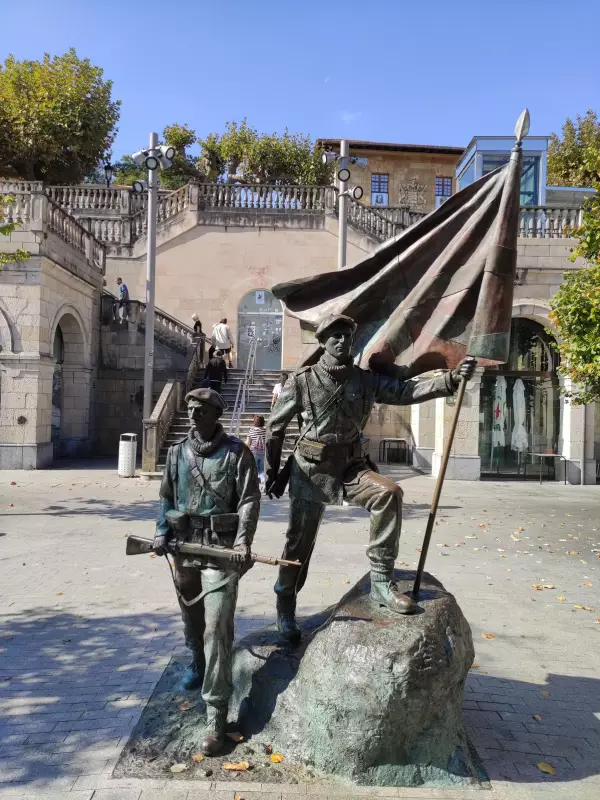
At first glance, the Spanish town of Guernica—Gernika in the Basque language—seems unremarkable. Its compact, walkable centre, dotted with cafes and colourful gardens, mirrors countless other towns across Spain. Yet, this place holds a unique and harrowing place in 20th-century history, forever marked by a single afternoon of terror.
The Day the Bombs Fell
The tranquillity of April 26, 1937 was shattered almost a year into the Spanish Civil War. The Nationalist forces, led by General Francisco Franco, permitted their fascist allies from Germany and Italy to unleash a devastating aerial assault on this Republican stronghold. For nearly four hours, Hitler's Condor Legion and Mussolini's Aviazione Legionaria bombed and strafed the town, a brutal testing ground for tactics later used in World War II.
Guernica was especially vulnerable. It was a Monday, market day, meaning the streets were busier than usual. Many buildings were constructed of wood, which fuelled uncontrollable fires. Guided by the notorious Colonel Wolfram von Richthofen, the attack aimed to break Basque resistance. While estimates vary, respected Basque historians believe around 1600 people were killed and nearly 900 injured, with many suffering horrific burns.

From Atrocity to Iconic Art
The global outcry was immediate, thanks to war correspondents like Australia's own Noel Monks. In Paris, the news deeply affected Spanish artist Pablo Picasso. He abandoned his original plan for a World Expo mural and instead poured his fury and sorrow into a monumental new work. That painting, titled "Guernica," became one of the most powerful anti-war statements ever created.
Though Franco eventually won the war and ruled Spain as a dictator until 1975, the painting's legacy endured. The original now resides in Madrid's Reina Sofia Museum, but a full-size tiled reproduction stands in Guernica itself, a permanent reminder just minutes from the central Plaza de los Fueros. This square displays chilling black-and-white photographs of the 1937 carnage, curated by the adjacent Museo de la Paz (Museum of Peace).
A Town Rebuilt in Peace
Today, Guernica is a testament to resilience. Reconstructed buildings like the Town Hall stand alongside survivors from the bombing, including the neoclassical Casa de Juntas (Assembly House) and the 15th-century Santa Maria de Gernika church. On a hillside above the town, the symbolic Tree of Guernica (Gernikako Arbola) grows within a temple-like structure, representing ancient Basque freedoms.
Nearby, the Parque de los Pueblos de Europa (Park of the Peoples of Europe) offers serene lawns shaded by oak and beech trees. Here, a poignant connection to other global tragedies exists: a gingko tree sourced from Hiroshima, the Japanese city devastated by an atomic bomb in 1945. The park also features sculptures by artists Eduardo Chillida and Henry Moore.
Life in Guernica now pulses with normalcy. The Monday farmer's market still thrives, and the sounds of children playing and birds chirping fill the air, the town being part of the UNESCO-protected Urdaibai Biosphere Reserve. Visitors can explore restored air-raid shelters, the Museo de Euskal Herria for Basque culture, and a statue of the 19th-century "Basque bard" Jose Maria Iparraguirre.
For travellers, Guernica makes for a compelling half-day trip from Bilbao, easily reached by bus or train in under an hour. Guided tours from Bilbao often combine a visit here with other coastal highlights like the Game of Thrones filming location at Gaztelugatxe.