As journalists, we at The Canberra Times are often tasked with holding power to account, a role that can sometimes cast a critical light on our city. But today, we set aside the critique for a celebration—a heartfelt ode to Canberra in its serene summer state, and specifically to the ever-evolving shores of Lake Burley Griffin.
The Secret Summer Bliss of the Capital
For those in the know, Canberra during the Christmas break is an open secret. The city empties out, transforming into a quiet, tranquil haven. While many flock to the South Coast or distant homelands, there is a unique pleasure in staying put. Imagine a state of pure bliss: walking the dog with the family along the lake, sharing a smile with passing cyclists, and untangling leashes with fellow dog owners. It’s in these simple moments that the city truly shines.
This peace invites reflection on Canberra’s journey. It’s a history that feels remarkably close. Many residents still remember the landscape before Lake Burley Griffin was filled, a testament to how recent and dynamic the capital’s story is. This proximity to the past is a powerful reminder that Canberra remains, endearingly, a work in progress.

From Dust Bowl to Vibrant Waterfront
The path of progress has seen its share of unexpected turns. Developments like the Molonglo Valley, the National Arboretum, the distinctive ASIO building, and the transformation of Braddon were not all part of a single, grand blueprint. Some were born of necessity, others from the vision of risk-takers and forward-thinkers inherent to a planned capital.
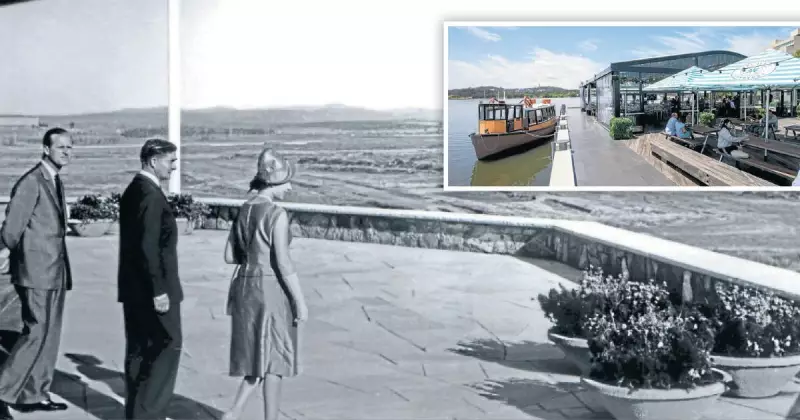
Yet, during a recent lakeside stroll, a question lingered: are we fully capitalising on this incredible asset? This thought surfaced even while enjoying an Aperol spritz at The Jetty, the delightful seasonal pop-up between the National Library and the National Gallery. Its temporary nature feels almost a shame; it’s the kind of vibrant social hub the lakefront deserves year-round.
Such experiences can stir a complex, if fleeting, regret. Why did it take so long for Canberra to cultivate these gems? Where was The Jetty for impressing university friends? Where were the thriving precincts of Lonsdale Street, Dairy Road, or Lindy Lee's Ouroboros sculpture decades ago? The city, for all its ongoing construction—particularly around Civic—now barely needs defending. Its appeal is self-evident.
A Monarch's View of Faith and Dust
But regret is pointless. The delights are here now. And their arrival is put into perspective by a striking historical image from the National Archives. It shows a young Queen Elizabeth II and Prince Philip at Regatta Point in 1963, surveying not a glittering lake, but a vast dust bowl.
The nation was in the grip of a severe drought, delaying the lake's filling. Two bridges stood forlornly in the dirt, waiting for water that had yet to come. Having first visited in 1954 when Canberra was barely an embryo of a city, the Queen would have witnessed tremendous growth by 1963. One can imagine her absorbing the atmosphere of faith and belief in the Canberra project, a testament to the collective determination to build a worthy capital.
That archival photo is oddly comforting. It is a visual promise that vision and perseverance eventually bear fruit. Look at the journey from that dust bowl to today’s summer delight. From the Kingston Foreshore and Snappers to the floating saunas and the West Basin development, the lake has become the vibrant heart it was always meant to be. Canberra’s story is still being written, but the chapters grow more compelling with each passing summer.