This past week has unfolded as one of those periods where each day, if spent absorbing the grim news from our troubled world and equally troubled Australia, concluded at twilight feeling like a day to be regretted. There was one particular day where repulsive horror seemed to pile upon repulsive horror. To the international news of the latest grotesque actions from figures like Donald Trump, Vladimir Putin, Benjamin Netanyahu, and Iran's supreme leader, was added the domestic spectacle of Opposition Leader Sussan Ley using the recall of Federal Parliament to once again sharply criticise Prime Minister Anthony Albanese. She demanded he apologise to Australia's Jewish community, accusing him of somehow enabling the tragic events at Bondi.
A Moment of Unexpected Grace
At dusk on that regret-filled day, I ventured out for a walk around my local oval, hoping to shed some of the day's accumulated despair. The attempt initially proved challenging. However, the scene soon transformed with the arrival of a young girl walking her family dog—a small, exuberant creature whose energetic body language radiated an enthusiastic love for life.
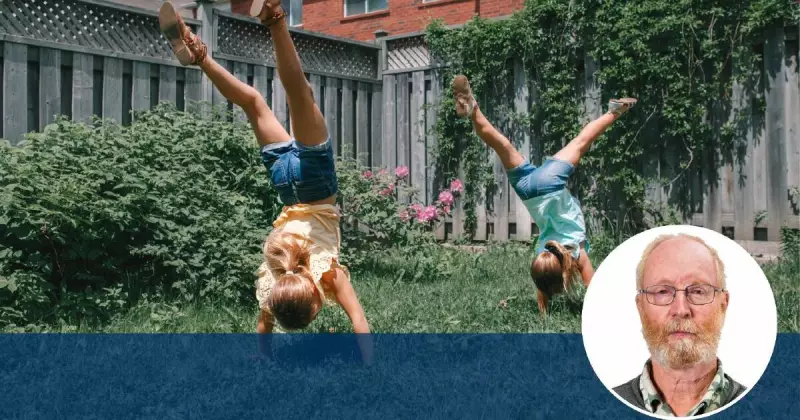
Pausing on the oval roughly a hundred metres from me, the youngster unleashed the dog and began throwing a ball for it. In the intervals between throws and the joyful dog retrieving the ball, the dear child performed a series of cartwheels. Cartwheels! This happy, simple spectacle, with the dog's merry scurrying contrasted against the carefree elegance of the child's impromptu gymnastics, arrived unexpectedly—a gift from nowhere.

The Echo of Robert Frost
It resonated deeply, much like the delight Robert Frost described in his poem 'Dust Of Snow', where a crow shaking snow from a hemlock tree lifted his spirits. Similarly, this lovely surprise shifted my mood, salvaging a portion of the day I had previously rued. The moral from my true 2026 Canberra story and Frost's perfect 1920 New Hampshire poem is clear: we can discover healing power in the smallest, truest, and simplest of things.
So, dear readers, in that spirit—and to further distance thoughts of Donald Trump and Sussan Ley—let us all join in singing the inspirational Shaker folk hymn 'Simple Gifts', which praises such simplicity. [Three minutes later] Thank you, reader-choristers, as we transition from simple gifts to the more complex gift of the Australian Summer of Tennis.
The Philosophy of Errors
This sublime season brings with it the minor irritation of tennis commentators and reporters fixating on players' "unforced errors". Yet, the philosopher within me argues that there is no such thing as an unforced error in life, let alone in elite lawn tennis. All human errors are forced errors, compelled by numerous forces.
Consider the example of the unknown, lowly-ranked French player who lost to world number one Aryna Sabalenka in the Australian Open's first round, reportedly making "19 unforced errors". However, the nerve-shredding intimidation of the occasion alone—performing under a global glare in the Rod Laver Arena coliseum against a towering champion—was sufficient to force errors from anyone, aside from any technical shortcomings.
Forced Errors in Broader Context
This concept extends beyond sports. The relatively harmless national error of situating the federal capital in its current location—where the idyllic Dalgety site was superior—was forced partly by human failures to fully appreciate Dalgety and by Sydney-centric political parochialisms. Anthony Albanese's widely criticised error in delaying the call for an anti-Semitism royal commission was forced upon him by his unfortunate, passionless, ultra-cautious, and miscalculating personality.
Furthermore, the Australian national moral error of voting 'No' in the Voice referendum—an act some deem unforgivable—was forced upon the nation by a galaxy of forces, including malevolent influences and the populace's innate racism and fearful ignorance, encapsulated in the slogan 'If you don't know, vote NO'.
Celebrating Summernats' Vibrant Disruption
Finally, we turn to the gods' many-splendoured gift to Canberra: Summernats. The annual storm in a teacup, primarily brewing in the fogeytorium of this newspaper's Letters page, regarding the perceived horrors of Summernats, prompts my yearly retort.

Summernats and its devoted visitors grace our city for only 4 out of 365 days a year—a mere 1.1 per cent of the annual calendar. Therefore, anyone who views Summernats as a catastrophic disruption to their life is indulging in fogeyism and petulance. The event is fleeting, disrupting Canberra no more than a breeze briefly tousles tree leaves on an otherwise still afternoon.
Summernats is a divine blessing, bestowed to inject colour and movement into an otherwise soporific city—a walled enclave that typically raises its drawbridge to keep the real Australia at bay, ensuring nothing disturbs privileged Canberrans' deep First-World slumber. How I wish my own tranquil suburb were closer to the Summernats venue, allowing us to thrill at the crowd's aromas and the jungle roars of revving engines from the event's exotic beasts.
In these dark times, it is the simple joys—a child's cartwheels, the roar of Summernats—that offer respite and remind us of life's enduring delights.