Albany's Bicentennial Light Show Illuminates More Than Just the Harbor
Albany's signature bicentenary event, 'Lighting the Sound,' promised a magical transformation of King George Sound with cascading lights across Bald Head, Breaksea Island, Michaelmas Island, and Frenchman Bay. As a former resident and correspondent, I eagerly booked accommodation to witness this ambitious spectacle marking 200 years since Western Australia's first settlement.
Logistical Marvel Meets Weather Reality
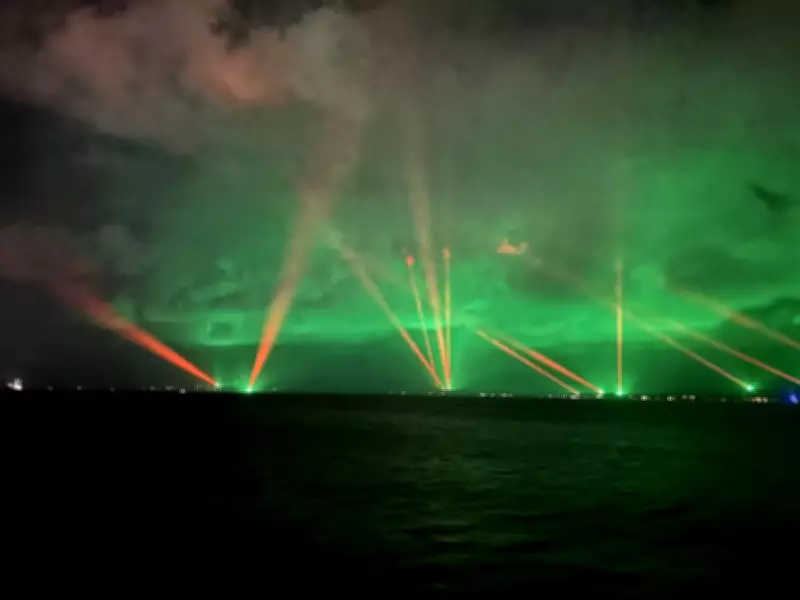
The sheer scale of illuminating remote locations like Bald Head—requiring a six-hour hike on favorable days—and islands accessible only during calm Southern Ocean swells demonstrated impressive planning. Originally envisioning champagne on a balcony overlooking Middleton Beach, we instead found Princess Royal Harbour glowing with green illumination and red shafts against the Torndirrup Peninsula backdrop.
Our picnic plans shifted to Anzac Peace Park as strong south-easterly winds and light squalls arrived, typical of Albany's unpredictable weather. Despite warnings about parking, we easily found foreshore parking along Marine Parade, though gale-force winds made photography impossible. After just ten minutes watching the stationary lights, we departed wondering about the event's deeper meaning.

Artistic Vision Versus Historical Context
Finnish light artist Kari Kola described the installation as "an immersive and meditative light experience" drawing colors from the native bloodroot plant (Haemodorum spicatum). Having sampled this plant during an Indigenous food lecture with Professor Stephen Hopper and Menang Noongar elder Larry Blight, I experienced its numbing effect firsthand—my mouth remained numb for over an hour after tasting a tiny bulb slice.
While the bloodroot holds significance for Menang people, Albany 2026's celebration appears lopsided, seemingly airbrushing the last two centuries of history. Why not also feature Albany's stunning Scarlet Banksia (Banksia coccinea), beloved by honey possums and symbolizing the region's status as a global biodiversity hotspot?
Unacknowledged Historical Foundations
Albany's story began when Major Edmund Lockyer arrived on Christmas Day 1826 with 20 soldiers and 23 convicts aboard the brig Amity—a vessel so small its replica at the Museum of the Great Southern surprises visitors. Ordered by New South Wales Governor Ralph Darling to establish a penal colony before French claims solidified, Lockyer officially proclaimed Fredericks Town on January 21, 1827, sharing a feast of flour, raisins, suet, and fish with troops, convicts, and Aboriginal people.
French explorers like Louis de Freycinet (1803) and Dumont d'Urville (October 1826) had documented the area's friendly Indigenous inhabitants and abundant fresh water—including Vancouver's 1791 spring in Frenchman Bay, still drinkable today. Yet searching "Major Lockyer" on Albany's bicentenary events website yields "No results found," suggesting the settlement's founder plays no role in commemorations.
Lockyer departed in April 1827 with Captain James Stirling, whose rapturous report about the Swan River destined Perth as Western Australia's capital, sealing Albany's secondary status. Perhaps Lockyer wouldn't mind being overlooked—he was just doing his job—but balanced historical acknowledgment seems essential when marking 200 years of complex, layered heritage.