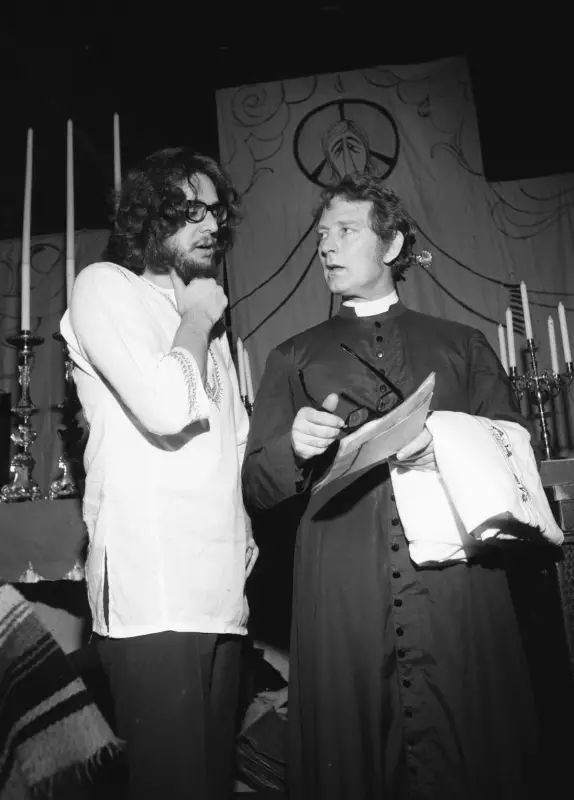
In the heart of 1970s Perth, a quiet revolution was taking place within the hallowed stone walls of St Mary's Cathedral. This was a time when the traditional Latin chants of the Catholic Mass were being swapped for the strum of guitars, the beat of drums, and the modern melodies of folk and rock music. It's a largely forgotten chapter of Western Australia's social history, where faith and contemporary culture found an unexpected, and for some controversial, groove.
The Folk Mass Phenomenon Takes Hold
The movement, known as the Folk Mass or sometimes the "Guitar Mass," began to gain traction in the early 1970s. It was part of a global shift within the Catholic Church following the Second Vatican Council, which encouraged greater participation and the use of vernacular languages. In Perth, this translated to a desire to make services more relevant, especially for the younger generation.
At the forefront was St Mary's Cathedral on Victoria Square. Here, the traditional organ was often set aside. In its place, musicians would set up with acoustic guitars, bass, and even a full drum kit on the cathedral's marble floor. The hymns of old were replaced with contemporary folk songs and soft rock tunes, with lyrics adapted to fit the liturgy. The atmosphere was markedly different: more casual, more communal, and pulsating with a new energy.

These services became a major draw. Hundreds of young people, students, and families would pack into the cathedral, often filling the pews and spilling into the aisles. For many, it was their primary connection to the church—a service that spoke their cultural language. The music created a sense of community and immediacy that the old Latin Mass, for all its majesty, often lacked for this postwar generation.
A Movement of Passion and Division
However, this musical revolution was not without its critics. The introduction of what some deemed "pop music" into the sacred space of the cathedral deeply divided the congregation and the wider Catholic community in Perth.
Traditionalists were aghast. They saw the drums and guitars as disrespectful, an inappropriate intrusion of secular culture into the solemnity of the Mass. The very sound—the backbone of youth counterculture—felt alien and disruptive within the ancient rituals. For them, the sanctity and timeless tradition of the cathedral were being compromised.
On the other side were the progressives and the young, who argued that the church needed to evolve to stay connected. They believed faith should be living and responsive to the times. The Folk Mass, for them, was a vibrant, joyful expression of worship that made their spirituality feel alive and relevant. This tension created a palpable friction within the parish, a microcosm of the wider generational and cultural clashes defining the 1970s.
Legacy of a Sonic Experiment
The peak of the Folk Mass at St Mary's Cathedral lasted through much of the 1970s before gradually fading. As the cultural moment passed and musical tastes evolved, the experiment wound down. The drums were packed away, and the cathedral largely returned to its more traditional sonic palette.
Yet, its impact was significant. It served as a powerful, if temporary, bridge between the institution of the church and a changing society. It showed a willingness to adapt and engage with contemporary life, however messily. For the thousands who attended, it left an indelible memory of a time when their place of worship felt uniquely theirs—a place where you could genuinely feel the spirit moving, to a brand new beat.
Today, this story exists mostly in the memories of those who were there, a curious footnote in Perth's cultural and religious history. It stands as a testament to a period of experimentation, a moment when St Mary's Cathedral became not just a house of prayer, but a venue where music and religion truly found their groove.