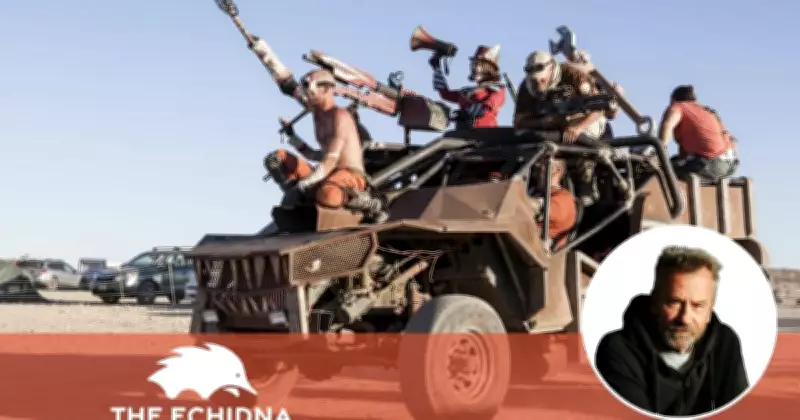
In a scenario that reads like a dystopian thriller, a convoy transporting 1000 tonnes of uranium from a mine in Niger is attempting a perilous journey to an Atlantic port. This real-life drama, dubbed the "Mad Max convoy" by French observers, underscores a disturbing new normal in global affairs: the erosion of the rules-based international order.
A Dangerous Journey Through Unstable Terrain
The landlocked nation of Niger faces limited and hazardous options for moving this valuable cargo. The safest route would traverse neighbouring Benin, but diplomatic relations have soured since Niger's military seized power in 2023. Benin has accused Niger of involvement in a failed coup attempt last December, making cooperation unlikely.
The alternative is a treacherous passage through Burkina Faso, where bandits and jihadist insurgents linked to Al Qaeda operate. The risk of the uranium, known as yellowcake, falling into extremist hands presents an unthinkable yet plausible threat. This is not fiction; it is a stark reality unfolding in West Africa.

French Interests and Global Implications
France has taken particular interest in this convoy because the uranium mine was formerly owned by a French company before being nationalised by Niger's military junta in June last year. However, the implications extend far beyond Franco-Niger relations.
As Foreign Policy magazine notes, we are witnessing the emergence of a "Mad Max World Order" where international agreements governing uranium sales and shipments are being disregarded. This breakdown represents another dimension of the collapsing rules-based system that has maintained relative global stability for decades.
Small Players Following Bad Examples
While much attention focuses on how major powers like China, Russia, and the United States have frayed the fabric of international norms, the Niger situation demonstrates that smaller, inherently unstable nations are now following suit. Niger's military junta, desperate to claim legitimacy and sovereignty over national resources, is willing to flout rules and destabilise neighbours to achieve its objectives.
The Sahel region has become what analysts call the "coup belt," with military takeovers in Mali, Burkina Faso, Chad, Guinea, Niger, Sudan, and Gabon. Parallel to these political upheavals, a jihadist insurgency has fuelled instability and driven away foreign investment, creating perfect conditions for such high-risk ventures.
Parallels with Major Power Behaviour
Niger's actions sadly reflect a broader pattern of norm violation by established powers. China engages in risky confrontations in international waters, Russia evades sanctions through shadow fleets of tankers (a maritime version of running the gauntlet), and the United States has demonstrated willingness to override sovereignty in pursuit of strategic interests.
When major powers behave appallingly, they set a tone that others follow. The Mad Max analogy proves apt: a hostile desert setting, heavily armed factions, valuable contraband, and a journey fraught with danger. In this real-world version, however, there are no heroes—only desperate actors in a destabilising global landscape.
The Normalisation of Abnormal Conduct
Niger's trafficking of yellowcake represents what has become normal in these abnormal times. The rules-based order that once constrained such behaviour continues to unravel, with consequences that extend far beyond West Africa. As international protocols weaken, the world faces increasing unpredictability and risk.
This uranium convoy serves as a potent symbol of how geopolitical norms are breaking down at multiple levels, from superpower confrontations to regional conflicts in Africa. The question remains: what kind of world will emerge if this dismantling of international rules continues unchecked?