Cambridge's Duality: Embracing the Ordinary to Appreciate the Extraordinary
There exists a profoundly grounding, even comforting, realisation when one discovers how thoroughly the mediocre and banal can coexist alongside the superior and the sublime in a historic city like Cambridge. This duality should hardly come as a surprise. The utopian visions often held by first-time visitors to places of immense historical significance are, much like fragile bubbles, easily burst. Their deflated forms are left draped over ubiquitous chain stores and wheelie bins lining less-than-pristine streets, reminiscent of those drooping timepieces in Salvador Dali's iconic painting, The Persistence of Memory.
The Savour of Contrast: From Lukewarm Chains to Culinary Excellence
Yet, consciously embracing these less salubrious aspects of a chosen destination serves a vital purpose: it throws a city's many excellent qualities into wonderfully sharp relief. This contrast becomes a palate cleanser. We encounter decidedly lukewarm pastries at Greggs, tepid coffee at Caffe Nero, and indifferent service within a shabby department store. These experiences, however, make the subsequent culinary delights all the more vivid and memorable.
They allow us to truly savour a splendid breakfast at the historic University Arms Hotel, overlooking the expansive Parker's Piece green. They heighten the enjoyment of lunch at The Millworks, with its views of the serene River Cam, and dinner at The Copper Kettle, which commands an unrivalled vista of the majestic King's College. Savour, indeed, but often with a lingering tinge of regret for the many other esteemed dining experiences one must forego on a short visit, such as La Margherita, The Old Bicycle Shop, or the renowned Midsummer House. In hindsight, perhaps that visit to Greggs was a bridge too far.

A Judicious Cultural Itinerary for a Brief Sojourn
With only two nights and one full day for a first exploration of Cambridge, my companion D and I adopted a judicious approach to our cultural itinerary. We focused our limited time on two iconic establishments: the world-class Fitzwilliam Museum and the awe-inspiring King's College Chapel. Our base, the centrally located University Arms Hotel, boasts its own rich historical provenance. More than just a short walk from the train station and many of Cambridge's most famous colleges, this establishment began as a coaching inn in 1834.
It grew to become Cambridge's oldest and finest hotel before undergoing significant renovations to seamlessly blend its heritage with 21st-century comforts. The interior design, a collaboration by John Simpson and Martin Brudnizki, is as superb as the rooms are genuinely comfortable. Departing from the hotel's magnificent neoclassical porte-cochere, we ventured out to explore the city, immediately noting the famous abundance of cyclists that define such university towns.
History Etched in Stone and Celebrated in Art
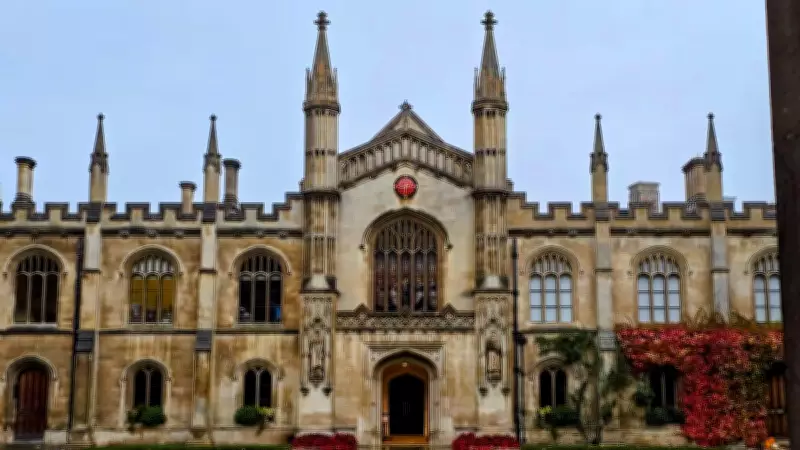
Our brief walk took in landmarks like the ancient St Bene't's Church, Castle Mound, and several illustrious colleges including Corpus Christi, Trinity, St John's, and Magdalene. The very elements of earth, water, sky, and stone here resonate with layers of history: Roman, Anglo-Saxon, Viking, and Norman. They echo the fortitude of the scholars who fled Oxford in 1209 to found what would become the University of Cambridge, and the monumental scientific innovations of figures like Newton, Darwin, and Hawking. Near the river, a forlorn young man guarded a fleet of punts, finding no takers on a rainy day.
Perhaps all the tourists had sought refuge in the Fitzwilliam Museum. Entering through its grand Corinthian portico and climbing the dramatic staircase, we passed through the magnificence of the Founder's Entrance Hall. Instead of crowds, we found silence and repose in a small oil painting: The Convalescent by Welsh artist Gwen John. This sensitive depiction of a seated woman reading a letter while recovering from illness, with its delicate harmonies and aura of quiet introspection, has long been a personal favourite. It became our still centre as we immersed ourselves in the museum's incredible cabinet of curiosities.

This collection teems with works by more famous artists like Monet, Picasso, Renoir, and Bridget Riley, alongside eye-popping antiquities, medieval and Renaissance decorative arts, coins, ceramics, armour, and weaponry.
The Architectural Majesty of King's College Chapel
King's College Chapel offered a vastly different, yet equally powerful, experience. Previously known only through the BBC's annual Carols From King's broadcast, this masterpiece of English Perpendicular Gothic architecture is every bit as breathtaking in person. Begun in 1446 under King Henry VI and taking over a century to complete, its soaring fan-vaulted ceiling and enormous stained-glass windows create an overwhelming impression. Much like Paris's Sainte-Chapelle, it feels as though one is standing inside an intricately crafted jewellery box, wondrously writ large.
Alas, we were unable to attend evensong, missing the chance to experience the chapel's celebrated choir and legendary acoustics firsthand. Yet, such regrets can make for piquant souvenirs. In their own way, they contribute to that grounding and comforting realisation of Cambridge's true, contrasting character—a place where the mundane and the magnificent are inextricably and fascinatingly intertwined.