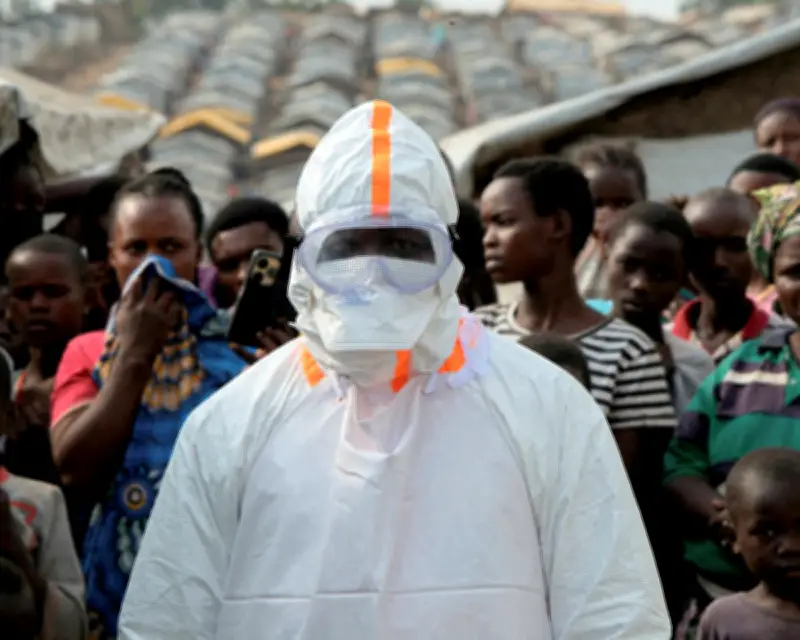
The Democratic Republic of the Congo's Ebola outbreak continues to spread rapidly, with 1,759 cases and 600 deaths recorded as of 8 July, according to government data. The virus has also reached Uganda, where 20 cases and two deaths have been confirmed. The outbreak is caused by the rare Bundibugyo variant, which has no approved treatment or vaccine.
Fastest Growing Outbreak on Record
Wessam Mankoula, head of emergency preparedness and response at the Africa Centres for Disease Control and Prevention, told reporters on Thursday that this is the fastest growing Ebola outbreak ever, surpassing all previous Bundibugyo outbreaks and other Ebola virus strains. The Congolese health ministry reported suspected cases in Tshopo and Haut-Uélé provinces, indicating spread beyond the initial epicentre in Ituri.
Conflict Complicates Containment
The outbreak began in May in Ituri province, which is embroiled in a long-running conflict between militias vying for control of mineral resources. It has spread to North Kivu and South Kivu, where the Congolese army and allied militia are fighting the M23 rebel coalition. Ladd Serwat, a senior analyst at the Acled conflict monitoring group, said armed groups have historically complicated humanitarian access, particularly where communities are perceived to align with rival ethnic groups. He added that while health workers can travel through these provinces, the divided administrations hinder coordination and information sharing.

Displacement and Funding Cuts
The International Organisation for Migration estimates 3.3 million displaced people live in Ituri, North Kivu, and South Kivu, with South Kivu alone hosting 1.2 million. Humanitarian funding for the DRC dropped sharply in 2025 after the US froze foreign aid. Carla Martinez, the DRC head at the UN Office for the Coordination of Humanitarian Affairs, said the reduction forced more than 10 humanitarian organisations to reduce or suspend activities, weakening local health systems and surveillance networks. "The Ebola outbreak is a stark reminder that when humanitarian systems are underfunded, they become more vulnerable to new emergencies," she said.
Attacks on Health Workers
Healthcare workers and treatment centres have faced violence, riots, and property damage during the current and past outbreaks. Alex Lock, a spokesperson for the International Federation of Red Cross and Red Crescent Societies, said 10 Red Cross volunteers have been attacked, with four injured. Most incidents occurred during safe burials due to mistrust fueled by rumours and misinformation. In one burial last month, four volunteers were injured, two severely, requiring airlift to Kinshasa. Lock noted that attacks force halts or postponements of critical response activities. "An immobilised colleague means a direct reduction in response capacity," he said, hindering containment efforts.