Venezuelan President Nicolas Rodriguez has defended his government's emergency response to the devastating earthquake that struck the country's central region on Sunday, as officials warned the death toll is expected to rise sharply.
Death Toll Expected to Climb
Speaking from the disaster zone on Monday, Rodriguez stated that the official death count of 347 was likely to increase as search and rescue teams reached more remote areas. 'We are prepared for a significant rise in the number of casualties,' he said, adding that over 1,200 people had been injured and thousands left homeless.
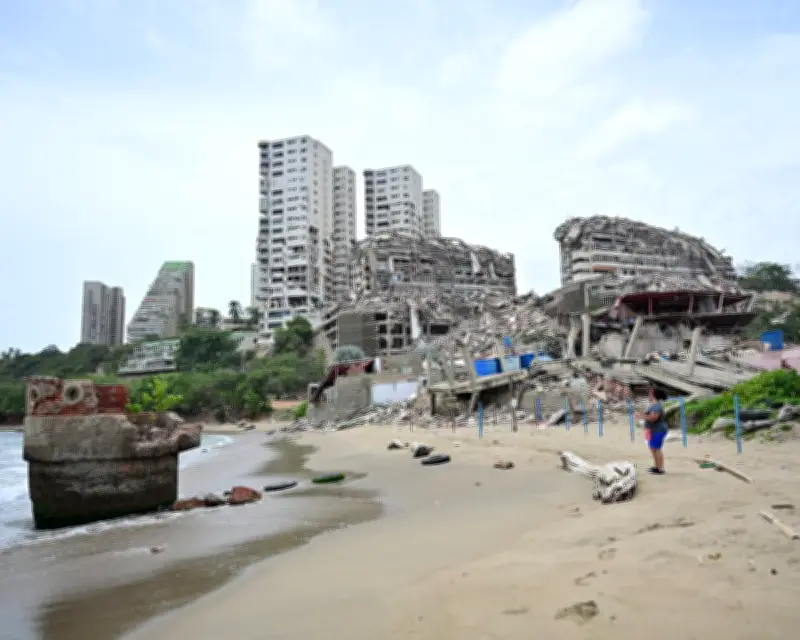
The 7.8-magnitude quake, which struck at 3:47 PM local time, has caused widespread destruction in the states of Carabobo, Aragua, and Miranda. Entire neighborhoods have been leveled, and infrastructure including roads, bridges, and hospitals has been severely damaged.

Government Response Under Scrutiny
Rodriguez faced questions about the speed and effectiveness of the government's response, particularly given the country's ongoing economic and political crises. He insisted that all available resources had been mobilized, including the military and emergency services. 'We are doing everything possible to save lives and provide aid to those affected,' he said.
However, critics have pointed to delays in the arrival of aid in some areas and a lack of heavy equipment to clear debris. Opposition leader Maria Corina Machado accused the government of being unprepared and called for international assistance to be allowed in without restrictions.
International Aid Offers
Several countries have offered assistance, including the United States, which has pledged $5 million in emergency aid. Russia and Cuba have also sent search and rescue teams. Rodriguez thanked the international community but emphasized that Venezuela would prioritize its own capabilities.
The earthquake has compounded the suffering in a country already grappling with hyperinflation, food and medicine shortages, and a crumbling healthcare system. The United Nations has estimated that 7 million people are in need of humanitarian assistance even before this disaster.
Rescue Efforts Continue
Rescue workers are racing against time to find survivors trapped under rubble. In the city of Maracay, a team managed to pull a 6-year-old girl alive from the wreckage of her home after 14 hours. 'Miracles do happen,' said firefighter Carlos Moreno, 'but we know the hours are ticking.'
The government has declared a state of emergency and set up temporary shelters in schools and sports stadiums. However, reports of looting and sporadic violence have emerged, prompting the deployment of additional police and National Guard units.
Long-Term Challenges Ahead
As the immediate rescue phase continues, attention is turning to the long-term recovery. The World Bank has estimated that rebuilding costs could exceed $10 billion, a sum that Venezuela, with its depleted foreign reserves, can ill afford.
Rodriguez called for national unity and resilience: 'We are a strong people. We have faced many challenges, and we will overcome this one too.' But for many Venezuelans, the earthquake is yet another blow in a seemingly endless crisis.