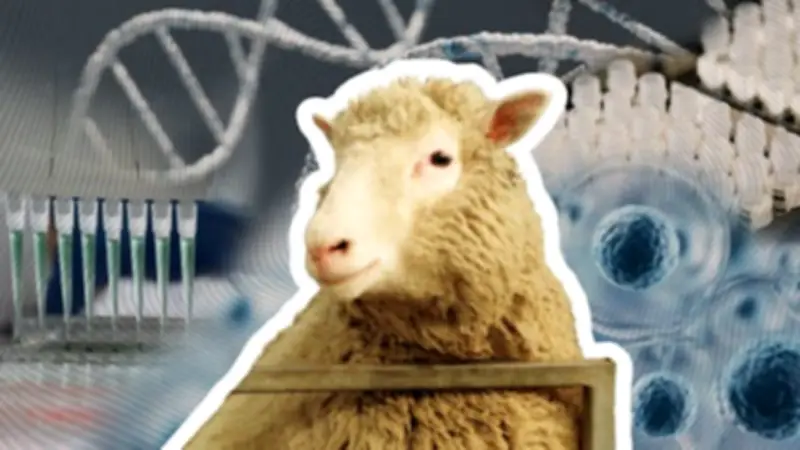
Thirty years after Dolly the sheep made history as the first cloned mammal, the technology has evolved from science fiction to a practical tool in disease research, conservation, and agriculture. However, human cloning remains banned due to safety and ethical concerns.
How Cloning Actually Works
Most animal cloning uses somatic cell nuclear transfer (SCNT). A non-reproductive cell's nucleus is removed and inserted into an egg cell whose own nucleus has been removed. An electric pulse fuses them, and the resulting embryo is implanted into a surrogate. The offspring is genetically nearly identical to the donor.
For Dolly, the donor cell came from a mammary gland. It took 277 attempts to produce one successful clone, highlighting the inefficiency of the process.

Why Cloning Remains Difficult Decades Later
Even today, cloning mammals is inefficient. Many reconstructed embryos fail to develop. The major challenge is epigenetic reprogramming—convincing a specialized adult cell to behave like a fertilized embryo. This reset is often incomplete, leading to failures.
Research into cloning led to induced pluripotent stem cells (iPSCs), which are adult cells reprogrammed to behave like embryonic stem cells without creating an organism. These cells help study diseases, test drugs, and explore regenerative medicine.
Where Else Is Cloning Used Today?
Livestock industries use cloning to replicate animals with valuable traits, such as high productivity or disease resistance. In Australia, horse cloning is permitted, and clones have competed in equestrian sports. China and the US offer commercial pet cloning; Barbra Streisand famously cloned her dog, but the puppies had different personalities because they lacked the original's memories.
In 2024, Chinese researchers cloned a rhesus monkey to speed up drug testing, but animal welfare advocates raised ethical concerns about low success rates and animal suffering.
Conservation and De-Extinction
Cloning helps restore endangered species. In 2020, scientists cloned a black-footed ferret using genetic material from a decades-old carcass, aiming to increase genetic diversity. However, bringing back extinct species like the woolly mammoth is not feasible due to damaged ancient DNA. Instead, researchers use gene editing like CRISPR to introduce extinct traits into living relatives, creating a "mammoth-like" elephant, not a true clone.
Why Human Cloning Remains Off the Table
Human cloning is prohibited in many countries, including Australia, due to high failure rates, risks to embryos and surrogates, and ethical issues around identity and consent. Since Dolly's birth, cloning has improved disease research, agriculture, and conservation, but it remains a challenging technology that raises ongoing questions about safety and regulation.