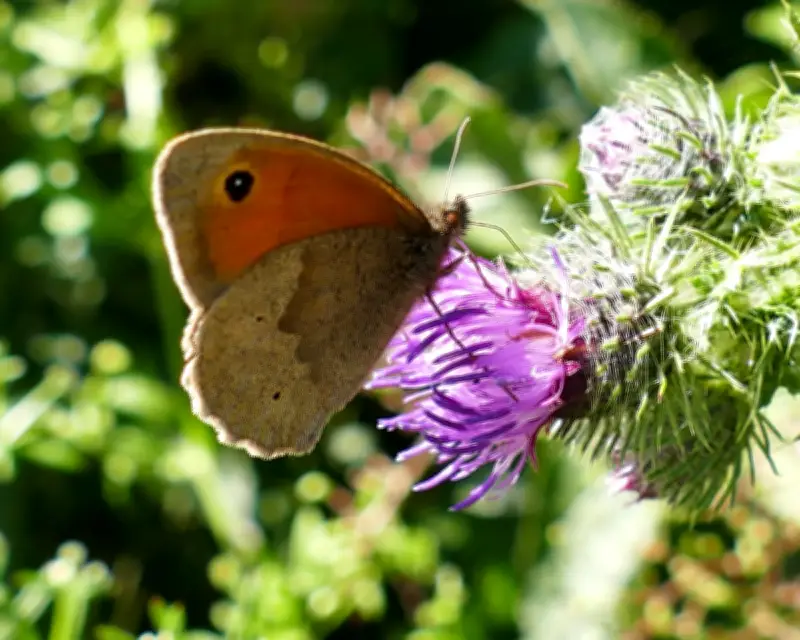
A groundbreaking study has mapped the intricate flight paths of the meadow brown butterfly (Maniola jurtina), revealing a network of hidden countryside corridors that are vital for the species' survival. The research, conducted by ecologists at the University of Exeter and Butterfly Conservation, tracked over 200 individual butterflies across farmland in Devon, England, using harmonic radar technology.
Tracking the Meadow Brown's Journey
The study, published in the Journal of Applied Ecology, found that meadow brown butterflies do not fly randomly across the landscape but instead follow specific linear features such as hedgerows, tree lines, and grassy margins. These corridors act as highways, connecting fragmented habitats and allowing butterflies to move between breeding sites, feed, and find mates. According to lead author Dr. Emily Smith, 'The meadow brown is often considered a common and resilient species, but our research shows it relies heavily on these narrow strips of habitat to navigate the agricultural landscape.'
The team attached tiny radar transponders (weighing just 12 milligrams) to the butterflies and followed their movements over two summers. They recorded over 1,200 flight paths, each lasting up to 90 minutes. The data revealed that butterflies were up to 30% more likely to travel along hedgerows than across open fields, even when the hedgerows were not the most direct route.

Implications for Conservation
The findings have significant implications for butterfly conservation and farmland management. With meadow brown populations declining by 25% in the UK over the past decade, according to the UK Butterfly Monitoring Scheme, preserving and restoring these habitat corridors is becoming urgent. 'If we lose the hedgerows and field margins, we lose the connectivity that allows these butterflies to thrive,' said co-author Dr. James Turner. 'Our study shows that even narrow strips of habitat can make a big difference.'
The research also highlights the importance of 'agri-environment schemes' that pay farmers to maintain hedgerows and wildflower margins. Currently, only 15% of UK farmland is under such schemes, but the study suggests that increasing this coverage could help stem butterfly declines.
A Broader View of Landscape Connectivity
While the focus was on meadow browns, the researchers believe the findings apply to other butterfly species and even pollinators like bees. 'The meadow brown is a model species for understanding how insects move through agricultural landscapes,' Dr. Smith noted. 'By protecting these flight paths, we can support entire ecosystems.'
The study also used computer simulations to predict how changes in landscape structure might affect butterfly movements. They found that removing just 20% of hedgerows could reduce butterfly dispersal by up to 40%, isolating populations and increasing their risk of local extinction.
Butterfly Conservation's head of science, Dr. Richard Fox, who was not involved in the study, called it 'a landmark piece of research' that provides 'unprecedented detail on how butterflies use the countryside.' He added, 'This is exactly the kind of evidence we need to inform land management policies and reverse the decline of our butterflies.'
Practical Steps for Landowners
The researchers have produced a set of guidelines for farmers and landowners, recommending that hedgerows be at least two meters tall and four meters wide to serve as effective corridors. They also suggest planting wildflower strips along field margins and creating 'stepping stones' of small patches of grassland between larger habitats.
In Devon, where the study took place, several farmers have already begun implementing these measures. 'We've seen an increase in butterfly numbers on our farm since we started managing our hedges better,' said local farmer Tom Roberts. 'It's good for the butterflies and good for the farm.'
Looking Ahead
The team now plans to expand the research to other regions and species, using drones equipped with thermal cameras to track butterflies at night. They also hope to work with policymakers to integrate their findings into the UK's Environmental Land Management schemes, which are set to replace the Common Agricultural Policy subsidies after Brexit.

As Dr. Smith concluded, 'This study shows that even common species need our help. By understanding how they move, we can create a countryside that works for both wildlife and people.'