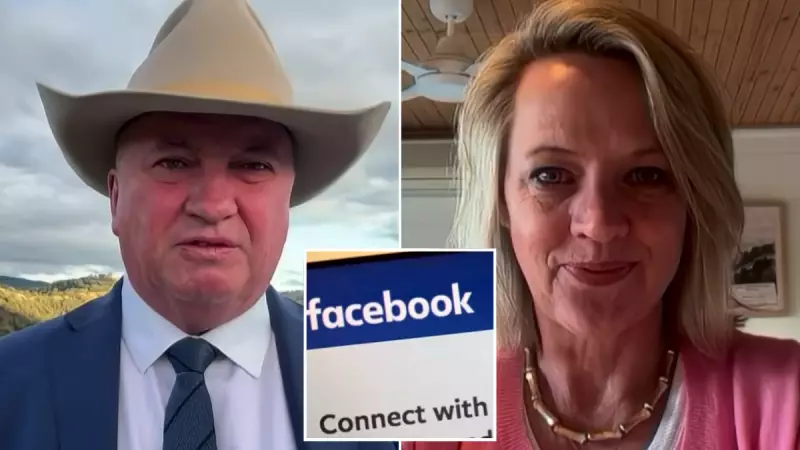
Australia's controversial social media ban for children under 16 is facing renewed political fire, with One Nation MP Barnaby Joyce declaring it is causing "more social harm than social good". The criticism comes as new data reveals the scale of the policy's impact, with tech giant Meta confirming it has shut down approximately half a million accounts belonging to teenagers.
The Scale of the Account Removal
Meta has removed around 500,000 accounts across its Instagram and Facebook platforms since the federal government's ban came into force in December 2025. This figure aligns closely with earlier estimates of how many Australian users aged between 13 and 15 were active on these services before the prohibition began. The early numbers suggest the policy is achieving its primary goal of reducing underage access, a point highlighted by News Corp's national education editor, Susie O'Brien.
"I think the real impact is going to be kids coming through who can't get on it in the first place," O'Brien stated during a debate on Channel Seven's Sunrise program. She described the 500,000 account removals as "quite a substantial figure" and called for attention to now turn to platforms like Snapchat, where an estimated million young users are still communicating.

Joyce's Critique: Targeting the Wrong Problem
Despite the significant enforcement action, Barnaby Joyce has strongly questioned the ban's fundamental logic. Appearing on Sunrise, the One Nation MP argued that the policy mistakenly targets the platform itself rather than the harmful content and behaviours hosted on it.
"The issue, of course, is the product that's on the platform rather than the platform itself," Joyce asserted. He advocated for a more targeted approach, suggesting authorities should ban specific harmful actions instead of imposing a blanket prohibition on access. As an example, he proposed that children should face fines for creating AI-generated nude images using tools like Grok, rather than being banned from entire platforms like X (formerly Twitter).
Joyce maintained that removing young people from these digital spaces altogether is "wrong" and will ultimately have negative social consequences.
Industry Pushback and the Safety Debate
The debate underscores a deeper conflict over where responsibility for online safety should lie. Both Joyce and O'Brien agreed that the primary duty should rest with the social media companies, not with children or their parents. However, Meta, while complying with the law, has again criticised the Australian approach.
The company argues that the ban has failed to meaningfully improve safety outcomes for young Australians, implying that more sophisticated, content-focused moderation is needed. O'Brien acknowledged that more data is required to assess the ban's full effects but stood by its core objective: "The whole ban was about getting kids off it and this suggests it has been working."
As the policy continues to be enforced, the clash between achieving broad access restrictions and addressing specific online harms remains unresolved, setting the stage for further political and industry debate.