Mobile Networks Transformed into Sensors for Predicting Extreme Weather Events
Australia has long been characterized by its dramatic climate extremes, famously described by poet Dorothea Mackellar as a land "of droughts and flooding rains." Despite this awareness, devastating floods continue to catch communities off guard, highlighting a critical need for more precise forecasting tools. While the Bureau of Meteorology provides general storm warnings, it often cannot pinpoint the exact location, timing, or volume of water involved in flood events. However, a revolutionary new technology developed by the TPG-UTS Network Sensing Lab is poised to change that.
World-First Flood-Sensing Technology
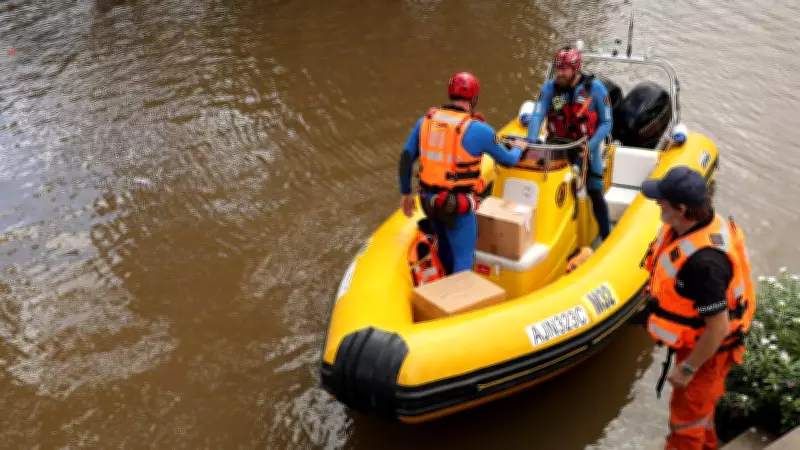
Established in 2024, the partnership between the University of Technology Sydney (UTS) and TPG Telecom combines academic research with Vodafone's extensive mobile network infrastructure. This collaboration has yielded a world-first flood-sensing system capable of detecting, monitoring, and predicting floods with remarkable accuracy. Distinguished Professor Jay Guo, director of the lab, describes the technology as "revolutionary," noting it emerged from a request by the New South Wales State Emergency Service (SES) for improved flash flood prediction.
The lab's analysis of the catastrophic Lismore floods in 2022 demonstrated that, had this technology been operational, it could have predicted the magnitude and scope of the event. Such precise information would have been invaluable for residents and emergency responders, allowing for better preparation and potentially saving lives and property. Although the technology has shown promise in field tests, further validation is required before full deployment, with an expected availability timeline of three to five years.

How the Technology Works
Des Ward, general manager of the TPG-UTS Network Sensing Laboratory, explains the innovative approach: "We provide the network infrastructure and radio engineering resources that allow researchers to analyze radio signals in real minutiae, enabling them to detect subtle changes in the environment." Essentially, the mobile network is repurposed as an integrated sensor array, monitoring environmental shifts that indicate impending floods. This real-time data collection represents a novel use of telecommunications infrastructure, offering insights previously unattainable.
The system provides continuous updates during disaster events, predicting impacts on infrastructure, power outages, and the need for emergency generators. This comprehensive information helps residents and first responders prepare effectively. Ward emphasizes, "People need information leading up to a disaster, during, and after the event. We play a role in that."
Broader Implications for Disaster Management
This technology marks a significant advancement in disaster management, moving beyond traditional weather forecasting to offer localized, real-time predictions. By leveraging existing mobile networks, it provides a cost-effective and scalable solution for flood-prone regions across Australia. The collaboration between academia and industry exemplifies how innovative partnerships can address pressing environmental challenges.
As climate change intensifies extreme weather events, tools like the TPG-UTS flood-sensing system will become increasingly vital. They not only enhance community resilience but also demonstrate the potential for technology to transform public safety and environmental monitoring. With continued development and testing, this pioneering approach could set a new global standard for disaster prediction and response.