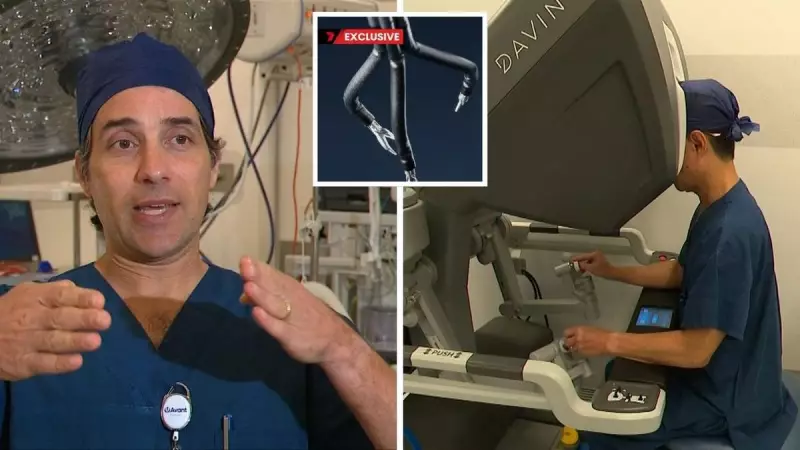
A surgical revolution is unfolding in a Sydney operating theatre, where a single robotic arm moves with superhuman precision inside a patient's body. Guided by a specialist surgeon at St Vincent's Private Hospital, this cutting-edge technology is transforming complex cancer operations and dramatically improving patient outcomes.
The Single-Port Surgical Revolution
This new system, known as the Da Vinci Single Port, represents a major leap forward from older robotic surgery methods. Where previous systems required multiple incisions across the abdomen, this technology delivers all necessary surgical instruments through just one single opening. The result is significantly less physical trauma for patients, reduced post-operative pain, and recovery times that are astonishingly fast.
Urologist Dr Benjamin Namdarian, who is using the technology, describes its capabilities in vivid terms. "I liken it to almost an octopus because, typically, keyhole surgery is just straight lines but this you sort of go through the hole and then it expands internally," he explained. "The ability to manoeuvre inside, just through a small hole, is groundbreaking."

Patient Experience: Home Within a Day
One of the first Australians to benefit from this system is 64-year-old David Scambary. After a routine blood test revealed elevated PSA levels and a subsequent biopsy confirmed prostate cancer, doctors recommended surgery using the new robotic system.
"So the best option seemed to be the new single port radical prostatectomy. It would be less invasive and the recovery would be quicker," Scambary said.
His experience exceeded expectations. Just 24 hours after his surgery, he was preparing to go home, with his surgical wound consisting of a single, small incision—a stark contrast to the multiple cuts required in traditional prostate surgery. "Much easier than I expected. I thought it would be a lot more pain and I didn't think I'd recover anywhere near as quickly," Scambary shared. "I feel like I've won an award."
He reported minimal pain, managed with basic pain relief, and was up and walking the same afternoon of his procedure.
Surgeon's Perspective: A Major Leap Forward
The surgery was performed by Professor Phillip Stricker, a pioneer of robotic surgery in Australia with over two decades of experience in robotic prostatectomies. Even for him, the results with the Da Vinci Single Port were striking.
"I was expecting a little bit of improvement with one hole compared to six, but I was impressed," Professor Stricker said. "(Scambary) was ready to go home the next day. Both of the patients I did were ready to go home. It's a significant advance. It's less invasive and obviously less trauma, and there's no question they're better."
The system provides surgeons with extraordinary vision and control, as the robot's instruments articulate and bend inside the body, minimising damage to surrounding tissue.
A Southern Hemisphere First in Sydney
St Vincent's Private Hospital is only the second facility in Australia to operate the Da Vinci Single Port system, following a site in Victoria. However, it will be the only hospital in the country to deploy the technology across multiple specialties, including ear, nose and throat, colorectal, and thoracic surgery.
In a landmark achievement, the hospital recently performed a Southern Hemisphere-first procedure using the same robot. Dr Namdarian led a complex cancer operation to remove a kidney, ureter, and part of a patient's bladder—all through a single incision.
"We've been able to perform what's called a nephroureterectomy, so that's where we remove the whole kidney and also the ureter as it travels all the way down to the bladder and taking part of the bladder, just through the one incision," Dr Namdarian explained. Historically, this operation required multiple incisions or a combination of keyhole and open surgery.
"Patients really have very little pain. They're up and about the same day and we can achieve the same results in terms of removing that cancer," he added.

While the technology has been used overseas for several years, its arrival in Australia marks a significant turning point for minimally-invasive medicine. "It's incredible technology and really great for our patients," Dr Namdarian concluded, placing Sydney at the forefront of this new surgical era.