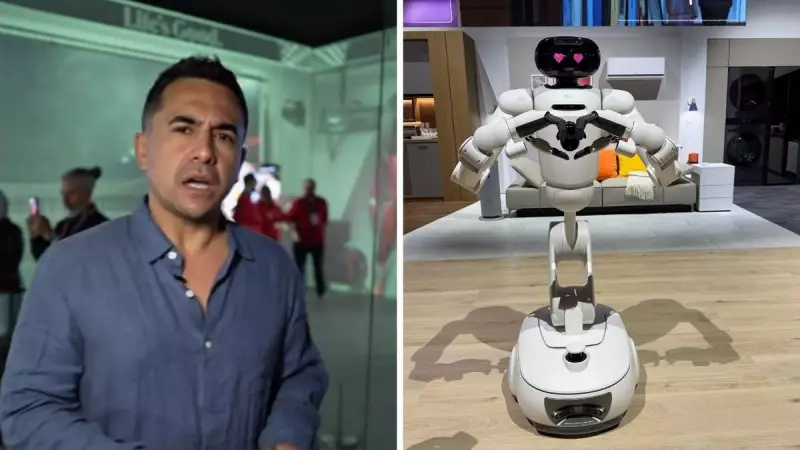
The dust has settled on the world's most influential technology showcase, CES 2026, which concluded after four action-packed days in Las Vegas. Marking the largest event since the pandemic, it drew a staggering crowd of more than 148,000 attendees and approximately 6,900 media representatives from across the globe. Among them was 7You's Shaun White, who witnessed the future firsthand.
The Standout Gadgets Redefining Home Entertainment
Projectors made a serious comeback, signalling a major shift for Australian home theatres. The standout was the Hisense XR10, a device that refuses to compromise. It can project a crisp image from a modest 65 inches all the way to a cinema-like 300 inches. Its secret weapon is a sophisticated liquid cooling system that delivers exceptional brightness without the typical noisy fan. With optical zoom for easy placement and smart sensors for automatic alignment, it transforms from a niche product into a genuine rival for a massive television.
Meanwhile, LG pushed the boundaries of television design to the absolute limit with its Wallpaper OLED TV. The name is no exaggeration; this screen is astonishingly thin, making a standard pen look bulky in comparison. It attaches to the wall like a piece of framed art, with all its processing components housed in a separate, discreet box. This innovation completely reimagines what a television in the Australian living room can look like, prioritising seamless integration over obtrusive hardware.

Flexible Screens and Smarter Home Helpers
In a surprising move for a show not typically focused on phones, Samsung unveiled the Galaxy Z Trifold. This device takes the familiar foldable concept and extends it further, opening from a phone into a mini-tablet. It represents a confidence in the maturity of flexible screen technology, built for immersive reading, multitasking, and viewing rather than quick, one-handed use.
This philosophy of expanded screen real estate extended to laptops with the ASUS Zenbook Duo. This machine solves the critical flaw of dual-screen laptops by giving each display its own dedicated battery, ensuring extra workspace doesn't come at the cost of all-day usage. Powered by fast OLED panels, it handles demanding tasks across both screens effortlessly, perfect for the modern blend of work and entertainment that many Australians now manage from home.
Robotics took a decidedly practical turn. The buzz wasn't about humanoid machines but about chore-focused helpers. LG's CLOiD robot captured attention for one simple reason: it attempts to fold laundry. While its proficiency may be a work in progress, it signals a future where robots tackle tedious household tasks. In a different vein, Ecovacs' Milo offered companionship, a cute, AI-powered digital pet that learns its owner's habits and provides interaction without the mess.
The Understated Tech Revolution
Some of the smartest innovations were those designed to fade into the background. LEGO's Smart Play bricks hide all technology within classic plastic bricks, allowing children to engage in physical play while sensors quietly respond in the background. It was a masterclass in subtle, effective tech integration.
Similarly, the push for autonomous vehicles felt more tangible. A concept vehicle, built by Lucid with Nuro's self-driving software and intended for the Uber network, featured a signature glowing 'halo' packed with sensors. It provided a very real glimpse into a near future where catching a driverless ride in Australian cities could become routine.
Even cleaning tech emphasised practicality over flash. Ecovacs' Winbot now includes a base that automatically charges and cleans its mop pads, while Tineco's Floor One i7 Flex vacuum is lighter, folds for storage, and easily slides under low furniture.
The overarching theme of CES 2026 was adaptation, not revolution. Technology is learning to bend to our needs: screens change shape and size, robots handle chores or offer company, and the smartest gadgets aim to be unseen. The future, as previewed in Las Vegas, is one of flexible, helpful, and often invisible tech that integrates seamlessly into daily Australian life.

Shaun White travelled to CES with assistance from Hisense, LG and ASUS.