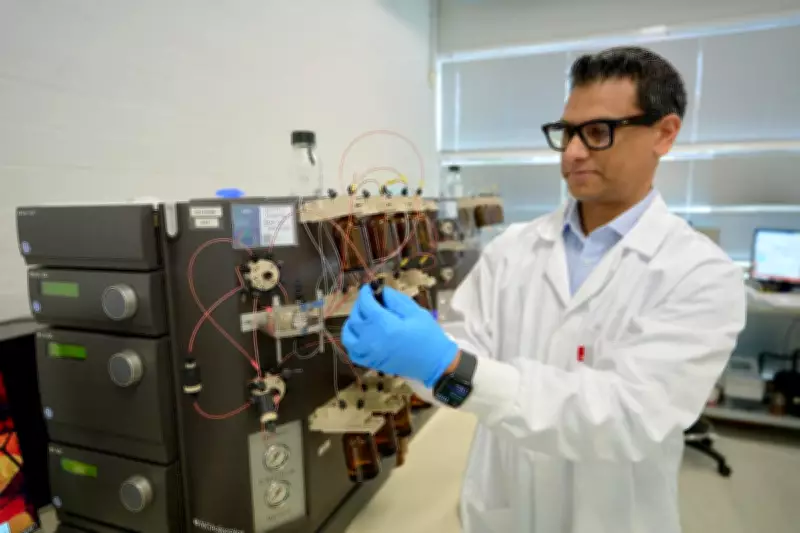
Syngenis Laboratories Leads Australia into the Future of Precision Medicine
In a quiet corner of Bentley Technology Park in Perth's southern suburbs, a groundbreaking venture is unfolding that could redefine Australia's role in the global biotechnology landscape. Syngenis Laboratories, an unlisted company, is on the cusp of achieving what no other Australian organization has managed commercially: the manufacturing of oligonucleotides, or "oligos," for human clinical use. This obscure term, rarely heard outside laboratories, represents a molecular key to unlocking new frontiers in medicine, from rapid COVID-19 tests to advanced gene therapies.
The Science Behind Oligonucleotides
Oligonucleotides are short, synthetic strands of DNA or RNA designed to target specific genetic sequences with pinpoint accuracy. Think of them as molecular keys that can detect diseases, silence harmful genes, or deliver therapies directly to affected tissues. For much of the twentieth century, medicine relied on broad chemical approaches to treat ailments, but the advent of oligonucleotides allows for a more precise intervention at the genetic level. Every disease, from cancer to Alzheimer's, originates in genetic code, and oligos offer a way to read and potentially rewrite that code, moving beyond mere symptom management to address root causes.
Currently, Syngenis operates Australia's only commercial oligonucleotide manufacturing lab, but its output is limited to research-grade sequences. However, this is set to change dramatically. In collaboration with government agencies, not-for-profits, and Murdoch University, the company is constructing a Good Manufacturing Practice (GMP) laboratory facility. This stringent quality standard is essential for producing DNA and RNA suitable for human clinical applications. Once completed, this facility will be the sole commercial, human-grade short synthetic DNA and RNA manufacturing site in Australia, positioning the nation on a global map dominated by the United States, Europe, and China.

Economic and Strategic Implications
The financial stakes are substantial. Under the Australian Government's R&D Tax Incentive rebate scheme, administered by the ATO, companies can claim a 43.5 per cent refundable grant for eligible research and development activities. This incentive has funneled billions into innovative Australian firms. However, guidelines make it challenging to claim for work that could be done domestically but is sent offshore. Syngenis estimates that approximately $160 million worth of GMP-grade oligonucleotide work leaves Australia annually, much of it destined for labs in China, the United States, and Europe, with claims often made under the rebate scheme.
A local GMP-approved facility could revolutionize this dynamic. Syngenis believes it could trigger a significant shift in bringing this work back onshore. With potentially the only compliant lab in the country, the company would be well-positioned to capture this multi-million-dollar revenue stream. For local biotech researchers, the benefits extend beyond cost savings. Intellectual property control becomes tighter, turnaround times shorten, and compliance advantages alone may redirect substantial volumes of work currently going overseas. Continued access to government grants favoring local suppliers adds further incentive.
Syngenis's Three-Pillar Strategy
The company has structured its operations around three reinforcing pillars: manufacturing, discovery, and diagnostics. Manufacturing serves as the current revenue engine, with a research-grade lab already servicing around forty paying customers across Australia and New Zealand, including academic institutions and biotech firms. Discovery leverages AI-supported laboratory science to develop proprietary diagnostic assets, with a lead program targeting Alzheimer's and Parkinson's diseases, aiming to detect molecular signatures years before symptoms appear. Diagnostics focuses on commercial deployment, starting with third-party point-of-care tests for conditions like prostate cancer and kidney disease, building a distribution network for future proprietary tests.

In essence, manufacturing supplies the materials needed for discovery, which in turn generates targets for diagnostics to validate and monetize. This integrated approach is supported by regulated infrastructure, ensuring consistency and quality across all stages.
Leadership and Market Potential
The team behind Syngenis is notably distinguished. Founder Professor Rakesh Veedu is an internationally recognized authority in RNA therapeutics and nucleic-acid manufacturing, having formalized the commercial operation in late 2020 after years of service at Murdoch University. The company benefits from the guidance of Professor Marvin Caruthers, who invented the chemistry behind modern synthetic DNA and RNA manufacturing and co-founded major firms like Applied Biosystems. Advisory Board Chair Dr. Sudhir Agrawal, with over 400 patents in oligonucleotide therapeutics, adds further expertise. Chairman Dr. Martin Blake and Executive Director Gavin Ball bring experience from ASX-listed businesses, with Ball and recently appointed MD Tom Hanly having a track record in successful biotech ventures.
Investor support underscores the venture's seriousness, with stakes held by the Perron Institute for Neurological and Translational Science and founders of Primewest Property Group. The market opportunity is vast: the global oligonucleotide synthesis market is forecast to exceed US$15 billion by 2030, with DNA diagnostics reaching US$17 billion and point-of-care diagnostics projected at US$125 billion by 2034. The Asia-Pacific region is the fastest-growing segment, offering ripe opportunities for expansion.
Future Prospects and Impact
Syngenis plans an ASX listing as its next developmental step, which will likely elevate its profile in the biotech sector. While challenges such as GMP construction complexity and long diagnostic pathways remain, the company has already validated its model with existing revenues from current customers, setting it apart from many speculative biotech startups. In simple terms, Syngenis produces custom genetic building blocks that enable scientists to target and modify disease-related biology. By adding clinical-grade capabilities, it transitions from a Perth lab making DNA and RNA strands to a cornerstone of Australia's domestic manufacturing for next-generation diagnostics and precision medicines.
For now, Syngenis operates largely under the radar in Bentley, but an ASX listing promises to attract attention from Australia's biotech community. As it advances, this pioneering lab could play a pivotal role in keeping critical research and development onshore, fostering innovation, and securing Australia's place in the global precision medicine revolution.