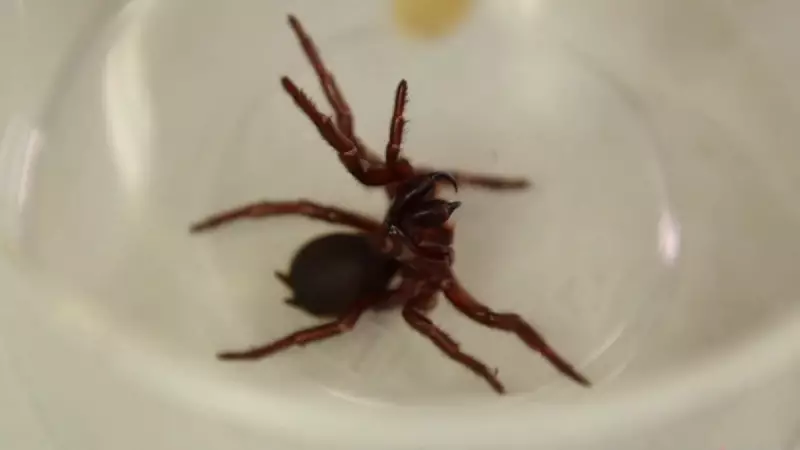
In a stunning twist of medical fate, the venom of one of Australia's most feared and deadly creatures is now at the heart of a groundbreaking treatment that could save thousands of lives. Queensland researchers have moved a revolutionary drug, derived from funnel web spider venom, into human clinical trials for the first time.
From Deadly Bite to Lifesaving Treatment
The experimental drug, named IB409, has been developed by scientists who discovered a unique property in the spider's potent toxin. It works by preventing cell death during cardiovascular events like heart attacks and strokes, a mechanism researchers say no current medication can achieve.
"In 24 hours, there'll be 24,000 people that'll die from a heart attack," stated Professor Mark Smythe, CEO of the research company Infensa. He emphasised the critical need for such innovation, noting, "There are no drugs out there that protect the heart during a heart attack."

How the Spider Venom Therapy Works
The drug's potential extends beyond emergency cardiac care. Researchers believe it could also preserve organ tissue during transplants, leading to better outcomes for recipients. "That recipient gets a heart that has less damage and has better function," Professor Smythe explained.
This phase of the research involves forty-eight human volunteers, a significant milestone after years of laboratory work. If the trials prove successful, the next step will be to administer IB409 to hospital patients. The ultimate vision is to have this treatment available for first responders. "This molecule will be in hospitals, ultimately in the ambulance, the first responders," Smythe said.
A New Frontier in Venom-Based Medicine
This is not the first instance where a dangerous animal has contributed to modern pharmacology. As noted by University of Queensland Professor Glenn King, the hugely popular drugs Ozempic and Wegovy were derived from molecules found in a venomous lizard.
Now, Australian scientists are pioneering a new path with the funnel web spider, aiming to transform one of the nation's most potent natural threats into a powerful guardian for human health. This clinical trial marks a pivotal moment in cardiovascular medicine, offering hope for a future where a spider's bite could mean life, not death.