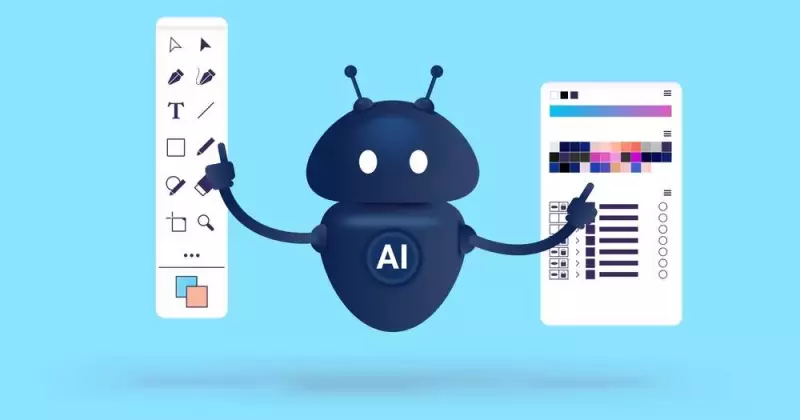
Artificial intelligence is now an undeniable force across Australian industries, with its impact profoundly felt in the realm of digital design. From crafting marketing materials to building websites, local creators and businesses are increasingly turning to generative AI tools to streamline their workflows. This shift marks a dramatic change from the traditionally manual, software-intensive processes that once defined fields like graphic design.
The Advantages: Speed, Access, and Lower Costs
The most significant benefit of AI in design is its sheer scalability. Tasks that previously consumed hours can now be completed in seconds. Tools like Adobe Firefly allow users to generate complex images from simple text prompts, revolutionising the initial stages of the creative process. However, mastering this new skill of 'prompt engineering' is key to moving beyond generic outputs and achieving high-quality, specific results.
Furthermore, AI has dramatically lowered the barriers to entry. Individuals and small businesses without formal design training can now produce professional-looking visuals and websites using AI-enhanced platforms. This democratisation extends to cost, with subscription-based AI tools offering powerful capabilities for a fraction of the price of traditional agency fees. Even established software suites like Adobe Photoshop and Canva are integrating AI features, allowing professionals to work more efficiently within familiar environments.

The Critical Drawbacks: Overreliance, Jobs, and Creativity
Despite the efficiency gains, the integration of AI is not without significant concerns. A major risk is overreliance on automated tools, which can lead to a decline in fundamental design skills and critical oversight. AI models still have well-documented limitations, such as struggles with anatomical accuracy or creating truly novel concepts. Human quality control remains non-negotiable for ensuring the final output meets professional standards.
This scalability also has a direct impact on employment. The very efficiency that benefits businesses is leading to a contraction in job opportunities for human designers. Where companies once required large teams, they may now manage with a skeleton crew or attempt to forgo designers altogether, relying solely on prompt-based generation. Experts caution that this is a short-sighted strategy, as AI currently lacks the innate creativity and nuanced understanding of a skilled human professional.
Finally, questions of originality persist. AI generates content based on its training data, which is finite. This can result in derivative work or a homogenisation of style. The unique creative spark, contextual understanding, and innovative problem-solving that human designers bring to a project are elements that AI cannot yet replicate, underscoring their enduring value.
What's Next for AI and Design in Australia?
The pace of AI development continues to accelerate. Looking ahead, integration into workplaces will deepen, with tools potentially managing entire campaigns or brand identities with greater autonomy. Personalisation of design at scale will also become more accessible.
The key takeaway for Australian professionals and businesses is clear: familiarity with AI is becoming essential. Whether you are a seasoned designer or a business owner, learning to leverage these tools effectively—while maintaining a critical, human-centric approach—will be crucial for future success. The landscape is evolving rapidly, and adaptability is the new imperative.