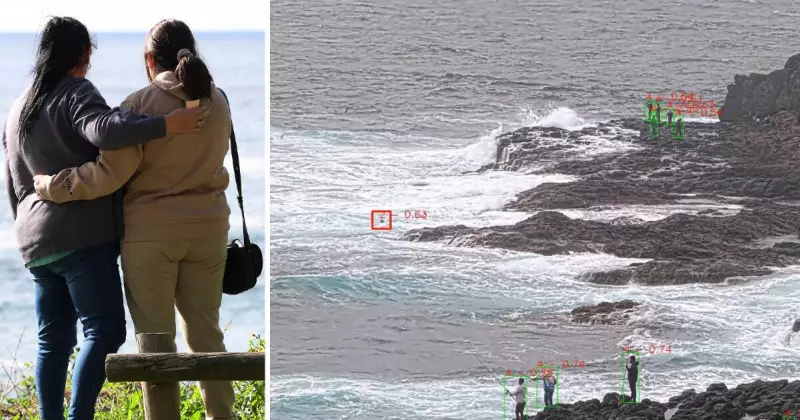
In a dramatic early morning rescue, artificial intelligence has been credited with saving the life of a fisherman swept off the rocks at Kiama Blowhole, proving the potential of new surveillance technology to prevent coastal tragedies.
A Swift Response Triggered by AI
The incident occurred at 6.50am on Sunday, January 11, 2026. A 29-year-old man was fishing near the iconic Kiama Blowhole when a large wave washed him and another angler into the ocean. The entire event was detected by recently installed AI cameras, which immediately triggered an alert to emergency services.
This activation prompted a major multi-agency response. Lifesavers, lifeguards, police, and a rescue helicopter were all dispatched to the scene. While one man managed to scramble back onto the rocks, the other was carried about 30 to 50 metres offshore. His lifejacket kept him afloat until the rescue helicopter could winch him to safety. He escaped with only minor injuries.

Technology Learning to Protect Lives
Kiama is one of only two locations in New South Wales involved in a 14-month AI camera trial, the other being Little Bay in Randwick. The technology was installed in late 2025 to address a grim statistic: 11 people have died while rock fishing in Kiama over the past 15 years, making it one of the state's highest-risk coastal areas.
The tragic case of father and son Nelson and Joshua Chan, who were swept to their deaths in August 2024, underscores the critical need for such interventions. Their bodies were never found after three days of intensive searching.
Surf Life Saving NSW South Coast duty officer Shane Wicks hailed the system as "unbelievable technology." "It's a game changer in how quick emergency services can be responded, but it also relies on fishers wearing the correct gear when fishing," he said.
The Path to a Fully Autonomous System
While the technology is already delivering results, it is still in a learning phase. Patrick Boddan from Surf Life Saving NSW explained that every alert is currently manually checked by staff to confirm it is a genuine emergency.
The AI is being trained to distinguish between different scenarios, such as a bird landing on water versus a person in distress, or a prepared diver entering the water versus someone being swept in unexpectedly. "It is getting much, much better. You have to teach it the tools," Mr Boddan said. "This camera, once it is trained and it does learn to pick up those incidents, it will be a game changer."
The system has already proven its worth elsewhere. At the Little Bay trial site, an AI notification allowed emergency crews to reach an angler eight minutes earlier—a crucial window that can mean the difference between life and death in a drowning incident.
This successful rescue in Kiama marks the first confirmed life saved by the new AI camera system, offering a powerful glimpse into a future where technology and vigilance combine to make dangerous coastlines safer for everyone.