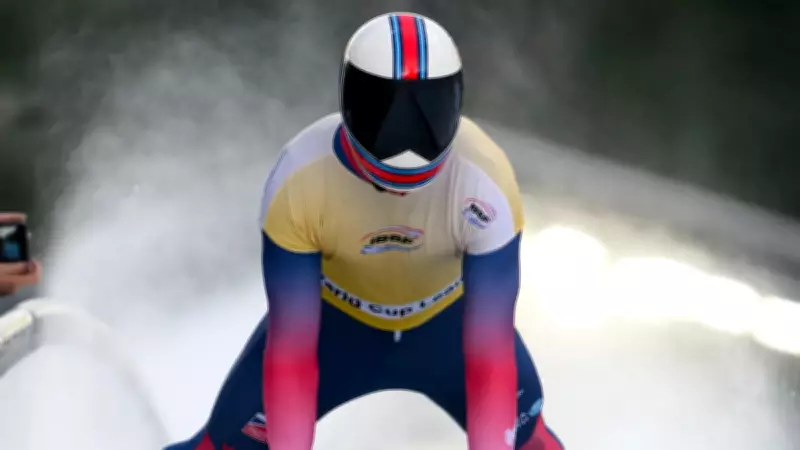
A major controversy has erupted at the Winter Olympics after skeleton officials banned a new high-tech helmet unveiled by Great Britain's team just days before the competition begins.
High-Tech Design Sparks Official Backlash
The well-funded Team GB outfit has collaborated with Formula 1 and cycling partners to develop cutting-edge equipment, aiming to shoot to the top of the pack in skeleton. This sport has been dominated recently by men's medal favourites Matt Weston and Marcus Wyatt.
However, the revised helmet—a crucial piece of equipment in the head-first, aerodynamically focused sport—intended to debut at the Olympics, fell foul of International Bobsleigh and Skeleton Foundation (IBSF) rules after being trialled last week.

Immediate Appeal Launched
The IBSF banned the helmet on January 29, stating it did not comply with regulations related to shape. In response, the British Bobsleigh and Skeleton Association (BBSA) has launched an urgent appeal with the Court of Arbitration for Sport (CAS).
They are seeking to overturn the decision in time for the first event. A hearing is scheduled for Thursday in Milan, with a result expected on Friday, ahead of the competition beginning on February 12.
Safety and Compliance Arguments
In a statement, CAS outlined the BBSA's position: "The design and manufacture of the Team GB helmet was funded by the BBSA, which they argue meets rigorous safety standards."
The association requests that CAS rules the helmet compliant with regulations and safe for use in the Skeleton Competition at the Olympic Winter Games Milano Cortina 2026 and future IBSF events.
They also argue that the Team GB helmet is proven to be safer and more beneficial to athletes' health and safety than any other helmets currently in use.
Contingency Plans and Team Prospects
The team's old helmets, which were used successfully during the World Cup season, are already in Cortina and ready to be deployed if the new version remains banned.
Alongside Weston and Wyatt, Tabitha Stoecker is tipped to contend for medals in the women's competition, alongside teammates Freya Tarbit and Amelia Coltman.
Historical Context and Investment
Team GB's skeleton program has a strong track record, claiming medals at every Olympics from the sport's reintroduction in 2002 until they failed to finish in the top three at Beijing 2022.
Since then, a significant investment of £5.8 million (approximately $A11.4 million) has been made, with increased use of wind tunnels to find aerodynamic gains.
The Milano-Cortina 2026 Games add another set of medals to be won, featuring a mixed event alongside the traditional men's and women's competitions.
Previous Equipment Controversies
This is not the first time Team GB has faced equipment protests. They previously overcame a challenge against their helmet at the Vancouver 2010 Olympics.
Their competition suits also came under fire from rivals at the Pyeongchang 2018 Games, highlighting ongoing tensions over technological advancements in winter sports.