Kasatkina's Australian Open Dream Shattered by Nerves in Debut as Citizen
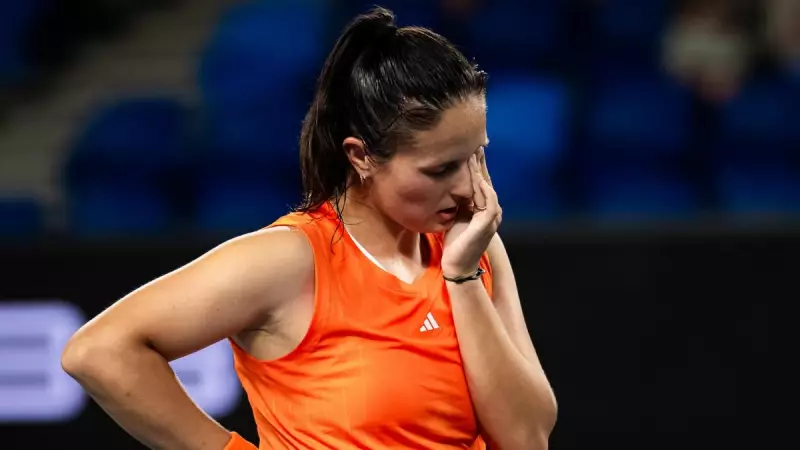
A visibly shattered Daria Kasatkina has openly admitted that nerves ultimately derailed her highly anticipated Australian Open debut as a newly minted Australian citizen. Just one week after officially receiving her citizenship, the former world No. 8 suffered a bitterly disappointing and shock first-round exit at Melbourne Park, falling to Czech teenage qualifier Nikola Bartunkova.
The emotional toll of the defeat was evident, with Kasatkina remarking that the result was "written all over my face". In a dramatic rollercoaster match that showcased extreme momentum swings, Kasatkina steamrolled Bartunkova 6-0 in the second set, only to lose the decisive third set 6-3.
Mental Battle Proves Decisive in Tight Contest
Reflecting on the match's pivotal moments, the 28-year-old explained her mindset during the intense battle. "I just relaxed in a way, I thought 'whatever', free on the ball, and everything was working well," Kasatkina said about recovering from losing the first set in a tie-breaker to dominate the second.

"Where in the third set when you're even, things are becoming a bit more complicated and you're not going for shots anymore. I think it's nerves, at the end of the day, tennis, it's a mind game."
Kasatkina's journey to this moment has been complex. She has not returned to Russia since publicly coming out as gay in a 2022 video interview, during which she also became one of the few Russian-born athletes to speak out against the war in Ukraine. The world No. 43 has wholeheartedly embraced her adopted country, but she firmly denied that the pressure of performing in front of new home fans was the primary catalyst for her nervous performance.
Court Switch Confusion Adds Unnecessary Stress
Instead, Kasatkina pointed to logistical disruptions that compounded the pressure. Her match was originally scheduled for ANZ Arena but was abruptly switched to Kia Arena at the last moment, creating significant confusion.
"The support (of the crowd) actually helped me," Kasatkina clarified. "The confusion with the court switch ... we didn't know until the last moment which court we were going to step on, so it added a little bit of stress. You warm up five, six times, and of course, it's a huge difference."
Searching for Form After Extended Break
Speaking before the tournament began, Kasatkina had expressed confidence that her game was in a better place than last year, when mental exhaustion forced her to take an extended break from competition. Despite that challenging period, she still managed to achieve notable results in 2023:
- Reaching the fourth round at two major tournaments
- Making the third round at both Wimbledon and the US Open
However, on Tuesday night, she acknowledged that fine margins and lack of match practice were contributing factors. "During the matches it is just very small details which I'm missing," Kasatkina admitted. "This was my fourth match of the year. I didn't play a lot of matches in the last couple of months, so it's not very easy (to find form)."
Notable Absence from Australian Contingent
The defeat carries additional significance within the broader Australian tennis landscape. Despite six Australian women successfully advancing to the second round at Melbourne Park—the highest number in 34 years—neither Kasatkina nor fellow high-ranked local Maya Joint are part of that promising contingent. Their early exits highlight the unpredictable nature of Grand Slam tennis, where experience and ranking offer no guarantees against determined qualifiers and the psychological pressures of the sport's biggest stages.