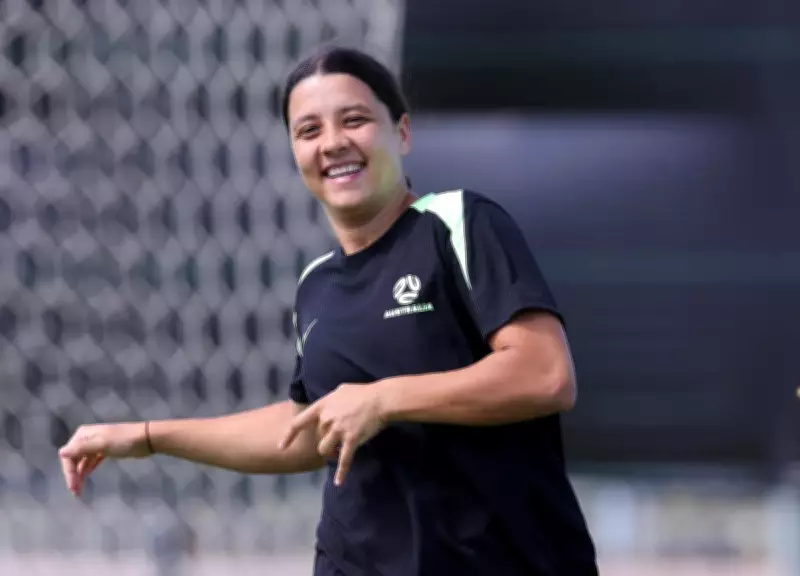
Sam Kerr's Father Credits Off-Field Happiness for Her On-Field Brilliance
In a revealing insight into the life of one of football's biggest stars, Sam Kerr's father has publicly attributed her exceptional on-field performance for the Matildas to her profound off-field happiness. This statement comes as the Australian women's national team, known as the Matildas, continues to make waves in international competitions, with Kerr often at the forefront of their success. The connection between personal well-being and professional achievement is a topic gaining traction in sports psychology, and Kerr's case serves as a compelling example of how contentment away from the pitch can translate into peak athletic performance.
The Impact of Personal Contentment on Athletic Performance
According to Kerr's father, her current good form is not merely a result of rigorous training or tactical prowess but is significantly influenced by her overall happiness in life. He emphasized that when athletes like Sam Kerr find balance and joy in their personal lives, it naturally enhances their focus, motivation, and resilience on the field. This perspective challenges the traditional view that success in sports is solely driven by physical conditioning and skill development, suggesting that emotional and mental well-being play an equally crucial role.
Experts in sports science have long advocated for a holistic approach to athlete development, which includes mental health support and life balance. Kerr's father's comments align with this philosophy, highlighting how her off-field stability contributes to her ability to handle pressure, recover from setbacks, and maintain consistency in high-stakes matches. For the Matildas, this insight underscores the importance of fostering a supportive environment that prioritizes player well-being alongside competitive goals.

Sam Kerr's Role in the Matildas and Women's Asian Cup
Sam Kerr, as captain and star striker for the Matildas, has been instrumental in the team's recent achievements, including their performances in the Women's Asian Cup. Her leadership and scoring prowess have not only propelled Australia to new heights but have also inspired a generation of young footballers. The revelation from her father adds a personal dimension to her public persona, showing that behind the accolades and media attention, Kerr's success is rooted in a fulfilling personal life.
This narrative is particularly relevant as women's football gains global recognition, with events like the Women's Asian Cup showcasing the talent and dedication of female athletes. Kerr's story exemplifies how off-field factors, such as family support and personal happiness, can be key drivers of on-field excellence. It also serves as a reminder to sports organizations and fans alike that athletes are multifaceted individuals whose performance is influenced by a wide range of life experiences.
Broader Implications for Sports and Society
The discussion sparked by Kerr's father's remarks extends beyond football, touching on broader themes in sports culture and society. In an era where mental health awareness is increasingly prioritized, his words reinforce the idea that happiness and well-being are essential components of success, not just in athletics but in all endeavors. For the Matildas and other teams, this could lead to greater emphasis on player welfare programs, mental health resources, and work-life balance initiatives.
- Enhanced focus on mental health support for athletes
- Recognition of the link between personal contentment and professional performance
- Inspiration for young athletes to prioritize holistic well-being
As the Matildas continue to compete on the international stage, with Sam Kerr leading the charge, her father's insights offer a valuable lesson in the power of happiness to fuel greatness. This story not only celebrates Kerr's achievements but also encourages a more compassionate and balanced approach to sports, where success is measured not just by wins and losses, but by the overall health and happiness of the players.