The National Rugby League has publicly acknowledged that two highly contentious disruptor calls made during this weekend's matches were incorrect, yet the governing body firmly maintains that the rule itself is crucial and will not be altered. Head of football Graham Annesley clarified on Sunday that there would be no modifications to the disruptor regulations, and he also addressed a common misunderstanding by stating that no ban exists on players attempting to compete for kicks using only one hand.
Annesley Breaks Silence on Controversial Decisions
Graham Annesley, who has been largely absent from public commentary in recent years after his weekly briefings were discontinued by head office prior to last season, re-emerged to provide clarity. The veteran official confirmed that Sydney Roosters centre Robert Toia and North Queensland fullback Scott Drinkwater should not have been penalised in what he described as isolated errors over the weekend.
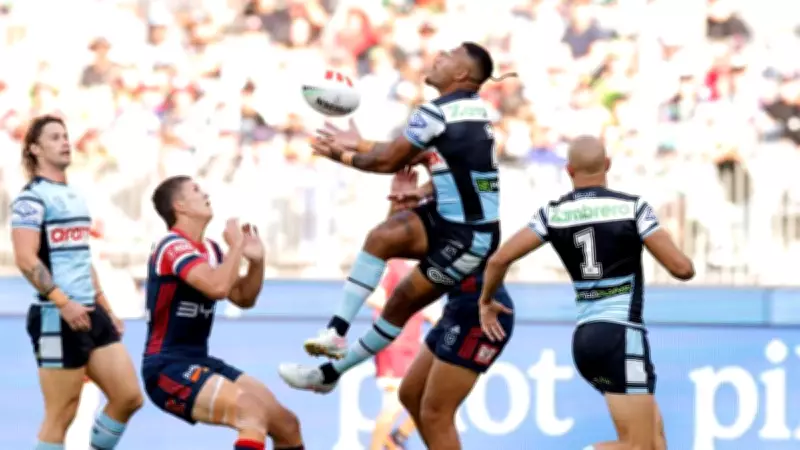
Drinkwater was penalised on Friday night for allegedly taking out Josiah Karapani during a kick contest, which led to Brisbane scoring on the subsequent set. Similarly, Toia was denied a try on Saturday due to a contest with Sam Stonestreet, after which Cronulla advanced downfield and scored. Annesley explained to AAP that in both instances, the NRL believes the players had legitimate opportunities to contest the ball, and the bunker over-adjudicated these situations.

Defending the Disruptor Rule Amid Criticism
The NRL's disruptor rule has faced intense scrutiny in recent days, with critics arguing that when applied excessively, it rewards what some call laughable errors from catching players. At its core, the rule is designed to prevent kick chasers from feigning contests after a rise in players making reckless, kamikaze-style runs and jumps at opposing fullbacks and wingers.
Annesley defended the rule, stating that without it, there would be open season for players to do whatever they want in kick contests, leading to frequent knockovers without any chance to contest the ball. He emphasised that it is a fundamental principle of the game that when the ball is in the air, players from both sides must be given a fair opportunity to receive it. The rule, which has been part of the laws for 118 years, is essentially about obstruction, prohibiting interference with players not in possession of the ball.
Clarifying Misconceptions and Decision Criteria
Annesley highlighted that the primary consideration for match officials is whether a fair contest for the ball occurred. Other factors include whether players arrived at the kick contest simultaneously, the line a player has run, and whether they are focused on the ball or their opponent. He also moved to clarify a significant misconception, noting that there is no blanket ban on players attempting to bat the ball back with one hand.
What is prohibited, according to Annesley, is coming through at high speed, jumping in the air, swiping at the ball, and taking out a defender without making a genuine contest. However, if a player can swipe at the ball and knock it backwards without making contact with a defender, that action is perfectly acceptable. This clarification aims to provide better guidance for players and officials moving forward.