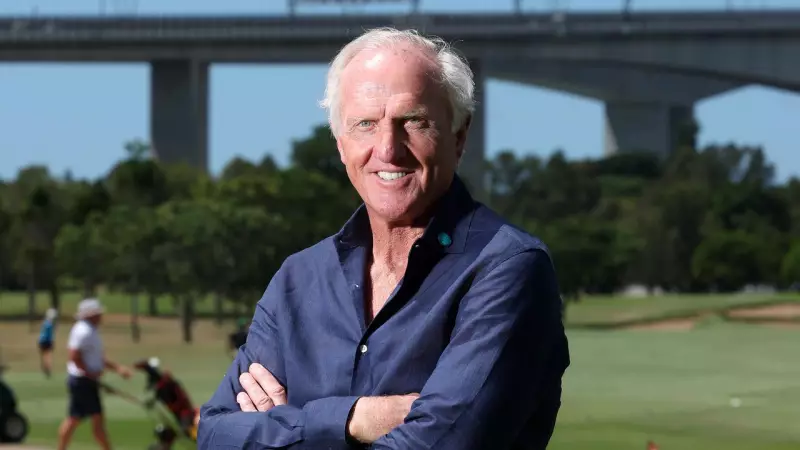
The conspicuous absence of golfing icon Greg Norman from the recent Australian Open celebrations has not gone unnoticed, raising significant questions and fuelling discussion among the sport's most influential figures.
A Notable Absence at a National Event
Despite the tournament being held in his home country, Greg Norman, a two-time Open champion and arguably Australia's most famous golfer, was not in attendance at The Australian Golf Club in Sydney. His absence was particularly striking given the event's stature and the presence of other legends of the game who were honoured. This snub has become a major talking point behind the scenes, with powerbrokers within Golf Australia and the wider industry openly questioning the reasons and ramifications.
The divide stems from Norman's role as the CEO and face of LIV Golf, the Saudi-backed tour that has created a seismic rift in professional golf. His leadership position has placed him in direct conflict with the established tours, including the PGA Tour, which maintains a strategic alliance with Golf Australia. This tension has effectively made Norman a polarising figure within the traditional governance structures of the sport.

The Underlying Tension and Strategic Alliances
Sources close to the event confirm that Norman was not extended a formal invitation to participate in the tournament's ceremonial activities. This decision is widely interpreted as a reflection of the delicate balancing act Golf Australia is attempting to perform. The organisation is deeply entwined with the PGA Tour through its partnership, making any high-profile inclusion of the LIV Golf figurehead a potentially fraught diplomatic move.
Key figures within the sport have expressed both understanding and concern over the situation. Some view the exclusion as a necessary step to protect existing commercial partnerships and the sanctity of the tour structure. Others, however, believe that Norman's legacy as a champion who elevated Australian golf on the world stage should have been honoured independently of his current commercial endeavours. They argue that the snub diminishes a moment meant to celebrate the game's history and its heroes.
Broader Implications for Australian Golf
The situation highlights the complex new reality for golf administration in Australia and globally. The schism between LIV Golf and the traditional tours forces national bodies to navigate a political minefield. The core dilemma is whether to acknowledge a legendary figure for their past contributions while sidelining them due to their present-day role in a rival commercial enterprise.
This episode sets a concerning precedent for how the sport manages its history amidst current conflicts. With LIV Golf continuing to sign major stars, the pressure on these relationships will only intensify. The absence of Norman from the Australian Open, therefore, is more than a simple scheduling note; it is a visible symptom of the deep fractures running through professional golf. The decisions made now will shape how the sport reconciles its past with an increasingly fragmented future, especially in a proud golfing nation like Australia.
As the dust settles on another Australian Open, the conversation among powerbrokers is less about the winner's final putt and more about the champion who wasn't there. The unresolved tension surrounding Greg Norman's place in the current ecosystem suggests that golf's civil war is far from over, and its battlegrounds now include the ceremonial stages of the sport's most historic national tournaments.