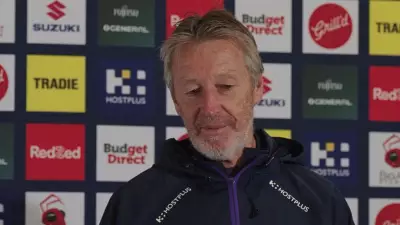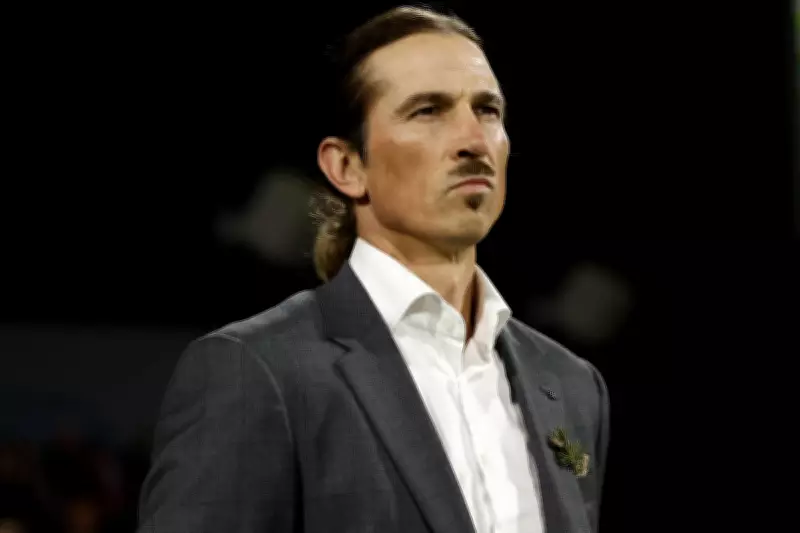
Former Perth Glory captain Jacob Burns has emphasized that the club's future success hinges on more than just the potential return of interim coach Adam Griffiths, stressing the importance of off-field stability and a clear direction from the club's hierarchy.
Griffiths' short-term contract expires at the end of the season, and fans are eagerly awaiting the club's decision on his future and the identity of next season's coach. However, Burns, who previously served as Glory's director of football, argued that regardless of who occupies the coaching role, the coach alone should not be the sole measure of success for Perth.
The 2012 Joe Marston Medal winner and 11-time Socceroo stated that the club requires stability and a concise sense of direction from its leadership structure, which includes chairman Ross Pelligra, vice chairman Jason Bontempo, chief executive Anthony Radich, and football director Stan Lazaridis.

"When you break it down, the bigger question is not just for the management, but for the club and senior management and an ownership of what they want to achieve," Burns told The West Australian. "What does Perth Glory want to be? There's no doubt that they've lost their identity over the past five years. They've had very little success and a hell of a lot of change over it. The club needs to go 'we are a collective, this is what we're doing, this is the direction we're going to go and if it doesn't work, then I'm not the person for the role.'"
After long-time owner Tony Sage handed back his licence in July 2023, Perth was placed in receivership before Pelligra purchased the club in February 2024. A few months later, Glory parted ways with incumbent coach Alen Stajcic after Perth finished last, then hired and fired rookie coach David Zdrilic after a second consecutive wooden spoon. Interim Griffiths sparked initial improvement before the club finished 10th, with a two-month winless streak dashing hopes of a first finals appearance since 2020.
While the level of funds invested in the club's football department will influence the composition of the coach and squad next season, Burns said the club needed to identify a broader plan beyond hiring a manager for next season.
"Under Griff, certainly the squad showed a definite improvement from when he came in, but the detail of how much, and the long-term view of the direction of the club is a bigger question," he said. "They need to determine what they're going to be and I'm sure Griff, if he's the one, would be asking that question: who's putting the team together with him and for how long? How can we stop this overturn of management, staff and players, and how do we get the balance right between bringing young talent through a model of trying to develop players to make money to bring into the club, and at the same time challenge for things? The fans are fed up with, and rightly so, the optimism when you're finishing last, second-last, third-last. If you're not making finals, if you're coming last where there's no relegation, there's no difference. You can't promise change and not deliver."
Burns said that if Glory chooses not to spend heavily and chase an experienced coach, sticking with Griffiths has its benefits. While he cautioned against offering Griffiths an overly lengthy deal, he had seen enough improvements to warrant a possible extension.
"If the club aren't going to spend and they're going to go light, then I don't think an upheaval of going for another unproven coach is the answer," he said. "If they're going to go for unproven, green coach, then you stick with Griff."