An iconic Canberra sportsground, often dubbed the 'golden hen' of AFL facilities in the capital, is receiving a significant half-a-million-dollar upgrade. The work at Ainslie Football Club's privately-owned Alan Ray Oval comes at a critical time, as sporting codes across the city compete for limited field space.
A Major Investment in a Premium Surface
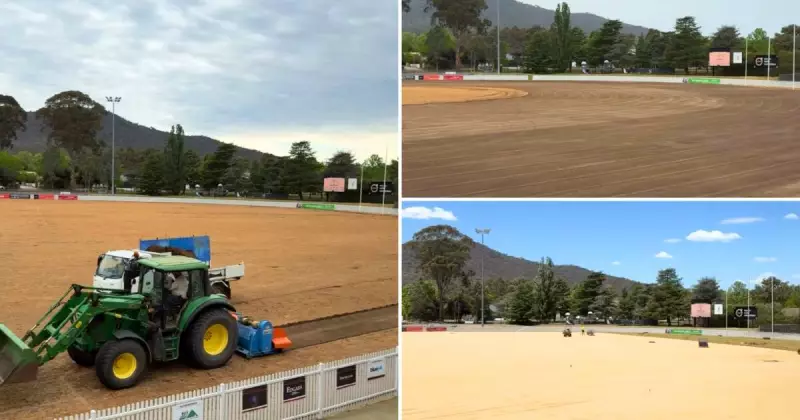
The $500,000 project to completely re-surface Alan Ray Oval began in October and is a joint investment between the Ainslie Group and AFL Canberra. This marks the first full surface renewal for the ground in over two decades, addressing wear and tear from a particularly dry and hot year that left the turf with brown patches.
The AFL contributed $200,000 towards the current works, following a previous investment of $150,000 in 2021 for a new LED lighting system. The extensive process involves digging up 10 centimetres of old soil, levelling and sanding the base, and rolling out new turf. The couch grass will then be oversown with rye for durability.

The oval is expected to be back in action by mid-March 2026, just in time for the new season. Until then, Ainslie's pre-season training has relocated to nearby Reid Oval and facilities at Duntroon.
Privately-Owned Advantage in a Public Field Crunch
Ainslie Football Club is keenly aware of its unique position. While many sporting groups lobby the ACT government for access to public ovals, Ainslie's private ownership of Alan Ray Oval provides a distinct 'competitive edge'.
"One of the really special things about our oval is that it's privately-owned, and that makes it the golden hen of AFL in Canberra," said Ainslie general manager Annie Reeson. She emphasised that appealing for government funding would mean ceding control, turning it into a public asset.
This stance is taken against a backdrop of intense pressure on public sports infrastructure. With participation rates rising, the ACT government is reportedly investigating bringing up to 13 previously unused ovals back into service to meet demand from various codes.
Alan Ray Oval's usage highlights the need. Last year, over 84 games were played at the venue, along with training sessions four times a week for multiple teams. "Without Alan Ray Oval there would be a massive gap for playing and training facilities in the ACT," said Ainslie Group CEO Simon Patterson.
Future Vision and Careful Management
The surface renewal is a key part of the Ainslie Group's broader master plan for the site. This long-term vision includes potential residential and commercial development on the north and north-western sides of the oval, while preserving the green space itself—a model similar to Manuka Oval.
The club also has ambitions to upgrade changerooms and the grandstand, though that work is at least two years away without further funding. For now, the focus is on protecting the new $500,000 surface.
"We will have to be careful how much we schedule next year because the surface is new and for long-term viability of the oval, we have to be very careful," Patterson cautioned. The new turf is designed to be more water-efficient and better withstand both Canberra's temperature extremes and the rigours of Australian Rules football.
For the club and the community, the upgrade is about securing a vital sporting hub. "It's giving back to the inner north," Reeson stated. "If you look around, there's not many green spaces that you can use specifically for sport. It helps keep kids engaged in sport."