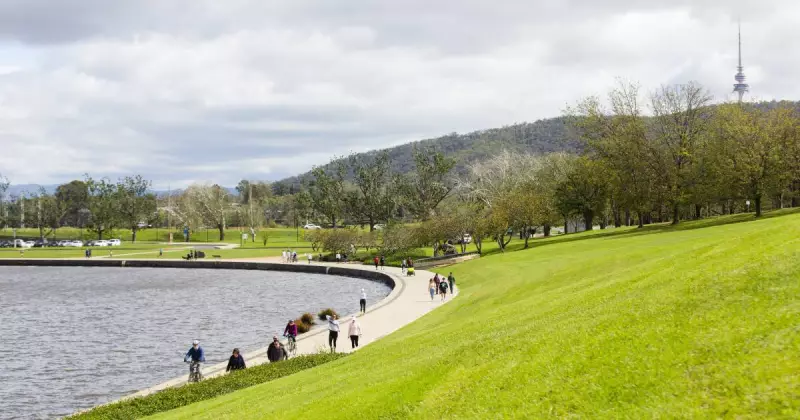
The ACT government is moving forward with plans to build a major new aquatic centre in Commonwealth Park, backed by a substantial $137.8 million budget jointly funded by the territory and federal governments. This significant investment promises a top-tier facility with diverse pools and amenities designed to serve the entire Canberra community.
The Inevitable Trade-Offs: Budget and Space
While community groups have passionately advocated for various features, the conversation has largely overlooked the project's fixed constraints. The budget is set at $137.8 million, and the available land in Commonwealth Park is finite. These locked-in parameters mean Infrastructure Canberra cannot satisfy every request. Difficult decisions about priorities are unavoidable, forcing a balance between competing desires for the centre's final form.
The Central Dilemma: How Much Space for Cars?
A primary point of contention is car parking. Community feedback reveals strong demand, with calls for ample spaces for people with disability, families, and event spectators. However, every square metre dedicated to surface parking is land lost for the aquatic centre itself. This raises direct questions about potential sacrifices: would the community prefer a larger carpark over a café, a hydrotherapy pool, or expanded changing rooms?

Some suggest multi-level or underground parking as a solution, but this comes with a steep financial cost. Constructing complex parking structures consumes a massive portion of the project budget, which could otherwise fund spectator seating, a childcare facility, or enhanced water features. The fundamental choice is between allocating resources for cars or for people and aquatic facilities.
A Vision Centred on Public and Active Transport
This project arrives as Canberra undergoes a deliberate shift from a car-dependent city model towards more concentrated development and balanced transport options. The scarcity and high value of land in the Commonwealth Park area make large surface car parks an unsustainable use of space. The argument is not for eliminating parking entirely—provision for those with genuine need is essential—but for avoiding the dedication of vast tracts of land to stationary vehicles.
By the centre's completion, the Stage 2 light rail will be operational, delivering frequent and reliable services directly to the Commonwealth Park stop. Enhanced bus services, including more electric buses, will improve connectivity from across Canberra. Simultaneously, pedestrian and cycling access to the site will be substantially upgraded.
The advocated vision prioritises exceptional public and active transport infrastructure. This includes high-quality, sheltered stops, a prominent entrance from Commonwealth Avenue, wide footpaths for crowds, and an attractive pedestrian boulevard linking the light rail stop to the centre and the park beyond. The goal is to create a facility accessible to the broadest cross-section of the community without compromising its core aquatic offerings for the sake of car storage.
Amy Jelacic, chair of the Public Transport Association of Canberra, authored the original opinion piece.